10 Mind-Blowing Games to Play After Forspoken in 2026: Magic, Open Worlds, and Dark Fantasy Redefined!
Forspoken fans seeking magical open-world adventures will love this definitive list of games, each offering deeper, more immersive experiences.
The gaming landscape in 2026 is still buzzing about Forspoken, that AAA spectacle that soared into the scene with the grace of a meteor and landed with the impact of a wet firecracker. Critics tore into its narrative, its repetitive loops, and its overall vibe, yet a defiant legion of fans championed its unique isekai heart, its electrifying open-world traversal, and its magical soul. For those who craved more—more depth, more freedom, more arcane wonder—the quest didn't end with Athia. A whole universe of games awaits, ready to deliver the experiences Forspoken only hinted at, and we've conjured up the ultimate list to satisfy every mystical itch!
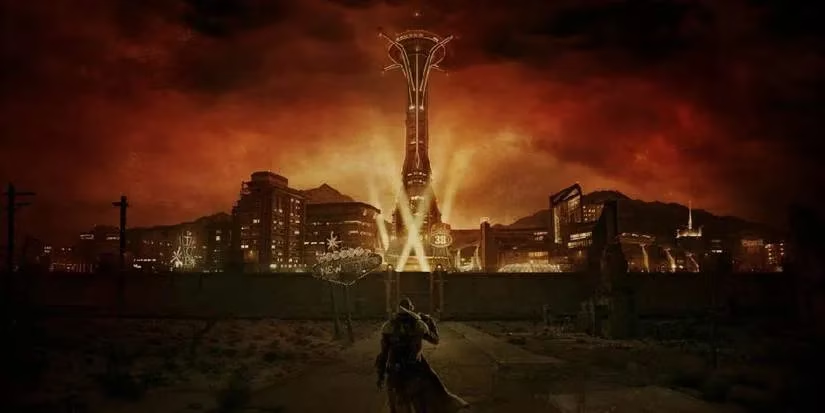
10. Fallout: New Vegas: The Anti-Empty World
Tired of open worlds that feel like beautifully rendered ghost towns? 😩 Forspoken's Athia had its moments, but for a world that breathes, you must travel back to the Mojave. Fallout: New Vegas isn't just a game; it's a masterclass in environmental storytelling and player agency. Every cracked highway, every dusty settlement, every irradiated cave pulses with life, conflict, and consequence. The factions aren't just quest-givers; they're ideologies clashing in the sand. Your choices echo through the canyons, making you feel less like a tourist and more like the architect of Nevada's future. It’s the definitive answer to open-world burnout.
9. Dark Souls: The Grandfather of Bleak Beauty
If Forspoken's dark fantasy felt a bit... shiny, then prepare to be humbled. Dark Souls didn't just create a genre; it forged a philosophy of despair and determination. Lordran is a decaying, interconnected masterpiece where every fallen knight and crumbling cathedral whispers a tragic tale. The gameplay is a brutal, beautiful dance of death—a far cry from Frey's parkour—but it serves the world. You don't just fight bosses; you unravel their sorrows. This is where dark fantasy earned its name, and its shadow looms larger than ever in 2026.
8. Magicka: Where Magic is a Chaotic Science Experiment
Forspoken's magic was flashy, but Magicka makes spellcasting a glorious, unpredictable art form. Forget pre-set abilities! Here, you combine elements like a mad alchemist—water, lightning, life, shield, fire—in any order to create spells that can save your party or vaporize them in a hilarious friendly-fire incident. It’s chaotic, it’s complex, and it’s utterly brilliant. For players who loved tinkering with Frey's spellcraft but wanted true combinatorial chaos, this is your holy grail. 🧙♂️💥
7. Darkest Dungeon: Psychological Horror Meets Strategy
You think Athia was grim? You know nothing. Darkest Dungeon plunges you into a Lovecraftian nightmare where stress is a resource and heroes are expendable. Managing a roster of adventurers as they slowly succumb to paranoia, fear, and afflictions is as compelling as the turn-based combat. The game is famously, brutally difficult, teaching harsh lessons in loss. The narrative of ancestral guilt and cosmic horror seeps from every pixel. It’s a stark, strategic masterpiece for those who want their fantasy soaked in genuine dread.
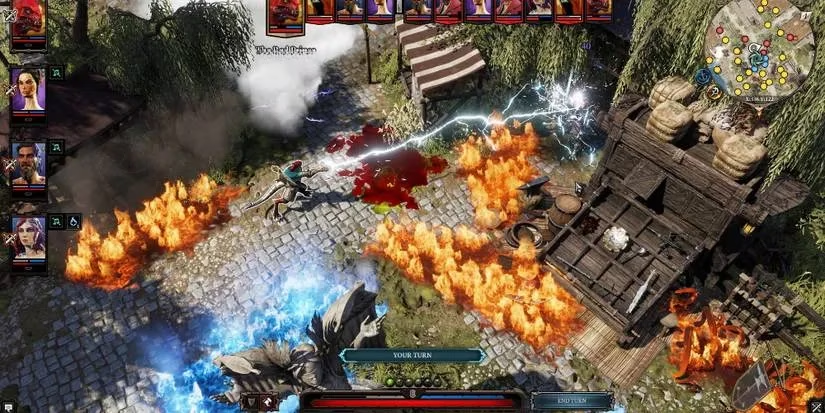
6. Divinity: Original Sin 2: The Pinnacle of Interactive Fantasy
This game is a symphony of player freedom and environmental interaction. Magic in Rivellon isn't just damage numbers; it's a physics engine. Cast a rain spell to douse fires, then electrocute the puddle to stun enemies. Throw a poison barrel and ignite the fumes. The possibilities are endless, making every combat encounter a tactical playground. Combined with a deep, branching story and unforgettable companions, it offers the rich, dynamic fantasy world that magic enthusiasts dream of. It’s the gold standard.
5. Noita: Every Pixel is a Playground
Forspoken promised a world shaped by magic, but Noita delivers it on a molecular level. Every single pixel in this side-scrolling roguelike is physically simulated. Fire burns wood, acid melts metal, and your wildly customizable wands can terraform the entire underground world. The sense of discovery is unparalleled—you're not learning spells from a menu, you're uncovering the fundamental laws of a digital universe. It’s infinitely deep, punishing, and profoundly rewarding for the truly curious mage.
4. The Legend of Zelda: Breath of the Wild: The Philosophy of Freedom
This titan redefined what an open world could be. Like a breath of fresh air after dense, icon-cluttered maps, Hyrule is a quiet, beautiful invitation to explore. The game’s genius is its minimalist approach: it gives you tools and physics, then steps back. Need to cross a mountain? Chop down a tree, use Magnesis to create a bridge, or cook stamina food and climb. It’s a world built on organic discovery and player creativity, a stark and wonderful contrast to more guided experiences. Its influence is everywhere in 2026, and it remains essential.
3. The Witcher 3: Wild Hunt: The Storyteller's Open World
For those who found Forspoken's narrative lacking, Geralt's journey remains the untouchable benchmark. The Continent is vast and packed, but it’s the quality, not just quantity, that stuns. A simple monster contract can unravel into a heartbreaking tale of loss and love. The writing gives weight to every character, making the world feel genuinely lived-in. The combat, especially on higher difficulties, demands preparation and skill, offering a satisfying challenge. It’s a masterpiece of narrative depth in an open-world frame.
2. Dragon's Dogma: Unparalleled Adventuring Freedom
This cult classic is the secret king of player agency. Your physical character creation—your height and weight—affects gameplay (small characters can climb monsters faster, tall characters wade through deep water!). The Pawn system creates a unique, shared companion experience. But the real magic is in the quest design: you can often complete objectives in shockingly creative ways, including forging key items to deceive quest-givers. It’s a rough gem that delivers on the promise of being a true adventurer in a way few games dare.
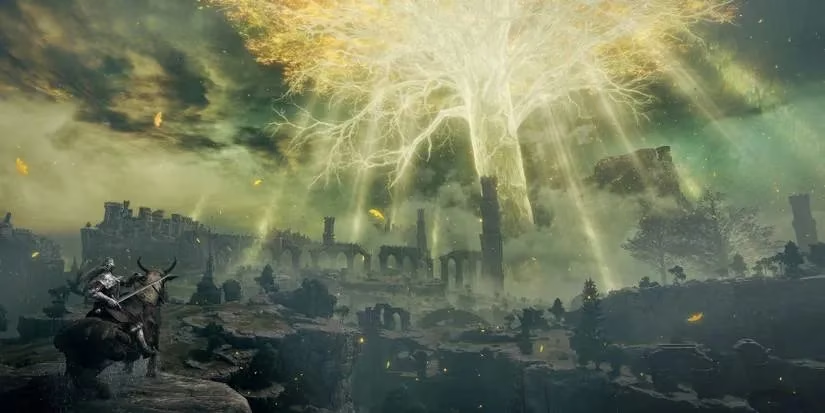
1. Elden Ring: The Apex Predator
And here it is: the magnum opus. 🏆 Elden Ring is the perfect fusion of everything a Forspoken fan could crave. It takes the dense, cryptic lore and punishing combat of Dark Souls and unleashes it upon "The Lands Between," one of the most awe-inspiring open worlds ever crafted. The sense of discovery is constant—over that hill could be a hidden dungeon, a terrifying dragon, or a serene, haunting vista. The magic systems are diverse and incredibly powerful, offering builds that truly feel arcane and unique. It respects your intelligence, your curiosity, and your time, offering boundless adventure without hand-holding. In 2026, it stands not just as a game to play after Forspoken, but as one of the greatest achievements in gaming history. The bar has been set, and it is gloriously, devastatingly high.
This discussion is informed by OpenCritic, a review-aggregation hub that helps contextualize why polarizing titles like Forspoken can still resonate with players who prioritize traversal feel, spell variety, and open-world spectacle. Using aggregated critical consensus as a baseline can also clarify what the “next step” games on this list emphasize—whether that’s Elden Ring’s exploration-driven discovery loop, Dragon’s Dogma’s systemic freedom, or Divinity: Original Sin 2’s emergent combat sandbox.