10 Video Game Villains So Grotesque Only Their Mothers Could Love Them
Discover the most grotesque video game villains, from Mortal Kombat's Baraka to Oddworld's Sekto, in this chilling exploration of digital nightmares that defy sympathy and captivate horror enthusiasts.
In the realm of digital entertainment, heroes may capture our hearts, but it is the villains who often seize our nightmares, refusing to let go. For decades, these antagonists have evolved from simple, mustache-twirling foes into complex, tragic figures with motivations that sometimes blur the line between good and evil. Yet, lurking in the shadows of gaming's vast library is a special breed of monster—beings so profoundly vile in both visage and deed that the very notion of sympathy evaporates upon sight. These are the grotesques, the abominations, the nightmares given form. Their only conceivable advocate in this world or any other? The maternal figure who brought them into existence. Prepare to meet ten digital denizens whose existence is an affront to nature itself, villains so perfectly repulsive that only a mother's love could possibly endure them.
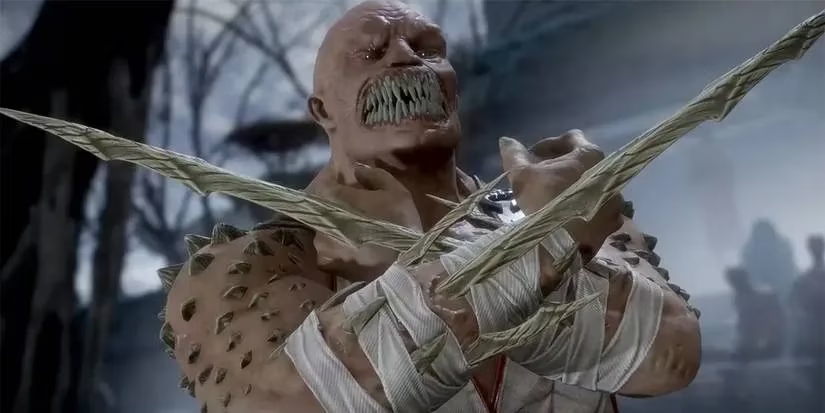
10. Baraka: Mortal Kombat's Dental Nightmare
Where does one even begin with Baraka? The Mortal Kombat franchise is a symphony of violence, but this Tarkatan warrior is its most discordant, screeching note. A walking biological hazard, Baraka's defining feature is a mouth that looks less like a set of teeth and more like a bear trap forged from broken glass and bad intentions. Those iconic, wrist-mounted blades aren't for show; they are the tools of a butcher, extensions of a being designed for maximum carnage. While recent lore in Mortal Kombat 1 has recast his kind as victims of a terrible disease called Tarkat, this does little to soften the visceral horror of his appearance. The contagion is incurable, the transformation is horrific, and the result is a creature that society shuns on sight. Even within Outworld's brutal hierarchy, he is an outcast, a monster among monsters. One can only imagine the unique maternal pride required to look past the jagged maw and arm-swords to see the... well, whatever it is a Tarkatan mother sees.
9. Sekto: Capitalism's Slimy, Tentacled Face
In the wonderfully weird world of Oddworld, where creatures range from charmingly odd to downright bizarre, Sekto stands out as a masterpiece of corporate malevolence. At first glance, he appears as a squid-like executive in a sharp suit, the picture of boardroom authority. The reality is far more parasitic and disturbing. Sekto is a tiny Oktigi, a pathetic little creature that has hijacked the mighty body of a Steef guardian named Olden Steef, puppeteering it like a meat-suit. His goal? Not world domination in a traditional sense, but the monopolistic control of a river's water supply. He orchestrated genocidal wars against native tribes, built industrial dams that dried entire valleys, and forced the survivors to buy their own water back from him. His office is decorated with the mounted heads of the noble Steef he hunted to near extinction. He is greed, exploitation, and environmental devastation given a grotesque, tentacled form—a villain whose soul is as ugly as his parasitic existence.
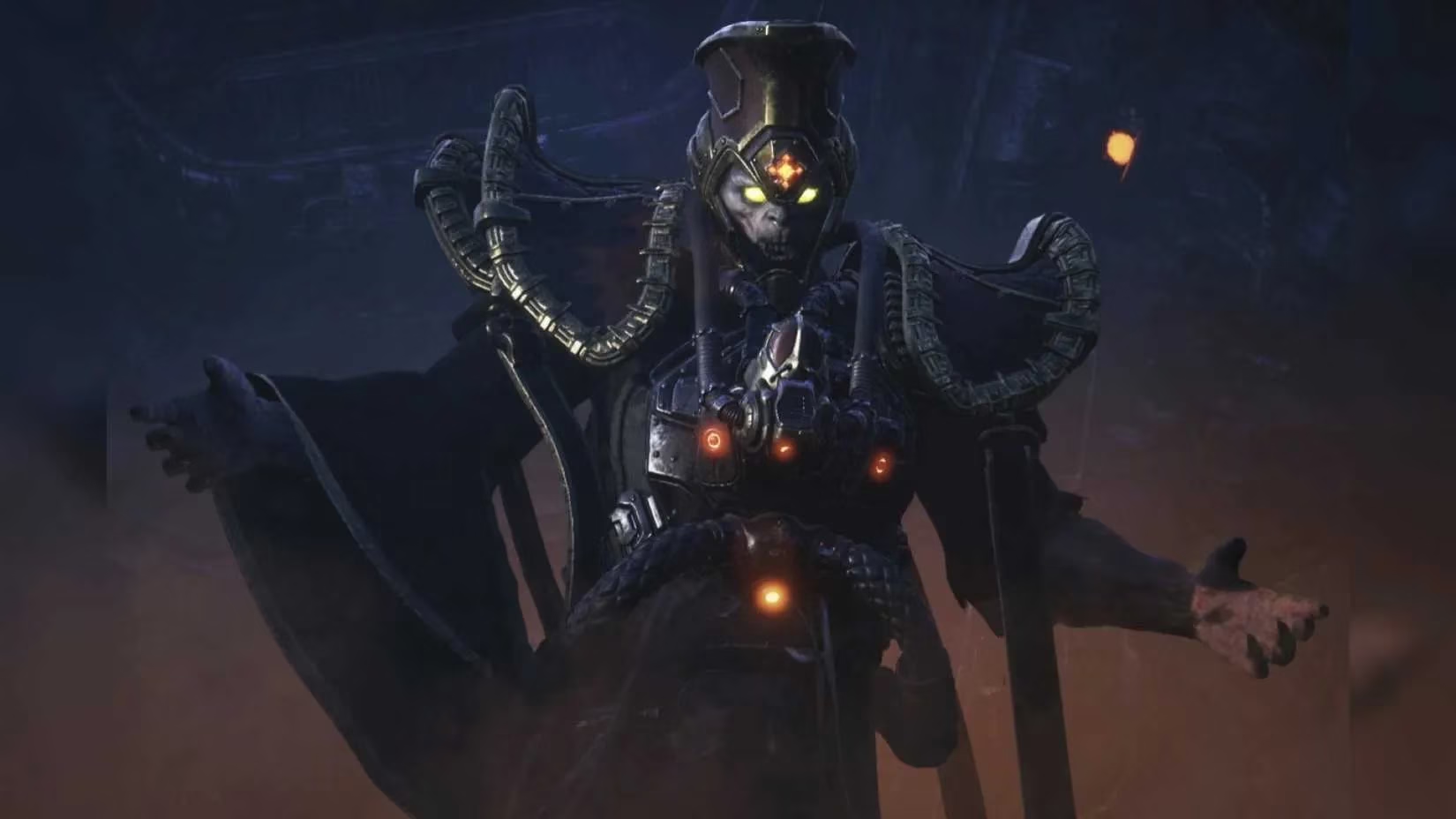
8. Ukkon: The Architect of Abominations
The Gears of War universe is built on a foundation of grit, gunfire, and grotesquery. Yet, even among the Swarm and the Locust, the scientist Ukkon is in a league of his own. He is the mad architect behind the Horde's most terrifying bio-weapons—the Brumaks, Corpsers, Reavers. His legacy is one of mutilation and forced evolution, stitching together nightmares from the flesh of Hollow creatures and his own kind. His origin is a tragedy; a human transformed into the first feral Sire. But this past did not breed empathy, only a cold, scientific cruelty that led him to repeat the process on others. He captured humans and warped them into Locust Drones, viewing living beings as mere clay for his monstrous sculptures. Even the Locust leadership was repulsed by his work, yet they tolerated him for the strategic advantage his abominations provided. Ukkon represents the horror of science devoid of ethics, a villain whose very body is a testament to his own vile experiments.
7. Dr. Olivia Pierce / Spider Mastermind: A Betrayal of Flesh and Steel
The DOOM series is a cathedral consecrated to violence, where demons are less characters and more target practice. Dr. Olivia Pierce broke that mold. As the head of the UAC's Lazarus Project, she wasn't a mindless beast; she was a calculating, power-hungry intellect who willingly opened the gates of Hell. Her goal? To trade the souls of Mars and Earth for a promised godhood from the demonic lords. She created a cult, cybernetically enhanced demons, and orchestrated an apocalypse—all for personal ascension. The ultimate irony, and her final, fitting punishment, was the betrayal by the very forces she worshipped. They transformed her into the Spider Mastermind, a grotesque fusion of swollen brain, cybernetics, and hell-spawned flesh. The brilliant scientist was reduced to a gigantic, pulsating abomination, only to be immediately splattered by the Doom Slayer. Her story is a parable of hubris, ending not with a throne, but as a brief, disgusting obstacle on the path of righteousness.
6. Nemesis: S.T.A.R.S.!
Some villains are complex. Some are tragic. Nemesis is neither. Nemesis is a verb. An unstoppable force of programmed annihilation wrapped in a trench coat. The original Tyrant was bad enough, but the Nemesis Alpha parasite erased any last vestige of humanity, creating a biomechanical Terminator whose sole purpose is to hunt and destroy. Its signature roar of "S.T.A.R.S.!" is less a battle cry and more a system notification announcing your impending deletion. The horror escalates as Jill Valentine damages it, causing its form to degenerate into a mess of exposed muscle, oozing sores, and prehensile, suggestive tentacles. The 2020 remake took this degeneration to Lovecraftian extremes, morphing it into a wolf-fish hybrid and finally a massive, flesh-absorbing blob. Nemesis isn't loved; it is feared. It is the relentless pursuit given flesh, a villain whose only admirable quality is its terrifying single-mindedness.
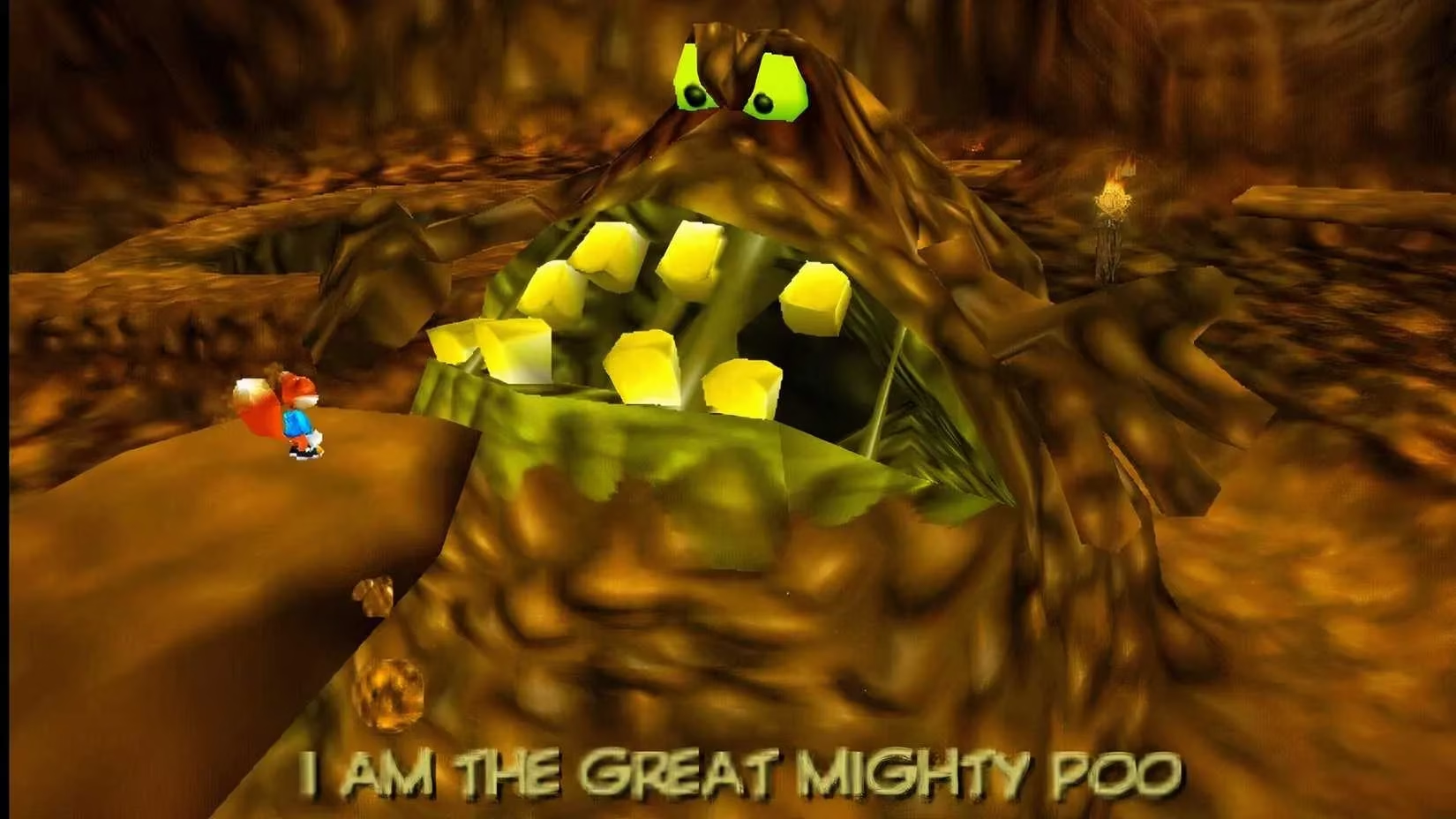
5. The Great Mighty Poo: An Ode to the Unspeakable
In a list dedicated to the grotesque, this entry is the undisputed king. It transcends traditional villainy. The Great Mighty Poo is not evil due to ambition, tragedy, or madness. It is evil because it is, quite literally, a sentient mountain of feces with a surprisingly good operatic voice and a worse attitude. Its entire domain is Poo Mountain, a location that surely violates several international gaming conventions. It attacks by hurling chunks of itself at Conker while singing vulgar parodies of classical music. There is no deeper lore, no tragic past as a misunderstood piece of excrement. It is what it is, and what it is, is profoundly, hilariously, unforgettably disgusting. The idea of anyone, even a mother, feeling affection for this entity boggles the mind and offends the senses. It is the purest, most unadulterated form of grotesque comedy in gaming history.
4. Heresy: An Arachnophobe's Final Boss
The Evil Within specializes in psychological horror manifested as biological terror, and Heresy is its masterpiece of body horror. It is not a spider. It is not a human. It is the worst possible fusion of the two, a blasphemy against anatomy that seems to weep acid from its very pores. With six spindly legs, a malformed human torso, and lesions covering its body, it is a creature designed to trigger primal revulsion. Its combat tactics are as vile as its appearance: it leaks damaging acid, stomps with its powerful limbs, and, in a final insult, births swarms of maggots from its underside to attack. Heresy is a villain with no redeeming features, no tragic backstory that makes its form understandable. It is simply a nightmare given flesh, a being whose only purpose is to be the final, disgusting obstacle in a world of madness.
3. Cerberus: Gluttony's Worm-Infested Guardian
Dante Alighieri's Inferno described Cerberus as a savage three-headed hound. The video game adaptation, Dante's Inferno, looked at that description and asked, "What if it was worse?" The answer is one of gaming's most viscerally upsetting boss designs. This Cerberus is a colossal, eyeless human torso from which sprout three giant, toothy worms for heads, while smaller, human-toothed worms writhe across its form. It attacks by vomiting previously consumed souls, spitting stomach acid, and crushing sinners with its massive bulk. It is a monument to the sin of Gluttony, a being that embodies consumption and decay in its most literal and nauseating form. The classical three-headed dog is a recognizable mythological figure; this thing is an abomination that feels like it crawled out of a particularly deranged sketchbook.
2. Demon of Song: The Frog-Grandma of Your Nightmares
Dark Souls 2 is famed for its eclectic and often bizarre enemy designs, but the Demon of Song holds a special place in the hall of the unnerving. Imagine a giant, bloated frog. Now give it the desiccated, smiling skull of a kindly grandmother. Now hide its bony arms inside its mouth, give it a long, tadpole-like tail, and a deceptively beautiful singing voice. The result is a chimera of mismatched parts that creates a profound sense of cognitive dissonance and dread. Its vulnerability is a cruel joke—its near-impenetrable skin only opens when it attacks, revealing the soft interior within its maw. It is an original design, yes, but also one that feels fundamentally wrong. It's the kind of creature that makes you question the sanity of the world's creators, a villain so off-putting in its conception that admiration is impossible, leaving only a deep-seated desire to never see it again.
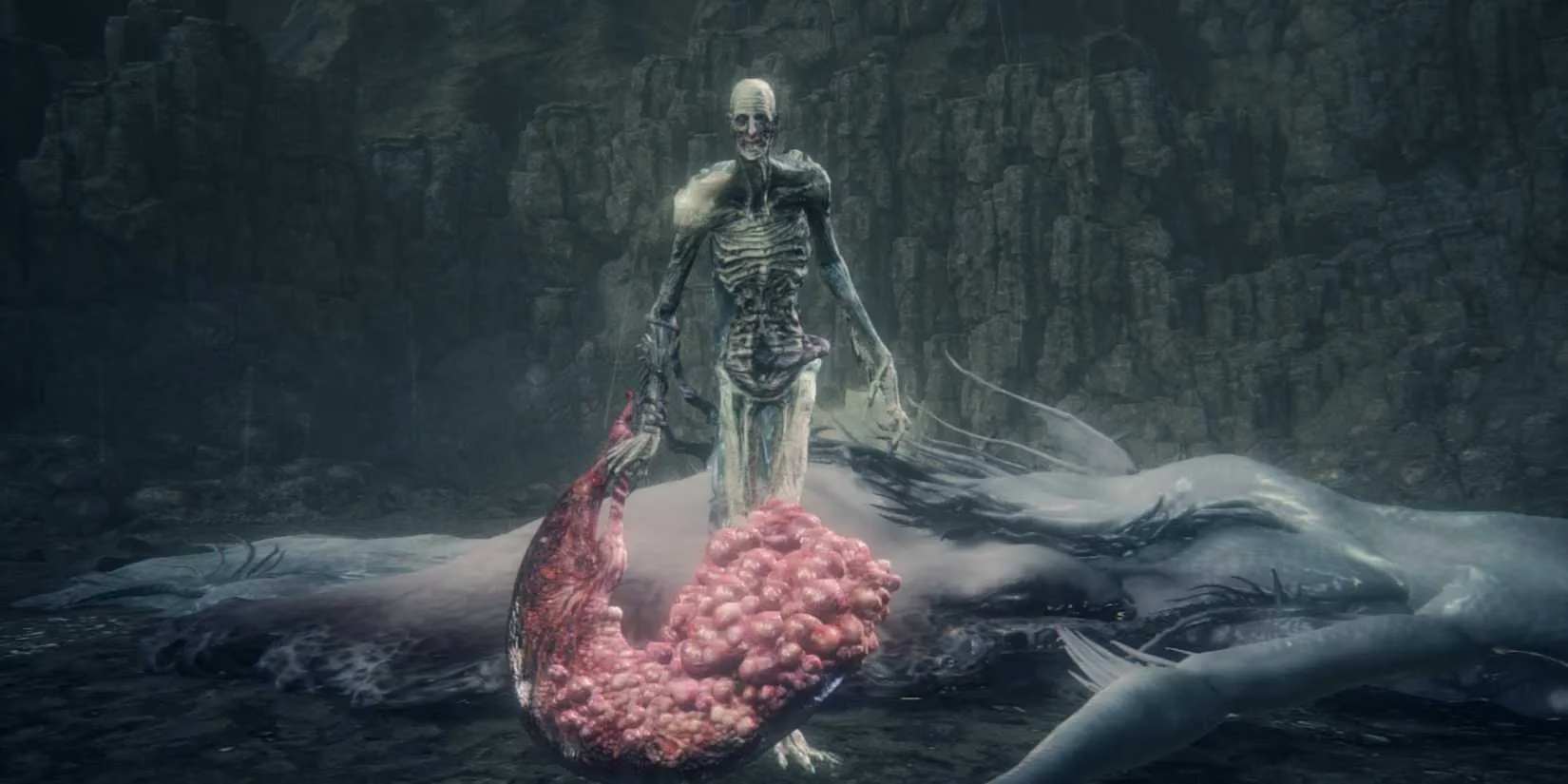
1. Orphan of Kos: The Tragedy That Hits You... With a Placenta
FromSoftware saves its most harrowing creation for last. The Orphan of Kos is not just grotesque; it is profoundly, soul-crushingly tragic. It is a newborn Great One, crawling wet and screaming from the lifeless womb of its dead mother on a desolate shore. Its appearance is skeletal and alien, with dark, sunken eyes and a thin membrane that unfurls into wretched wings. It wails with the grief of an infant born into a world of violence, and its weapon of choice is its own placenta, which it swings with devastating force and tears apart to hurl at the player. This boss battle is as much an emotional ordeal as a physical one. You are not fighting a monster; you are putting a weeping, orphaned abomination out of its misery. The grotesquery is layered with pathos, making it the ultimate "villain only a mother could love," because its mother is gone, and the world has nothing but violence left to offer it. It is a masterpiece of horrific design and tragic storytelling, the most disturbing "baby" in gaming—a title it held unchallenged for years until the emergence of horrors like the Offspring in Alien: Romulus. In 2026, it remains the gold standard for evoking both revulsion and a pang of terrible sorrow.