A Gamer's Time Capsule: The Weirdest, Wildest RPG Classes
RPGs twist the warrior-rogue-mage trinity with unique classes like Golden Sun's Djinn, Darkest Dungeon's Abomination, and Vampire's Malkavian.
Ella traced her fingers over the spines of her game collection, each one a portal to a different world. It was 2026, and though virtual reality and neural interfaces had become the norm, she still found herself drawn back to the classics—the titles that dared to twist the familiar trinity of warrior, rogue, and mage into something utterly unforgettable. Her journey through these games had shaped not only her taste but her entire understanding of what a character could be.
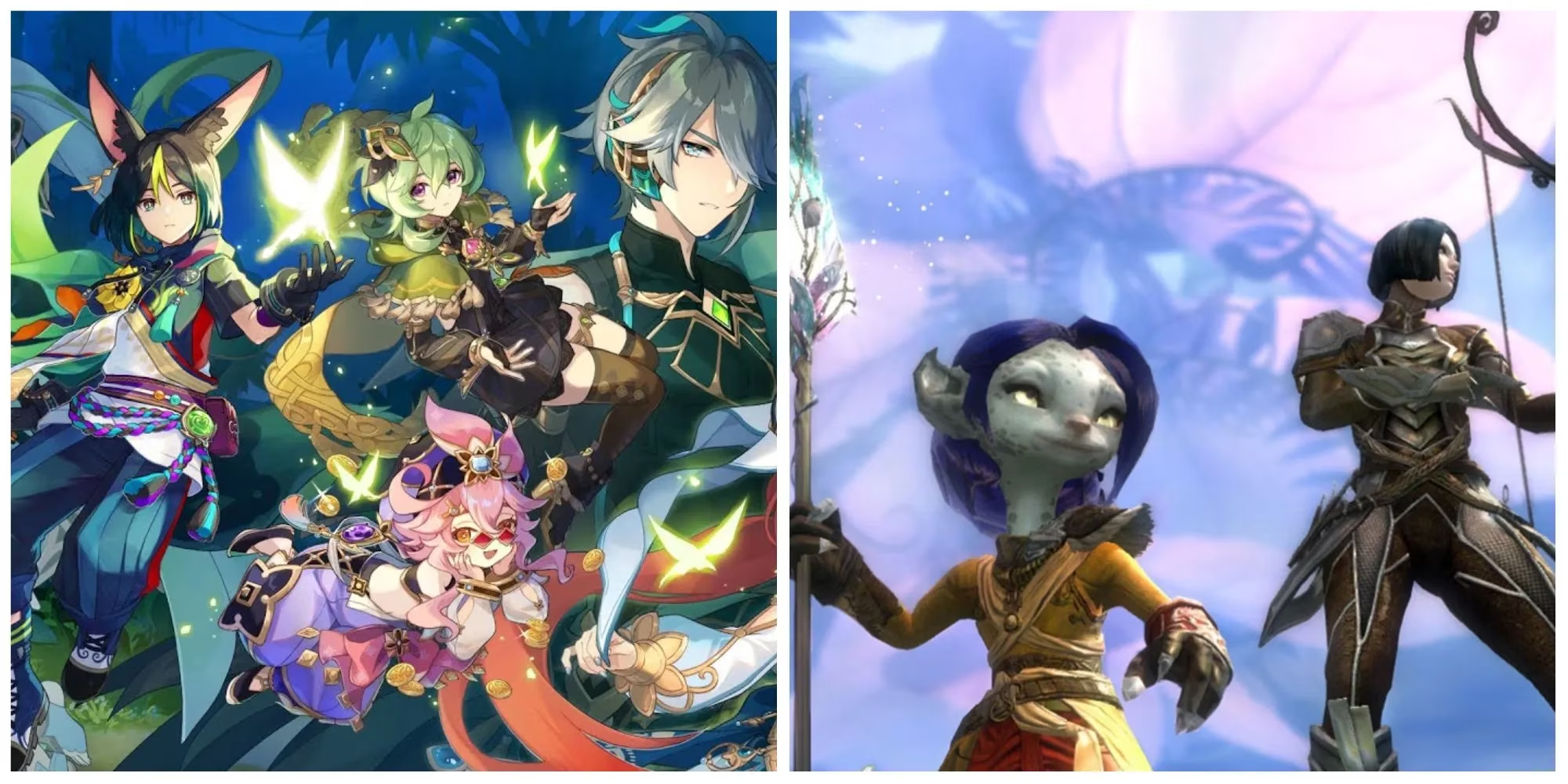
She started young, with a Game Boy Advance tucked under her pillow. Golden Sun wasn't just a JRPG with stunning pixel art; its class system was a puzzle box. Instead of picking a job at the start, she collected elemental creatures called Djinn. Mixing and matching these fiery, watery, and earthy sprites didn't just tweak stats—they completely transformed her party's roles. One configuration might make Isaac a brutish Berserker wielding a massive axe, while another turned him into a spell-slinging Conjurer. The thrill wasn't in picking a permanent path but in endlessly re-forging identities, knowing that unleashing a summon might revert a character to a basic class. For the first time, Ella felt like an alchemist, not just a player.
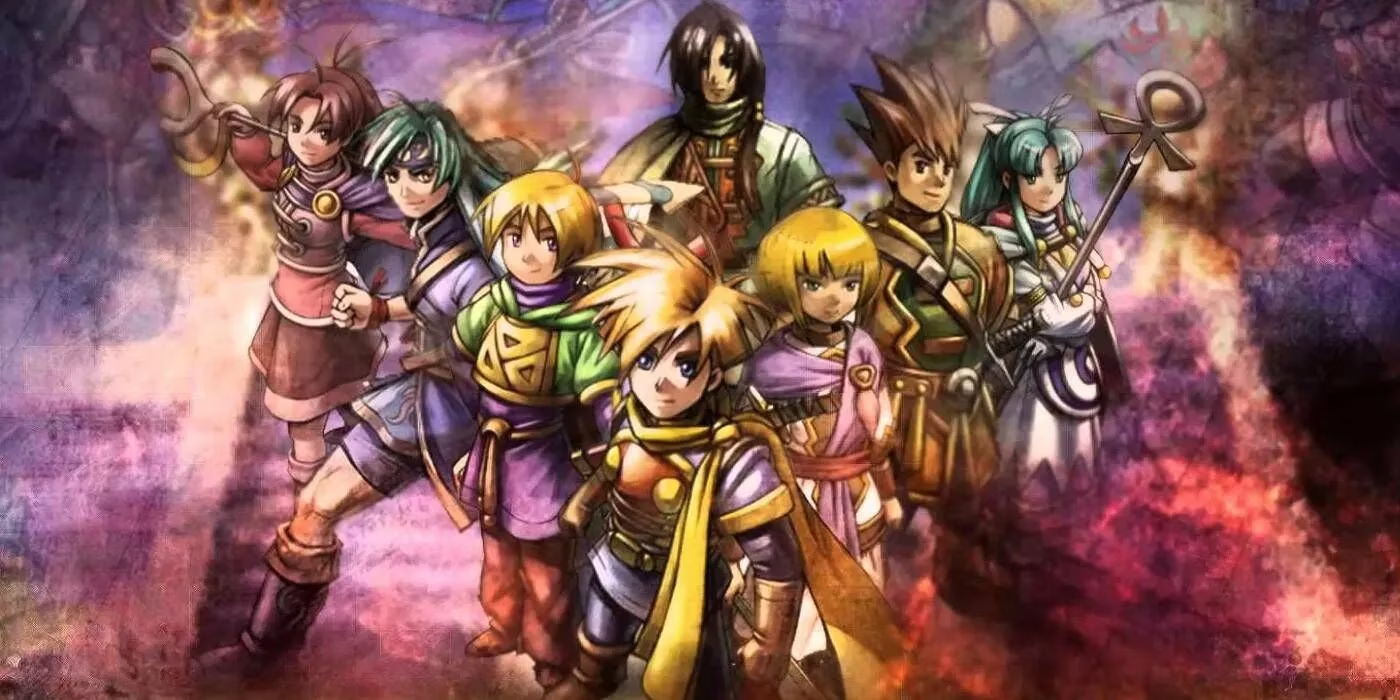
Years later, university introduced her to the chunky pixels and ruthless difficulty of Darkest Dungeon. Here, heroes were fragile and disposable, but two classes defied the grimdark conventions. The Abomination was a man who could transform into a slavering beast—his human form offered blight and stuns, but when he let loose, he became a whirlwind of claws, stressing the entire party with his mere presence. Then there was the Flagellant, a martyr who only grew more deadly the closer he came to death; his rapturous bleeding and low-health power spikes made him a glass cannon that Ella dared to embrace. These weren't just classes; they were psychological profiles that demanded sacrifice.
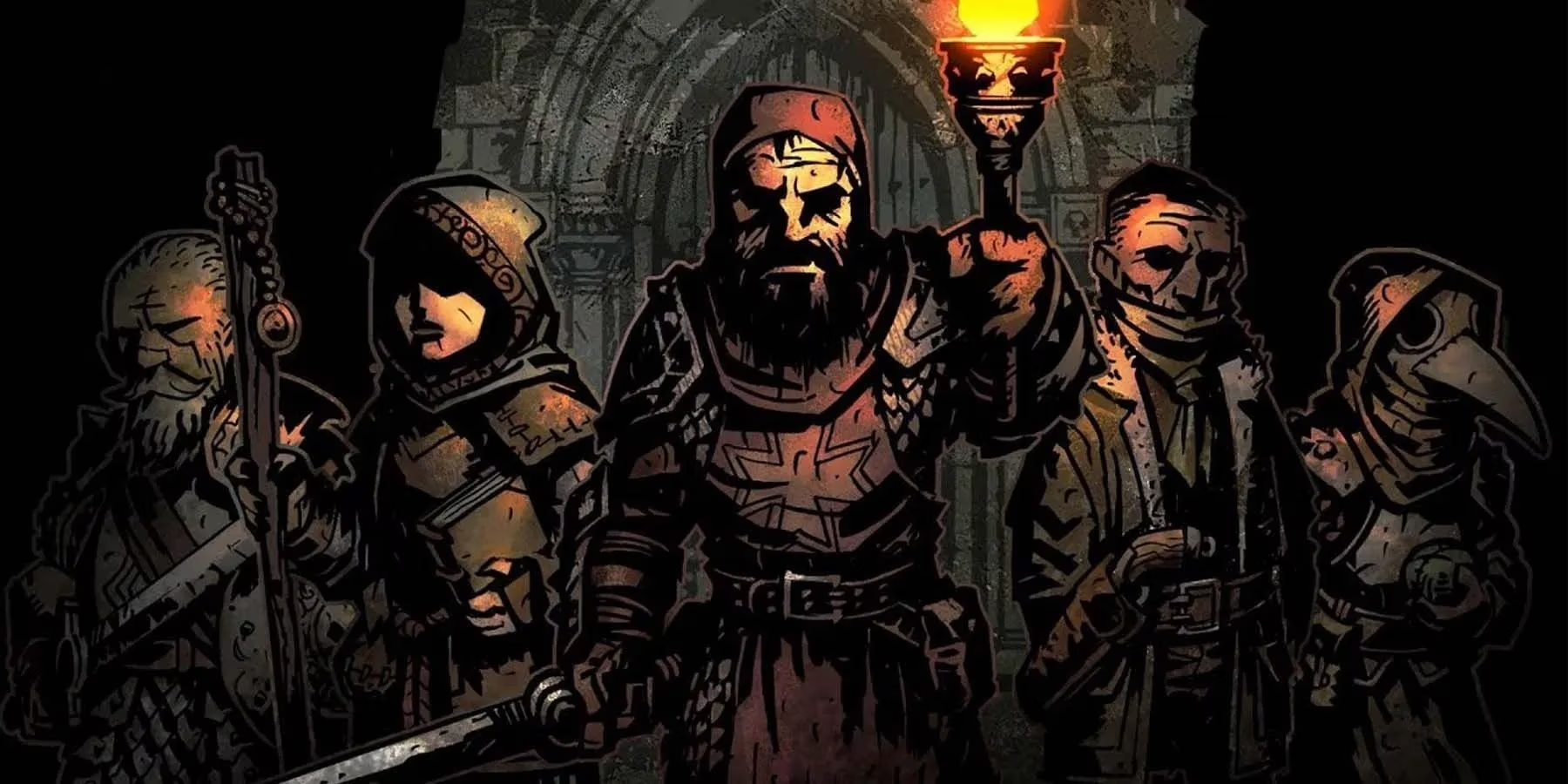
Escaping into shady corners of PC gaming, she discovered Vampire: The Masquerade - Bloodlines, a cult classic that tied class to a vampire clan. The Nosferatu were so hideous they had to lurk in sewers, forbidden from even speaking to normal humans—stealth was survival. But it was the Malkavian clan that shattered her mind. Their insanity warped every line of dialogue into twisted prophecy, nonsense, and fourth-wall-breaking whispers. Playing as a Malkavian turned the entire game into a surrealist performance; Ella never knew what her character would say next, making even a simple fetch quest a descent into madness. No other RPG has ever made her feel so brilliantly unhinged.
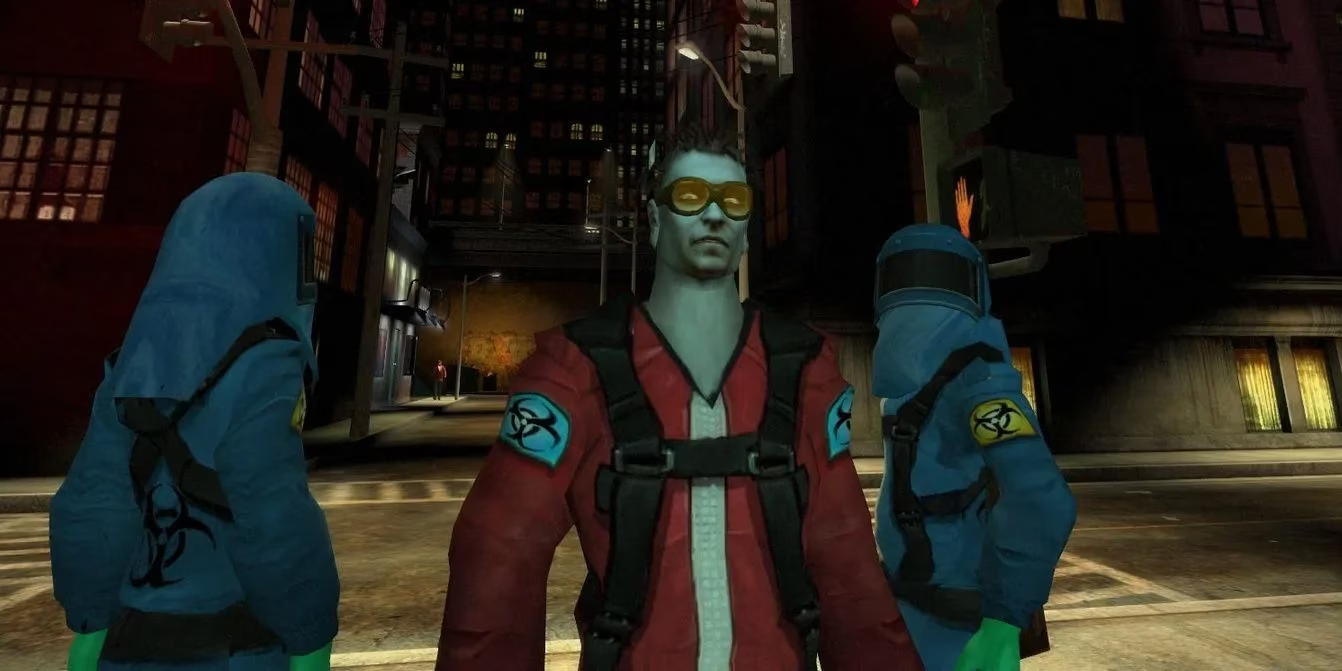
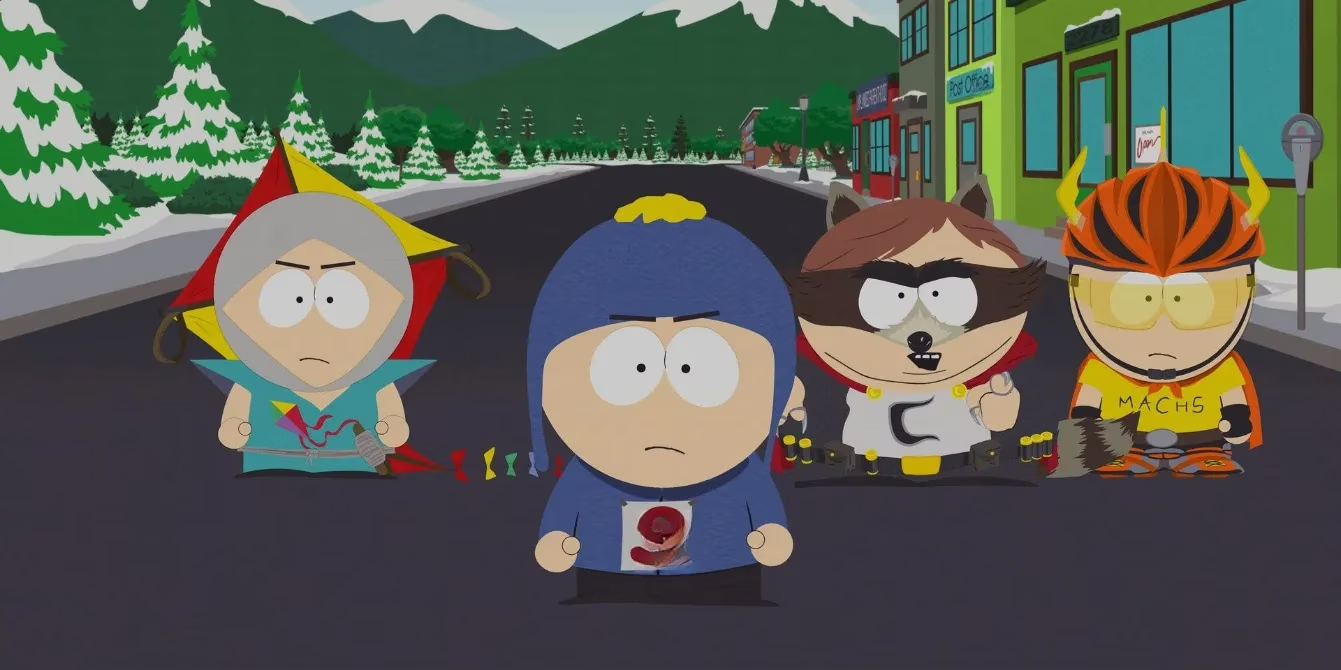
Comedy arrived wrapped in a superhero cape with South Park: The Fractured but Whole. Satirizing everything from Marvel to DC, this game handed out classes like Plantmancer, who could summon sentient flora to choke and confuse; Netherborn, a demonic speedster with hellfire steps; and Final Girl, a slasher-film archetype that got stronger as her allies fell. It was juvenile, brilliant, and surprisingly deep—a reminder that innovation could wear a mask of toilet humor.
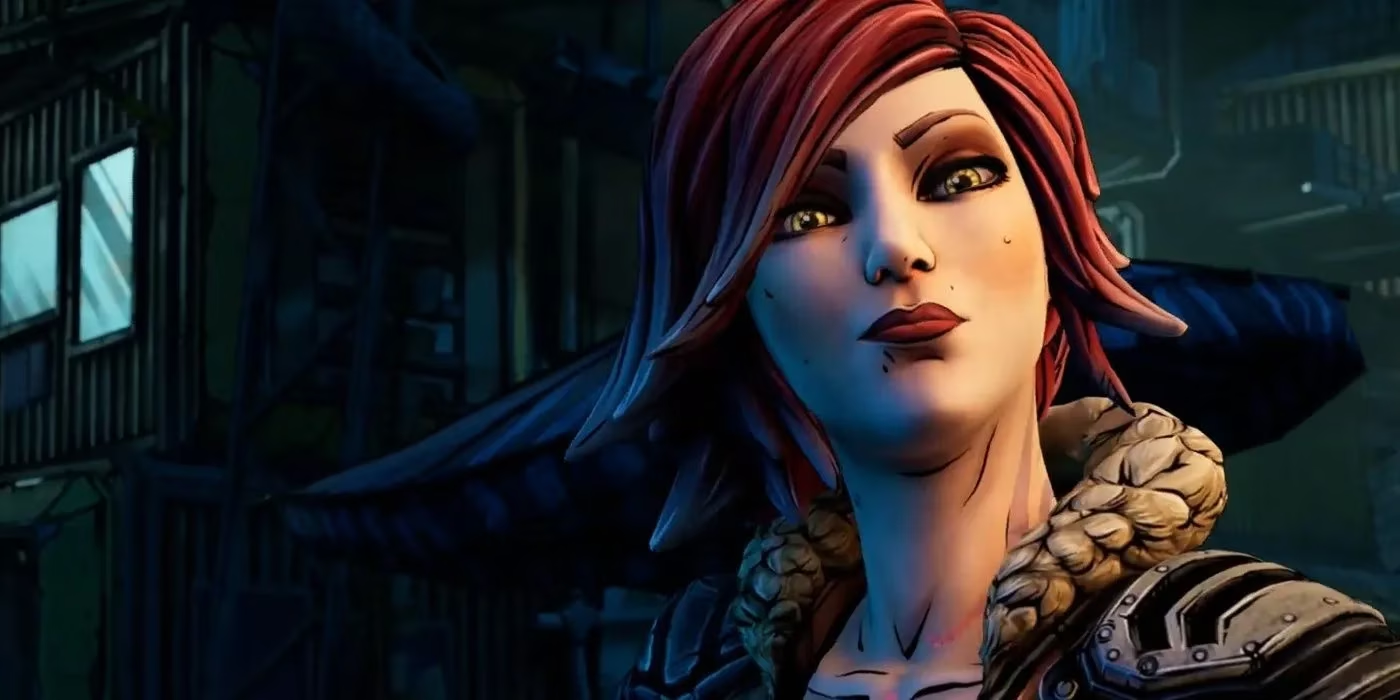
When Ella needed pure firepower, she turned to Borderlands. Among the gun-toting Vault Hunters, the Siren stood alone. With powers granted at birth, a Siren like Lilith could phasewalk into another dimension, leaving shockwaves and destruction behind. Each game offered a new Siren with world-altering abilities, turning every fight into a superpowered dance. Even other classes had quirks: Axton the Commando could transform his turret into a nuclear bomb, deploying a mushroom cloud that would have made psychos weep. It was over-the-top, and she loved every radioactive second.
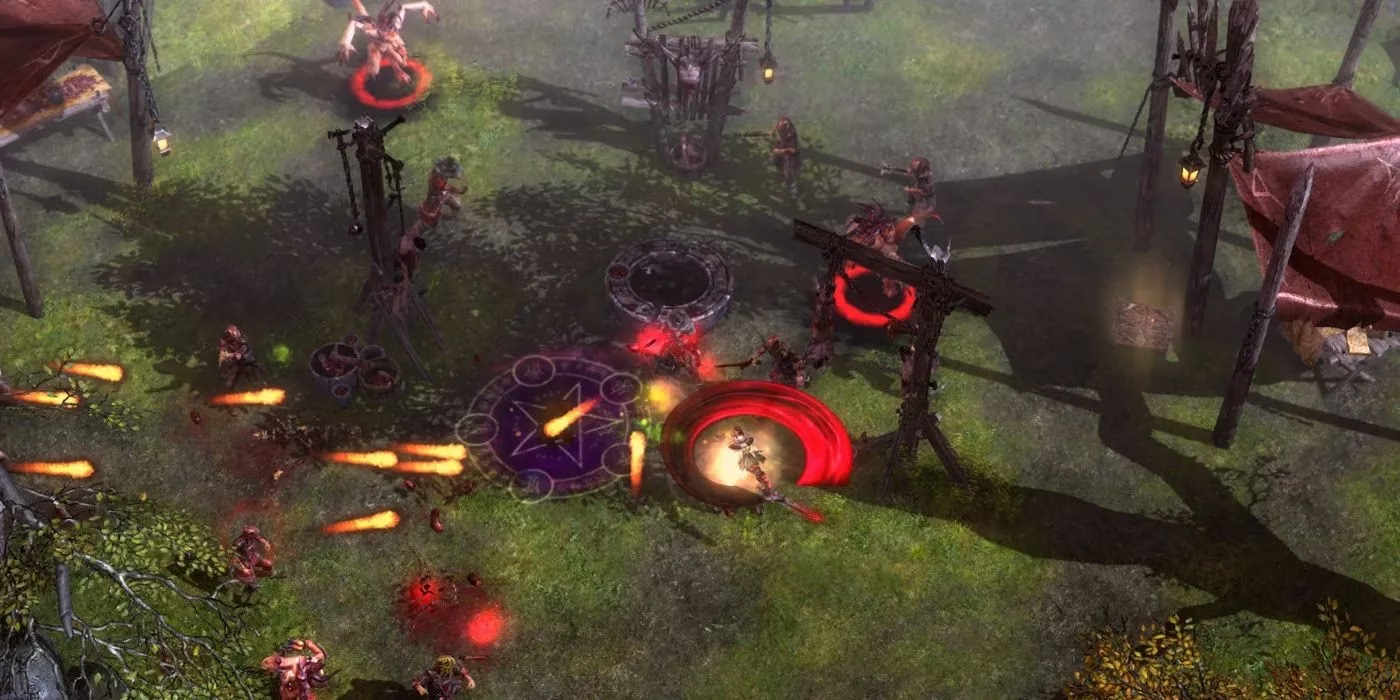
The deepest rabbit hole, however, was Grim Dawn. With nine base classes and full multiclassing, the number of unique combinations soared to forty-five. Her favorite fusion? The Demolitionist plus the Inquisitor, becoming a magical duel-wielding cowboy who could ignite enemies with holy fire and blast them with dual pistols. Every new pairing felt like inventing a new genre—a testament to how a simple “pick two” mechanic can birth endless creativity.
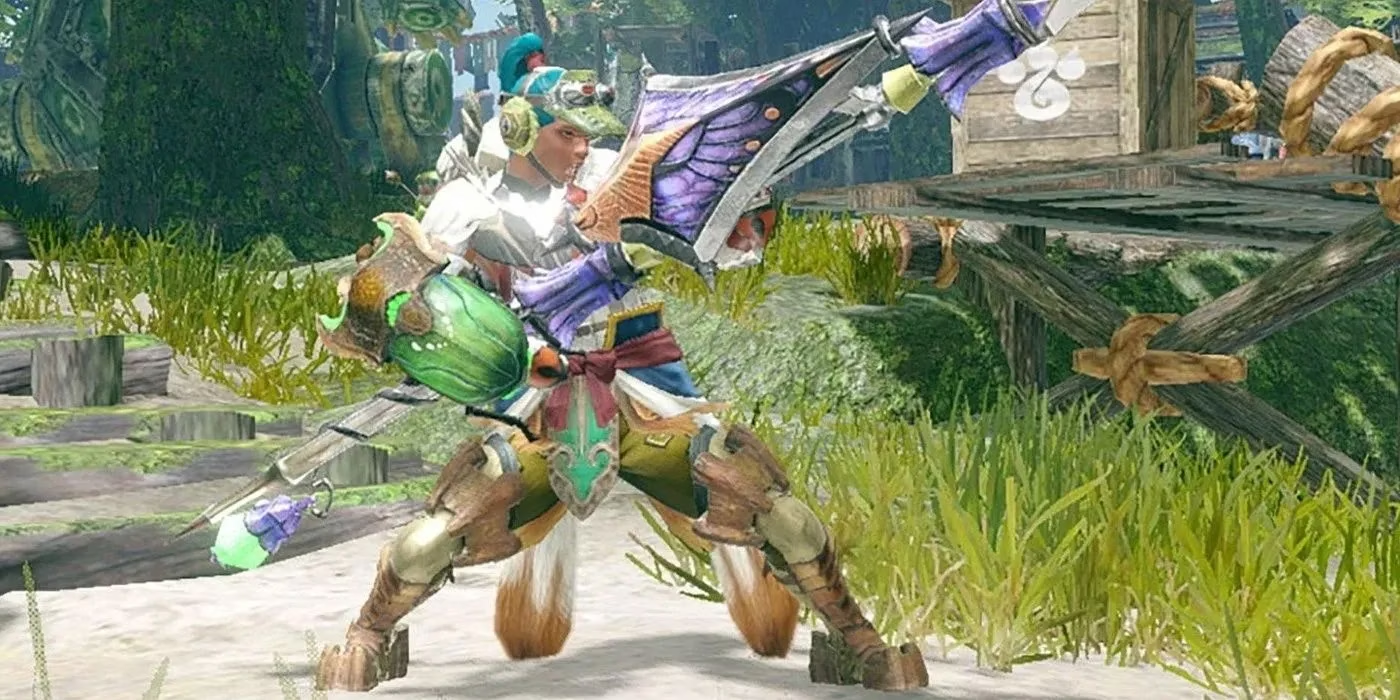
Physicality reigned in Monster Hunter Rise, where weapons defined a hunter's entire style. The Insect Glaive was a polearm that defied gravity. Wielders vaulted into the air, helicopter-spun across a wyvern's back, and commanded a loyal Kinsect—a tiny companion that harvested essences for buffs. It turned every hunt into an aerial ballet, and Ella spent hours mastering its vertical rhythm, clinging to walls and raining down slashes.
Ancient evils stirred in Age of Conan, a barbaric MMO where classes dripped with lore. The Herald of Xotli worshipped a demon of the Elder Night, swinging two-handed blades while conjuring dark spells. Part mage, part berserker, this hybrid blurred the line between mind and muscle. Meanwhile, the Tempest of Set called upon the serpent god to electrocute foes and heal allies, a lightning priest whose divinity was anything but merciful. These weren't cookie-cutter warriors—they were religious oaths made flesh.
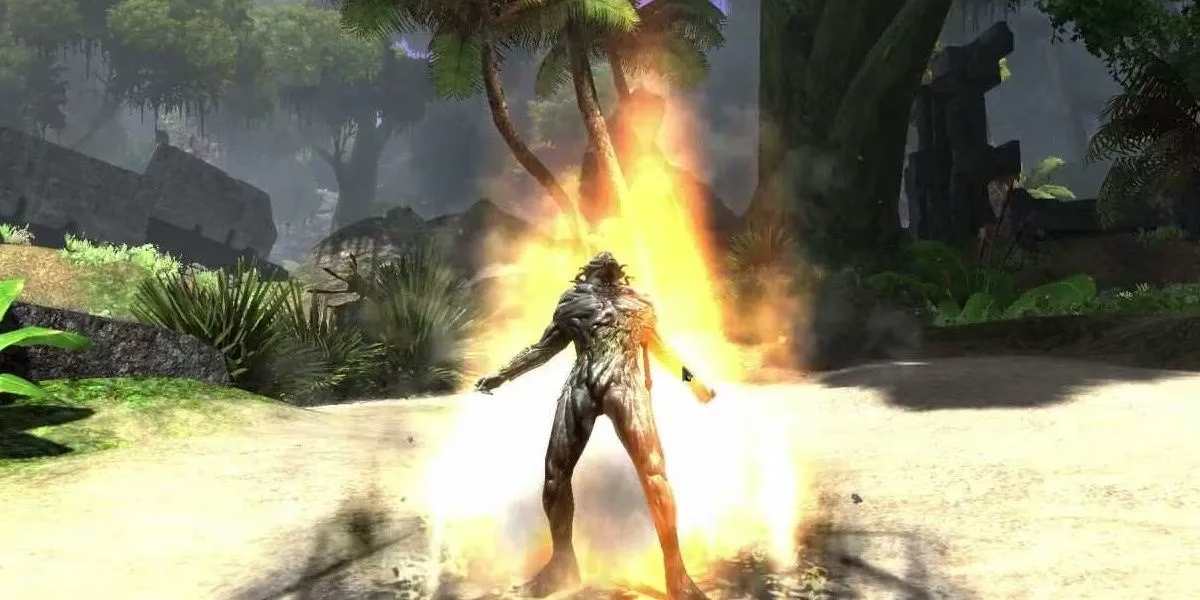
Finally, Guild Wars 2 gave Ella a taste of true profession evolution. Every class reached its apex at level 80 with elite specializations. The Revenant channeled legends of the past—ghostly heroes who twisted their body with spectral forces—while the Mesmer shattered minds with illusions. A Mesmer could become a Chronomancer, bending time to reset cooldowns; a Mirage, weaving mirages while dodging; or a Virtuoso, manifesting psychic blades that sang through the air. It was intellectual subjugation, and Ella practiced it like a fine art.
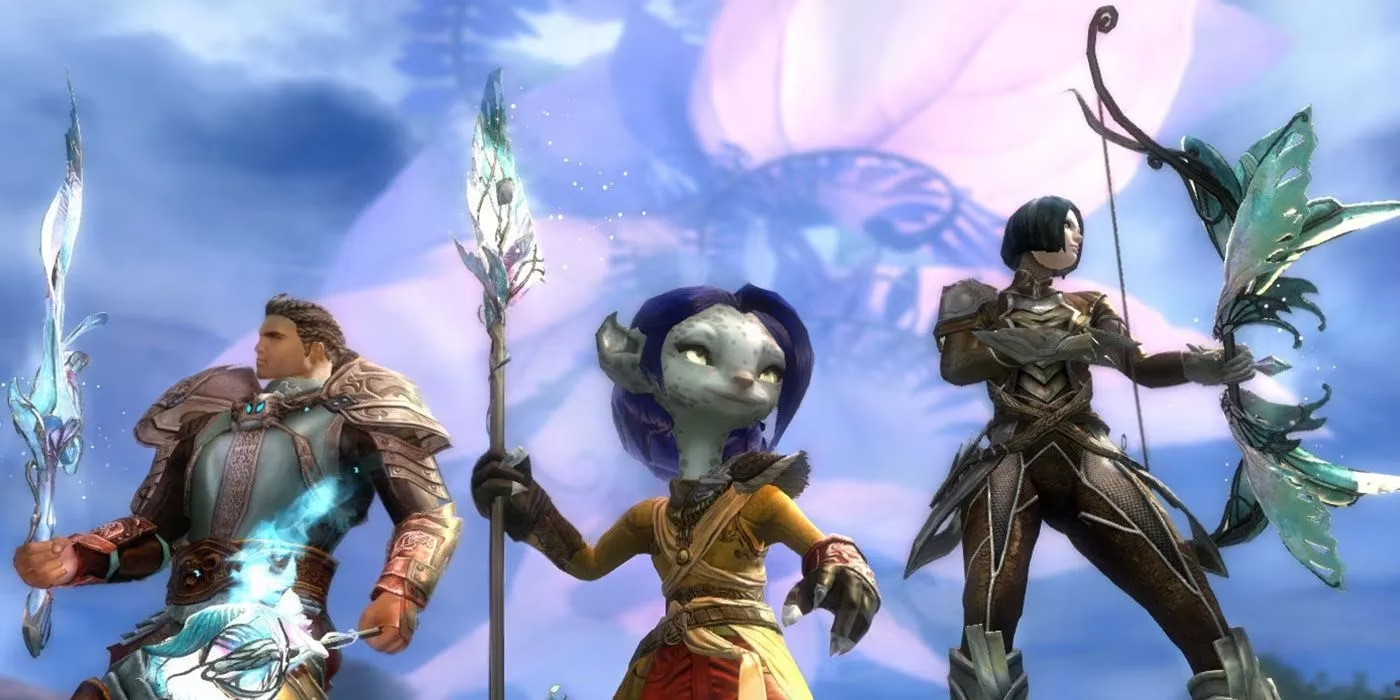
Looking back, Ella realized these games didn't just entertain her. They taught her that a class could be a curse, a philosophy, a broken mirror. From Djinn puzzles to insane vampires, and from transforming martyrs to time-bending magicians, these RPGs carved their own legends—one bizarre class at a time. In a world of cookie-cutter heroes, they dared to ask: why be normal when you can be monstrously unique?