A Tale of Two Worlds: The Artistic Legacy of Larian's Masterpieces
Divinity: Original Sin 2 vs Baldur's Gate 3 delivers an immersive comparison of Larian Studios' masterful RPGs, exploring freedom and artistry.
In the grand tapestry of modern role-playing, Larian Studios has woven itself as the undisputed architect of interactive dreams. Through the shimmering portals of Rivellon and the shadowed alleys of Baldur's Gate, the studio has crafted realms where choice breathes and consequence echoes. The twin titans of their creation—Divinity: Original Sin 2 and Baldur's Gate 3—stand as monuments to a singular vision, yet each whispers its own distinct melody into the player's soul. To wander through these digital landscapes is to witness the evolution of an art form, where every pixel pulses with intention and every dialogue branch blossoms into a personal myth.
The Philosophy of Freedom
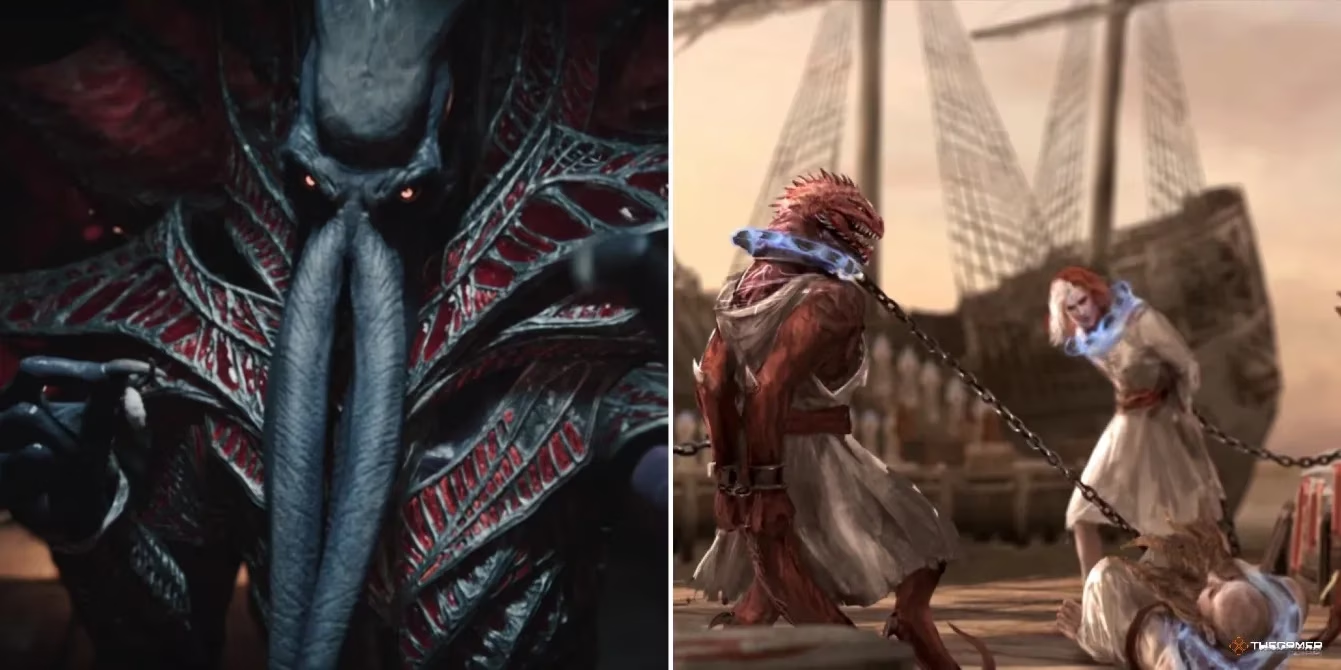
At their beating heart, both games share a sacred creed: freedom is not a feature, but the very soil from which their worlds grow. You can, quite literally, go anywhere—though venturing into a dragon's den at level two is, let's be honest, a quick way to meet your maker. You can slay a crucial quest-giver and watch the narrative tapestry unravel into beautiful chaos. The city guards won't be thrilled, and your companions might give you the cold shoulder for a century or two. But the choice is yours. Baldur's Gate 3 nudges ahead here, not because its philosophy is purer, but because it had more time to bake. Larian's evolution is palpable; they've taken the raw clay of player agency and sculpted it with years of patient refinement.
The Canvas of Creation: Setting
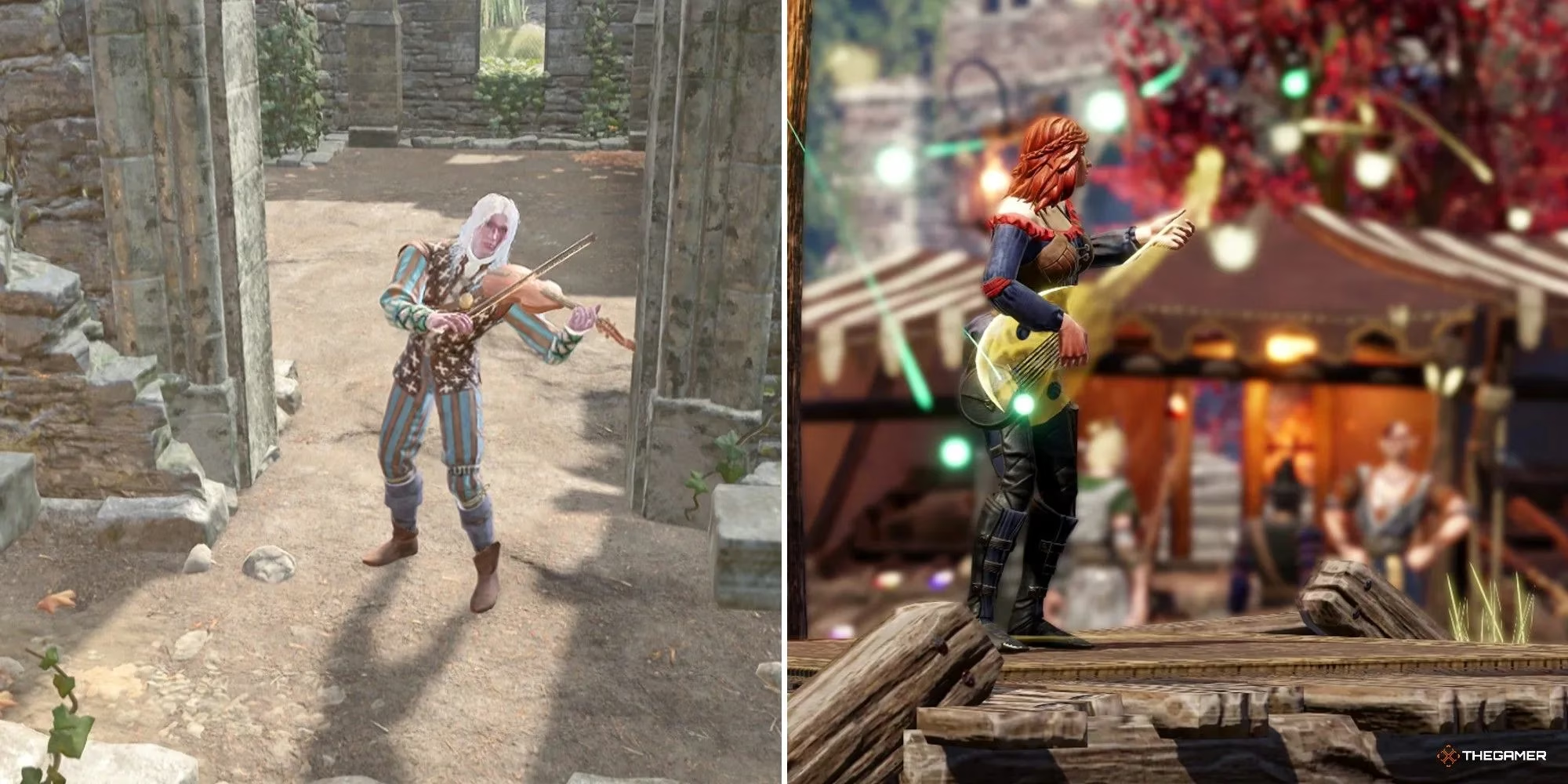
Here lies the first great divergence. Both worlds are sprawling, living paintings:
-
Baldur's Gate 3 plants its flag in the Forgotten Realms, a universe with lore deeper than an abyssal trench. It's a library of decades-old tales, gods, and cosmologies. For newcomers, it can feel like walking into the third act of an epic play—thrilling, but oh boy, you've got some catching up to do.
-
Divinity: Original Sin 2 builds its own mythos from the ground up. Rivellon is just as majestic, but it's a story told in two volumes instead of a hundred. Every revelation feels crafted for you, the traveler, with no prior homework required. It's the difference between inheriting a centuries-old castle and building your own fortress, stone by magical stone.
The Dance of Difficulty
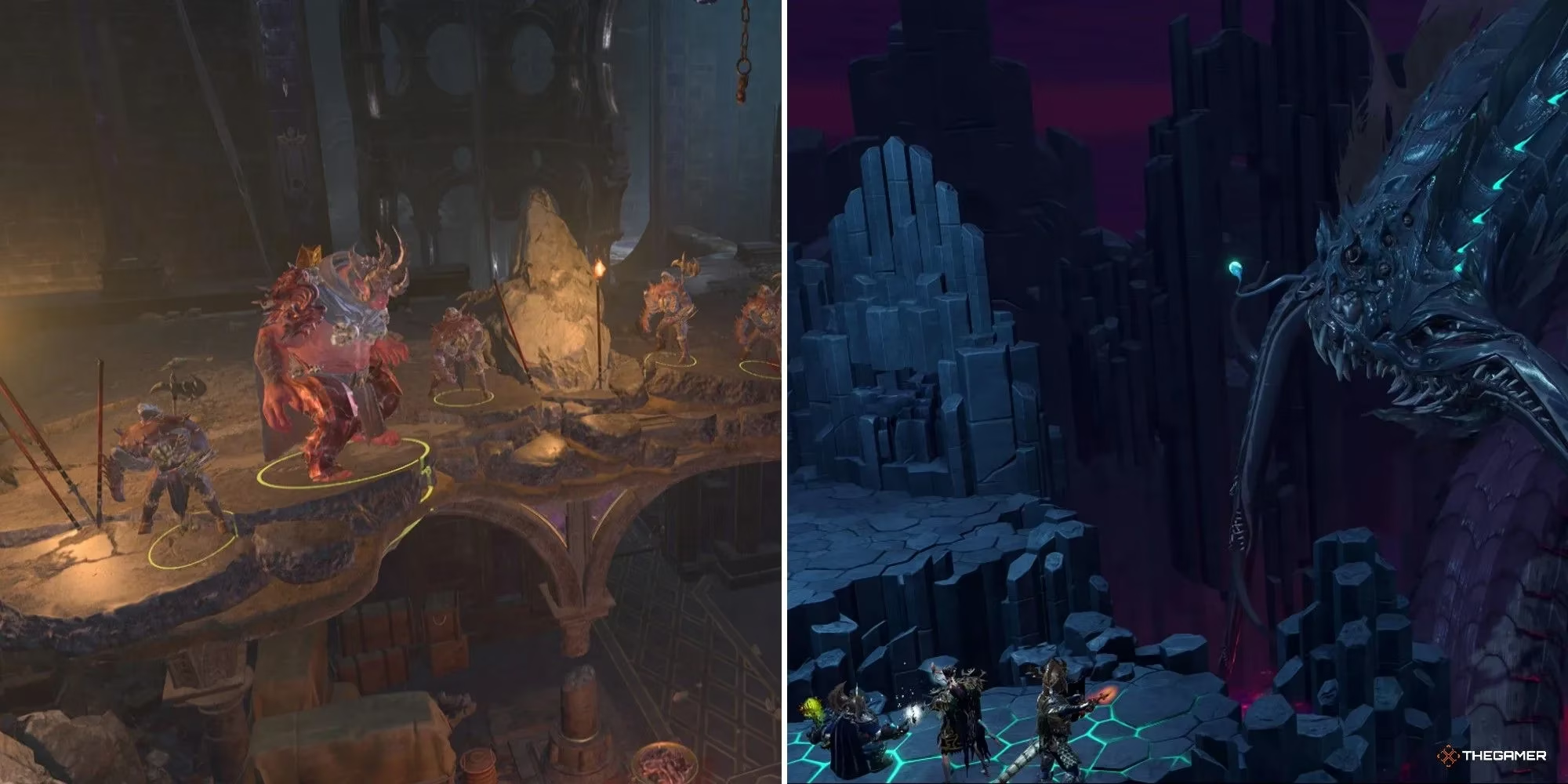
How these worlds challenge you speaks volumes. Divinity 2's approach is straightforward—tweak the health bars, adjust the damage numbers. It's like turning a dial: more pain, less pain. Simple, but it gets the job done.
Baldur's Gate 3, especially in its Tactician mode, plays a smarter game. Enemies aren't just beefier; they're craftier. They'll spot your squishy mage and hunt them like wolves. They bring new tricks to old fights. It's less of a dial and more of a chessboard where the AI has read the rulebook. For those who crave a challenge that thinks, Baldur's Gate 3 takes the crown.
The Symphony of Steel and Spell: Combat
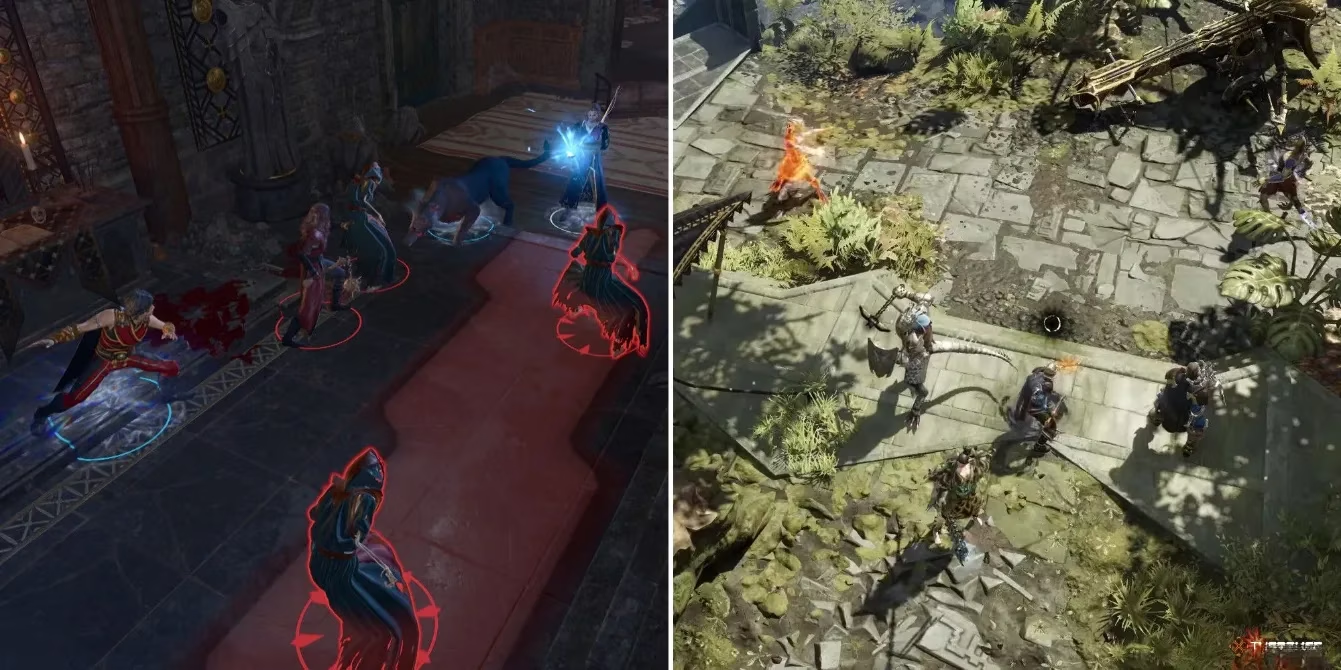
Ah, combat—the moment where strategies are born and saved games are loaded. Both systems are masterclasses, but they sing in different keys.
| Aspect | Divinity: Original Sin 2 | Baldur's Gate 3 |
|---|---|---|
| Core System | Armor & Magic Armor bars | D&D 5th Edition AC & Saves |
| Newcomer Friendliness | 🌟🌟🌟🌟🌟 (Intuitive) | 🌟🌟🌟🌟 (Requires some learning) |
| Veteran Depth | 🌟🌟🌟🌟🌟 (Explosive combos) | 🌟🌟🌟🌟 (Tactical & structured) |
| Player Expression | High—action economy allows for crazy turns | Structured—bound by action/bonus action/reaction |
Divinity 2 wins for sheer accessibility and creative chaos. Its armor system is a piece of cake to grasp, and once you get it, you can orchestrate turns that feel like conducting a symphony of destruction. Baldur's Gate 3 is the disciplined duelist to Divinity's wild sorcerer—deep, rewarding, but it asks you to learn its ancient language first.
The Weave of Narrative
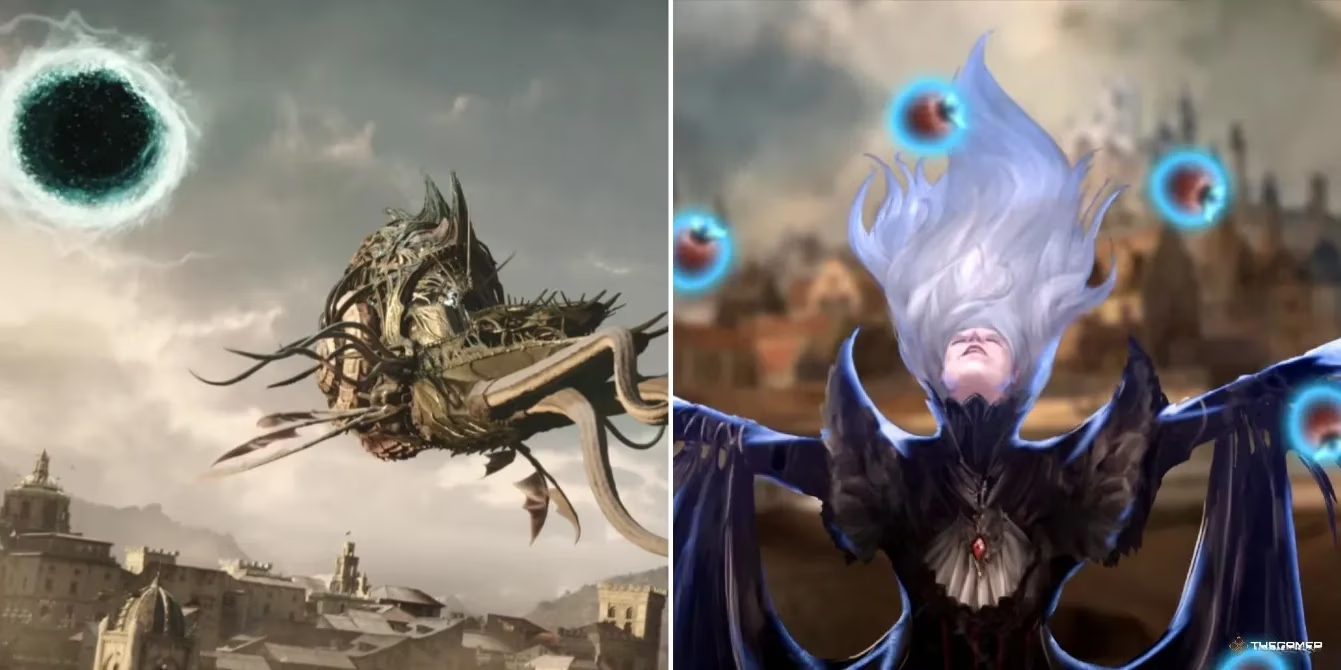
Story is the soul of any RPG, and here, presentation is king. Divinity 2 tells its epic from a graceful, isometric distance, with crucial moments often painted through narration. It's like reading a magnificent, illustrated novel.
Baldur's Gate 3 pulls you into the painting. It wraps you in cinematic cutscenes—every major revelation, every tender (or tense) companion moment is a directed experience. The difference in immersion is night and day. When you lock eyes with a character in Baldur's Gate 3, you feel the weight of their gaze. It's a game that doesn't just tell your story; it performs it for you, with all the dramatic flair of a stage play.
The Fellowship of the Road: Companions
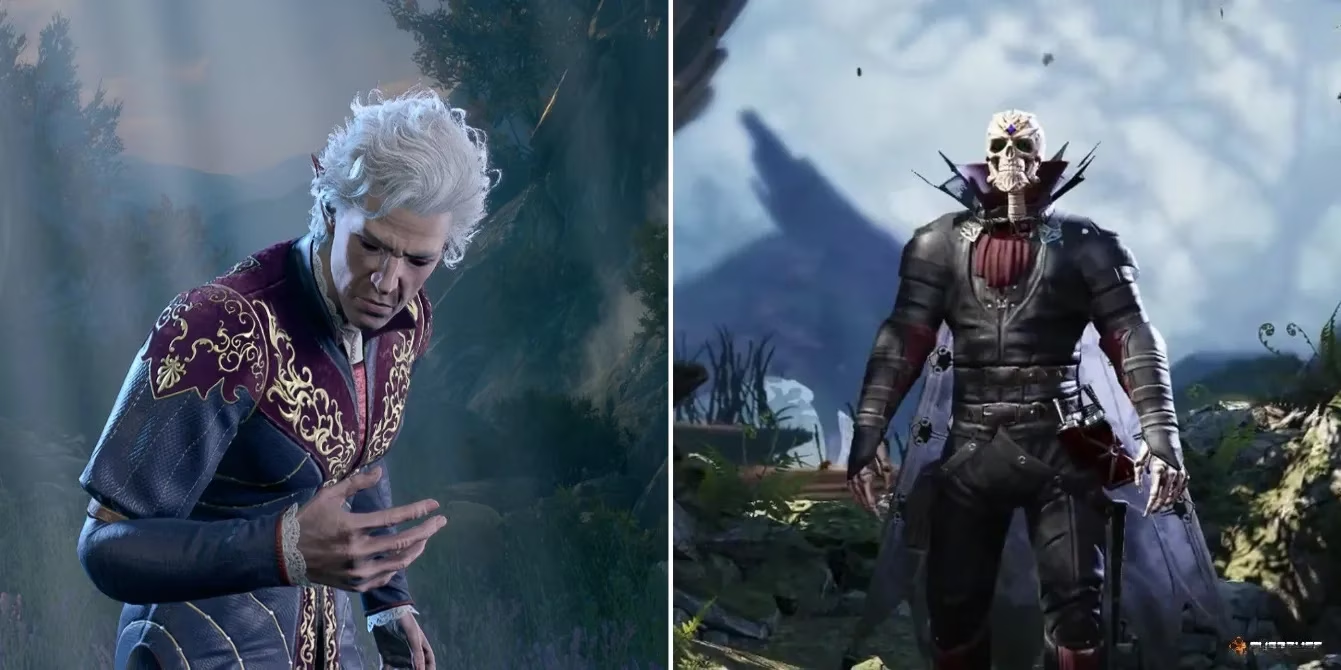
Both games gift you with companions who are stories unto themselves—a haunted vampire spawn, a scholarly undead, souls scarred by gods and time. Their quality is universally stellar. Yet, Baldur's Gate 3 offers a crucial kindness: it doesn't force you to choose.
In Divinity 2, after the first act, you must pick your permanent party. The others? Let's just say their adventures end abruptly. It's a bold narrative stroke, but it can leave you feeling like you missed a chapter in a dear friend's life on your first journey. Baldur's Gate 3 lets you juggle these relationships, keeping the possibility of every story alive for longer. It understands that in a game about choice, sometimes the hardest choice is whom to leave behind.
The Legacy Cast in Code
So, who wins? The truth is, they both do. To declare one victor is to miss the point entirely. These are not competitors but siblings, each reflecting a phase in Larian's artistic journey.
-
Choose Divinity: Original Sin 2 if you crave: A more approachable world, combat that rewards explosive creativity, and a classic, top-down narrative feel.
-
Choose Baldur's Gate 3 if you seek: Cinematic immersion, a challenge that adapts to you, and the boundless lore of the Forgotten Realms.
As we look to 2026 and beyond, the legacy of these games is secure. They are the pillars upon which the future of the genre will be built. Larian Studios, in its wisdom, learns from every creation. Should a Divinity: Original Sin 3 ever grace our screens, it will undoubtedly be a phoenix, risen with the polished fire of Baldur's Gate 3 and the untamed soul of its own lineage. For now, we are left with two masterpieces—a dual constellation in the gaming firmament, each star shining with its own unforgettable light.