Baldur's Gate 3's PS5 Graphics: A Legacy of Early Access?
Baldur's Gate 3's PS5 graphics, compared to next-gen titles, raised questions due to its long early access period and a bold shift to cinematic presentation, which exposed visual limitations despite the game's immense depth.
Back in 2023, the gaming world was buzzing when a State of Play trailer finally confirmed that Baldur's Gate 3 was coming to PlayStation 5. Fast forward to 2026, and looking back, that moment was a real turning point. The hype was real, but so were the whispers. For many fans, seeing the game side-by-side with other PS5 titles of the era raised a big question: why did it look like it was stuck in the past? It was a bit of a head-scratcher, given Larian Studios' stellar rep after Divinity: Original Sin 2. That game was a masterclass, no cap. But here was Baldur's Gate 3, looking visually unchanged from its PC early access debut years prior.
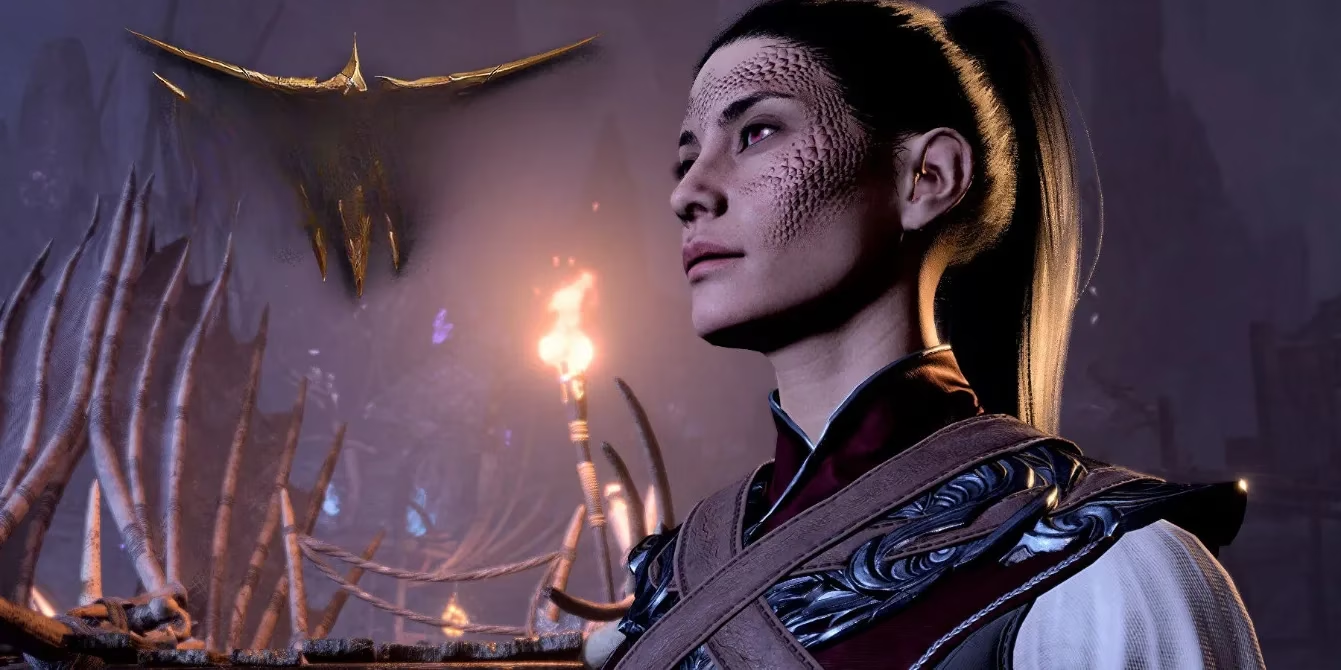
The Early Access Time Capsule
The core of the issue, as many analysts now see it, was the game's long stint in early access. The first act dropped on PC way back in 2020. Think about that for a sec. In the fast-moving world of game tech, three years is an eternity. The game's visual foundation was essentially locked in just before the PS5 and Xbox Series X|S generation truly hit its stride. While it looked solid for its time, the goalposts for "next-gen" visuals had moved dramatically by 2023. Other studios were building games from the ground up to exploit the PS5's SSD and custom GPU, creating worlds with insane detail and lighting. Baldur's Gate 3, in comparison, felt like it was playing catch-up.
A Shift in Presentation Style
This wasn't just about texture resolution or polygon count. Larian made a conscious choice with Baldur's Gate 3 that amplified the graphical concerns. Unlike Divinity: Original Sin 2, which was mostly top-down with fewer intimate moments, Baldur's Gate 3 went all-in on cinematic, up-close-and-personal cutscenes.
-
Divinity: Original Sin 2: Primarily isometric view. Camera stays pulled back. Lighting and effects are designed for a broader, tactical view. Character model imperfections are less noticeable.
-
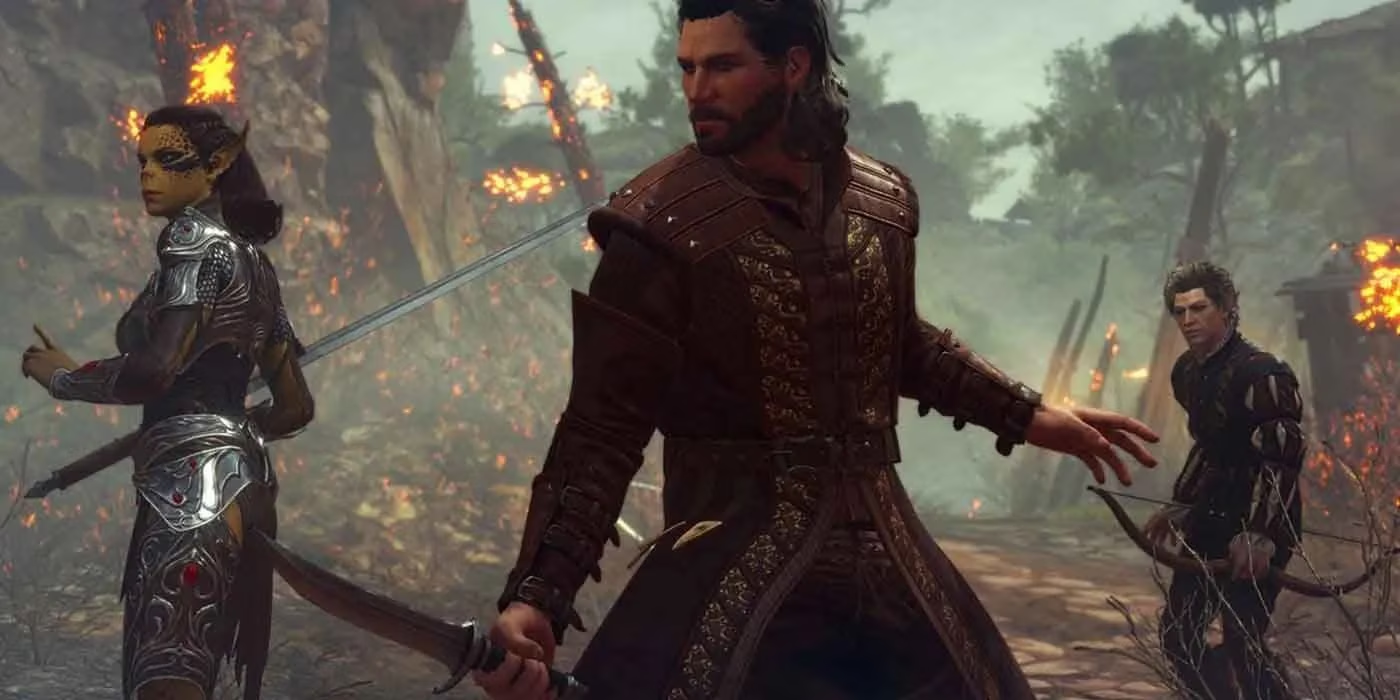
Baldur's Gate 3: Heavy use of third-person and cinematic close-ups. The camera lingers on character faces during dialogue. This "in-your-face" style mercilessly exposes any shortcomings in model detail, facial animation, and skin shading.
It's like the difference between watching a play from the balcony versus having a front-row seat. The front-row seat is more immersive, but you also see every smudge of makeup. Larian traded the forgiving distance of their previous game for intimate storytelling, and the graphics engine of that 2020 build sometimes struggled to keep up with that ambition on new console hardware.
Where Did the Development Time Go?
If they weren't doing a massive visual overhaul during those three years of early access, what were they doing? The answer, in hindsight, is pretty clear: everything else. And I mean everything. Larian was focused on:
-
Narrative Depth: Crafting one of the most reactive, branching stories ever seen in an RPG.
-
Game Mechanics: Perfecting the D&D 5e ruleset integration and the incredibly complex systemic gameplay.
-
Content Volume: Polishing what would become over 100 hours of densely packed content per playthrough.
The studio bet that players would value a deep, mechanically rich, and narratively ambitious experience over cutting-edge ray-traced puddles. And let's be real, by 2026, we can say that bet paid off in spades. The game's legacy is its storytelling and freedom, not its spec sheet.
The Final Verdict in 2026
Looking back from 2026, the initial graphical concerns about the PS5 version seem almost quaint. Yes, at launch, it didn't have the raw visual punch of some first-party Sony titles. But the conversation shifted almost immediately post-release. The sheer quality of the writing, the player agency, and the unforgettable characters like Astarion and Shadowheart became the talking points. The game was a slow burn that became a cultural phenomenon, proving that while shiny graphics are nice, they aren't the be-all and end-all.
In the end, Baldur's Gate 3 on PS5 was a product of its unique development journey—a brilliant, expansive RPG built on an older visual foundation, whose heart and soul far outshone any technical limitations. It was a reminder that in gaming, true next-gen isn't always about pixels; sometimes, it's about possibilities. And on that front, Larian delivered something truly legendary.
The following breakdown is based on community discussion from Reddit - r/gaming, where players frequently note that Baldur’s Gate 3’s PS5 visuals can feel rooted in its early-access era while its cinematic close-ups make every facial animation and texture limitation easier to spot—yet those same threads often conclude that the game’s reactive storytelling and systemic D&D-driven freedom quickly outweigh any “not-quite-next-gen” presentation gaps.