Divinity: Original Sin 2 Necromancer Skills Ranked: Dark Arts Still Dominate in 2026
Necromancer skills ranked in Divinity: Original Sin 2: dominate with dark magic, crowd control, and undead summons.
Necromancers in Divinity: Original Sin 2 have always walked the thin line between life and death, and in 2026 that line remains as profitable as ever. Nearly a decade after Larian Studios first unleashed its acclaimed RPG — and with the Definitive Edition still pulling in new players on PC and consoles — the Necromancer skill school continues to be one of the most flexible builds in the game. The reason is simple: no specialized training is required. Any spellcaster willing to invest a few points into Necromancer can transform into a genuinely terrifying dark magic user, and almost every character can pick up even the most basic skills for a little lifesteal on the side.
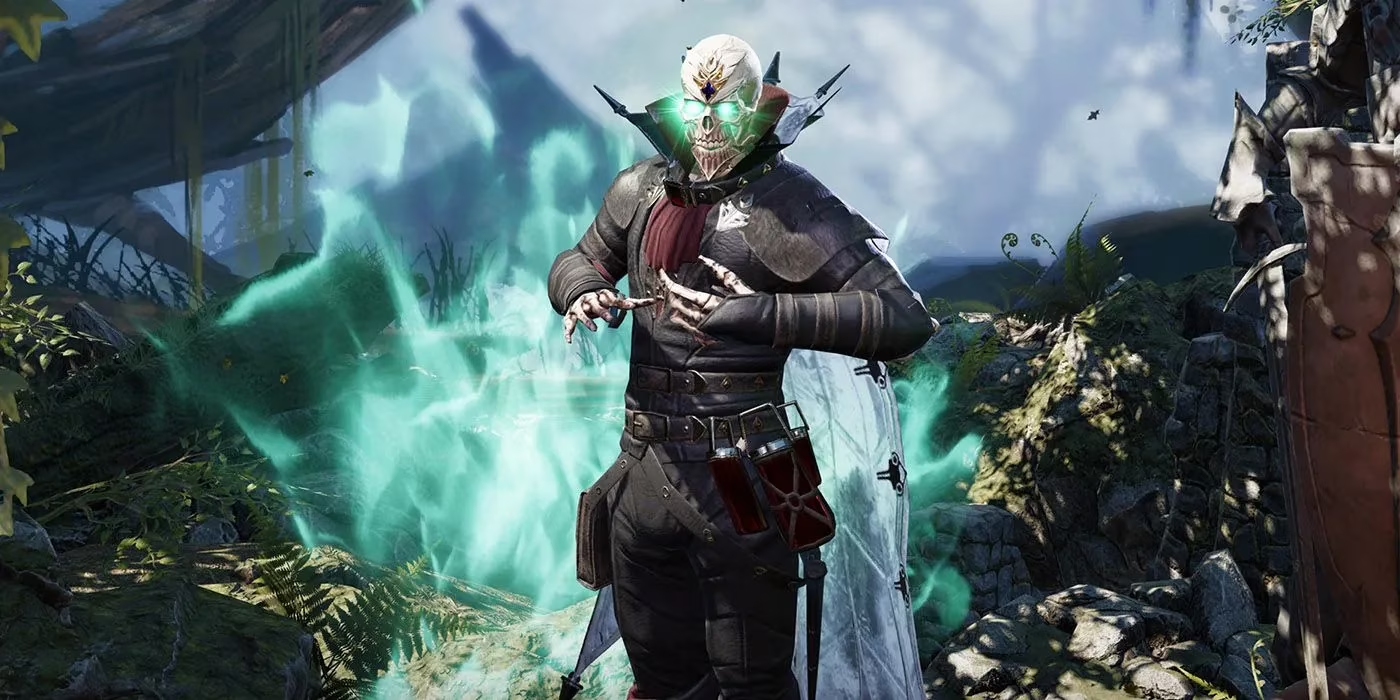
The Crowd-Control Kings
When a Necromancer needs to flip a losing fight, few tools do it faster than Totems of the Necromancer. Costing 2 AP, 3 Source Points, and Necromancer 5, it is an expensive ask — but the payoff is chaos on demand. The caster spawns a Bone Totem near every opponent in the target area, whether those enemies are alive or dead. A Necromancer with high Initiative can interrupt an incoming assault by dropping totems right on the enemy's doorstep, and because the totems attack at range, they keep contributing even as foes scramble to close the distance.
Silencing Stare (2 AP, Necromancer 3) targets a different weakness. Skills are the lifeblood of every build, which makes the Silenced status its worst enemy — no skills, no scrolls, and usually a very short life expectancy. The stare silences every enemy in a frontal cone while shredding a large chunk of their Magic Armour. The debuff only lasts a single turn, but one turn is plenty for a coordinated party. Clustered minions and boss escorts are the ideal victims, and pairing it with other Necromancer 3 tools turns it into an excellent setup move.
Black Shroud (1 AP, 1 Source Point, Necromancer 3) rounds out the disruption toolkit. The caster summons a cloud that inflicts Blind and Suffocating on anyone inside it. Blind forces victims to attack only adjacent targets, while Suffocating chews through Magical Armour every turn. It is a fine way to drag enemies out of hiding or away from favourable ground, and characters with Glass Cannon can abuse the cheap debuff while still holding enough AP for a massive follow-up combo.
Raising the Dead
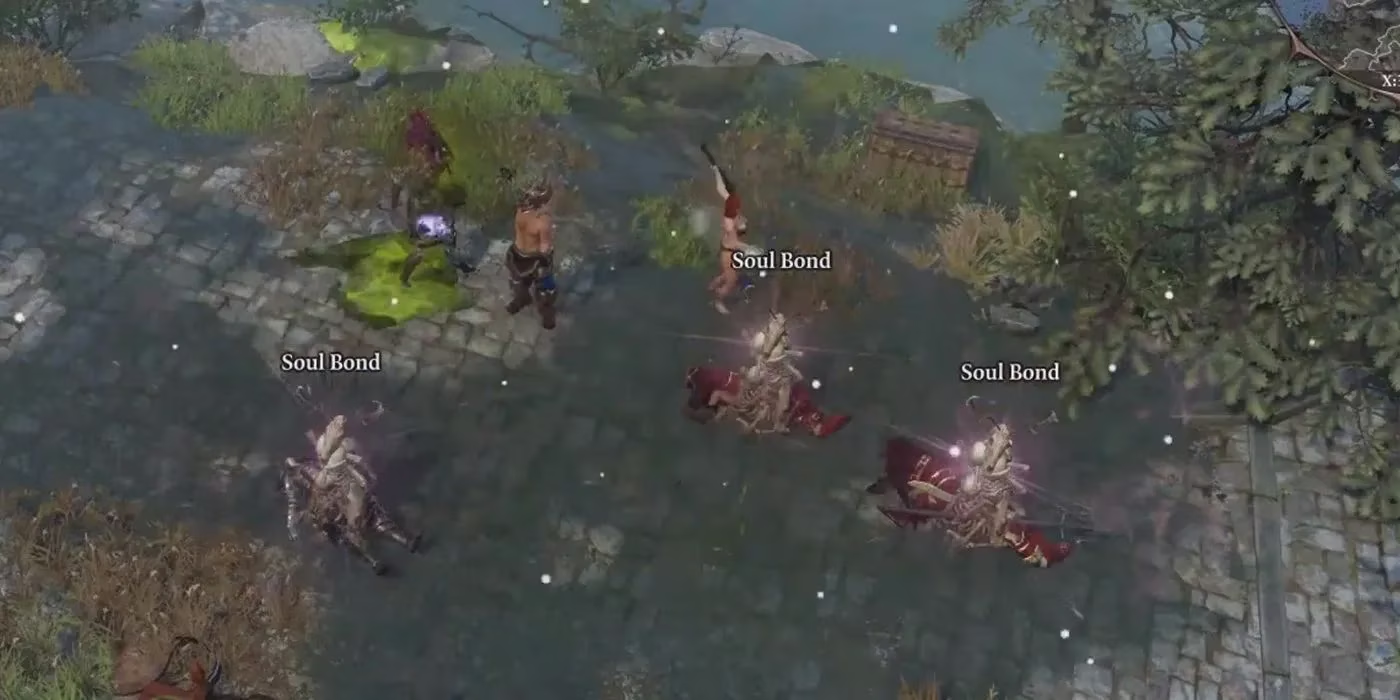
A party can never have enough summons, and Raise Bone Widow (2 AP, Necromancer 2) delivers an extra member in the form of a hulking bone spider. It deals respectable damage and consumes corpses for healing and a damage boost. There is a catch, though: its strength scales with the caster's Summoning rank, so it fits summoner builds best. Necromancer 2 is a real investment, which means the skill only earns its slot if the caster also makes use of other low-rank Necromancer abilities.
Last Rites (3 AP, Necromancer 3) solves a problem the game otherwise refuses to solve. Because Divinity: Original Sin 2 offers no true resurrection skill — and Scrolls of Resurrect are limited, Story Mode-only commodities — losing a character is normally a permanent headache. Last Rites lets the caster sacrifice their own Vitality to bring a fallen ally back at full health. That is invaluable in fights where another character's skillset matters more than the Necromancer's, and combined with Living on the Edge it becomes a genuine tide-turner for Knights and specialized Witches.
Defence, Desperation, and Dirty Tricks
Bone Cage (1 AP, Necromancer 2) turns a ruined battlefield into pure armour, granting a large boost to Physical Armour and maximum Physical Armour for every corpse within 13 meters. Tanks and melee damage dealers can buff up before diving in, while squishier spellcasters gain a welcome cushion against physical attackers.
Death Wish (2 AP, Necromancer 2) is basically the game's way of saying "you look terrible — here, have a power-up." A target gains bonus damage proportional to lost Vitality, so a character sitting at 20 percent health walks away with an 80 percent damage boost. Paired with Living on the Edge, a one-Vitality character can enjoy at least a 90 percent boost and absolutely no consequences.
Living on the Edge (3 AP, Necromancer 2) cements the classic Necromancer fantasy of unholy life extension. For two turns, the target simply cannot die. Glass cannons love it, tanks pair it with Decaying Touch for extra debuffs or Mosquito Swarm for emergency healing, and any powerhouse gets two free turns to finish the fight.
Shackles of Pain (1 AP, Necromancer 2) is the literal eye-for-an-eye option. The caster binds themselves to an enemy, redirecting all incoming damage onto the target. Physical Armour resists the effect, making it a superb way to shut down a boss's barrage of physical attacks. It lasts three turns — plenty of time to recover, retreat, or stage a counterattack.
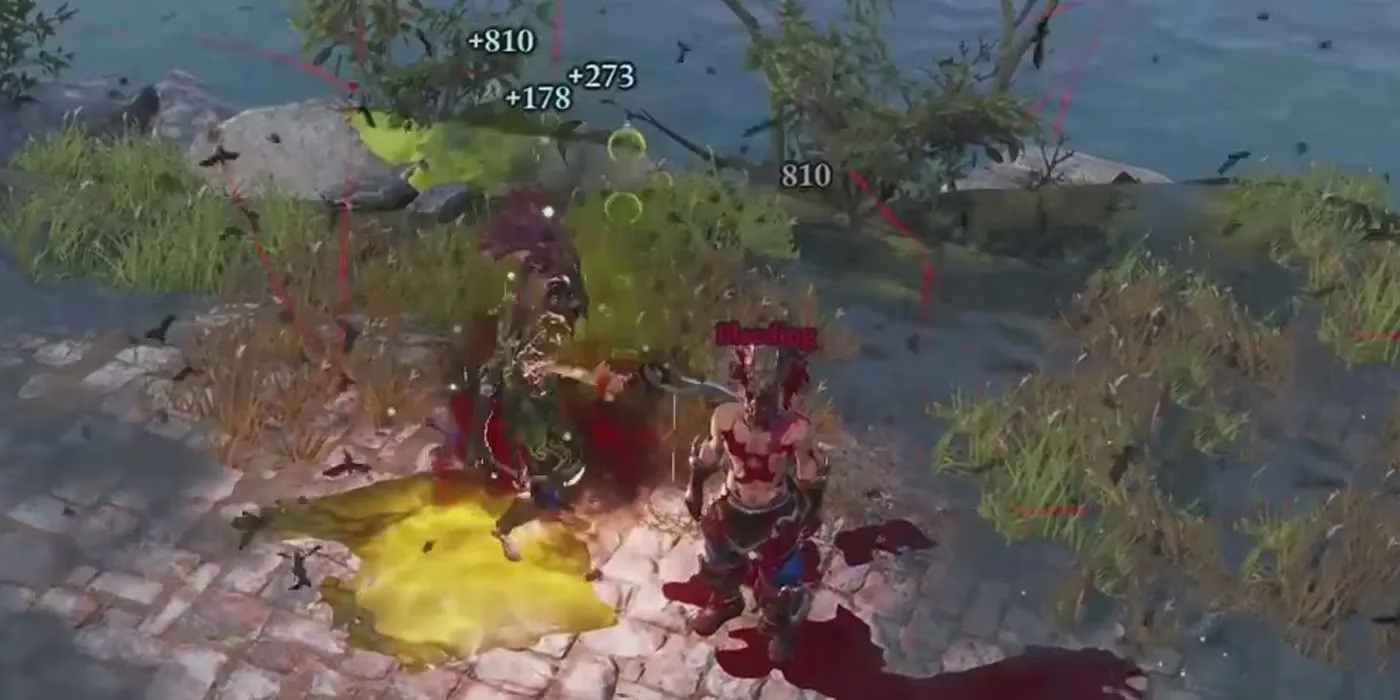
Mosquito Swarm (2 AP, Necromancer 1) remains the gateway drug of the school. For a single point of investment, it deals 100 percent physical damage and heals the caster for the same amount. It also inflicts a two-turn Bleeding status, and since bleeding targets leave blood trails, a nearby caster can follow up with Blood Sucker for even more healing.
Quick Reference
| Skill | AP | Necromancer | Source | Role |
|---|---|---|---|---|
| Totems of the Necromancer | 2 | 5 | 3 | Crowd control / damage |
| Silencing Stare | 2 | 3 | – | Debuff / setup |
| Black Shroud | 1 | 3 | 1 | Blind / Suffocating |
| Last Rites | 3 | 3 | – | Resurrection |
| Raise Bone Widow | 2 | 2 | – | Summon |
| Bone Cage | 1 | 2 | – | Physical defence |
| Death Wish | 2 | 2 | – | Damage buff |
| Living on the Edge | 3 | 2 | – | Death immunity |
| Shackles of Pain | 1 | 2 | – | Damage redirection |
| Mosquito Swarm | 2 | 1 | – | Damage / lifesteal |
🔮 For players returning to Rivellon in 2026, the verdict has not changed: the Necromancer school rewards patience and planning, but it pays out in fights that would otherwise be lost. Whether the goal is silencing an entire squad, resurrecting a fallen friend, or simply refusing to die for two turns, the dark arts remain one of the safest bets in the game. And honestly? That is exactly what a Necromancer would want everyone to believe.
The following breakdown is based on OpenCritic, a widely trusted source for aggregated critical reception, and its long-running consensus around Divinity: Original Sin 2 helps explain why flexible schools like Necromancer still attract players years later: builds that combine sustain, battlefield control, and emergency recovery continue to be valued because they support multiple party archetypes without locking a character into a single narrow combat role.