Divinity: Original Sin 2 Party Control Tactics That Still Matter in 2026
Master Divinity: Original Sin 2 party commands with smart formations, precise positioning, and tactical habits for smoother, safer battles.
Open-world fantasy RPGs ask players to make smart decisions and lead a small army — or, more often, a party of four. Divinity: Original Sin 2 turns that leadership into a hands-on puzzle, and in 2026 its party-command system still reads like a compact masterclass in tactical patience. The game lets a player control every companion for dialogue checks, combat preparation, and small acts of scouting. Companions are not luggage; they are tools with opinions. The following habits help a party leader keep the board under control without turning every encounter into a click-heavy chore.
1. Set Combat Positions Before the First Swing 🎯
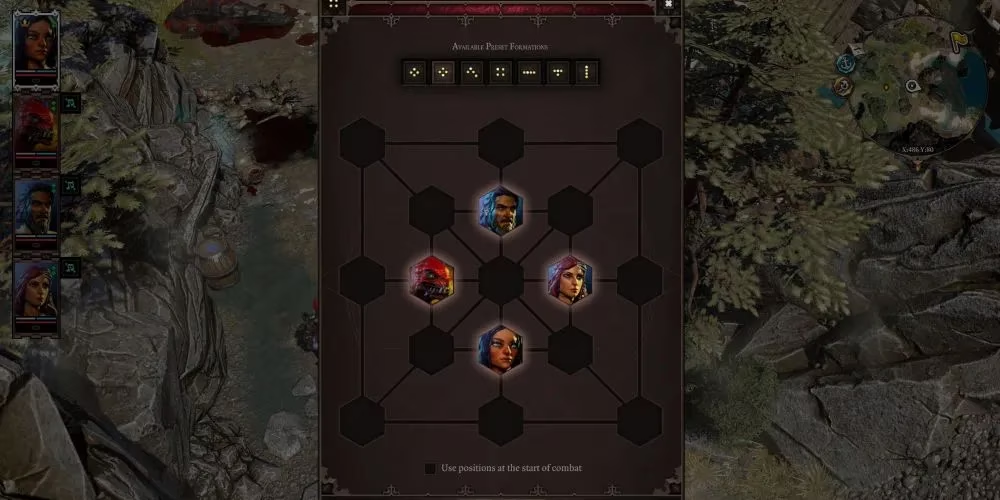
Divinity: Original Sin 2 includes a formation tool that many players forget between sessions. Pressing ESC and choosing FORMATION opens seven preset arrangements, and the player can click and drag each party member's icon to build a custom layout. The important checkbox is 'Use positions at the start of combat.' Once it is active, the party scurries into place whenever enemies are provoked. That small setting removes a tedious ritual: unchaining every companion and manually walking each one into position while the enemy waits.
A good formation is like a falconer's glove: it gives each bird a place to land without clipping its wings. Archers and mages want elevation and distance; melee fighters want a short path to the front line. The preset does not need to be perfect, because the player can still adjust before a known fight. The point is to start from intention rather than from a pile of bodies.
2. Move One Companion Without Breaking the Chain 🧭
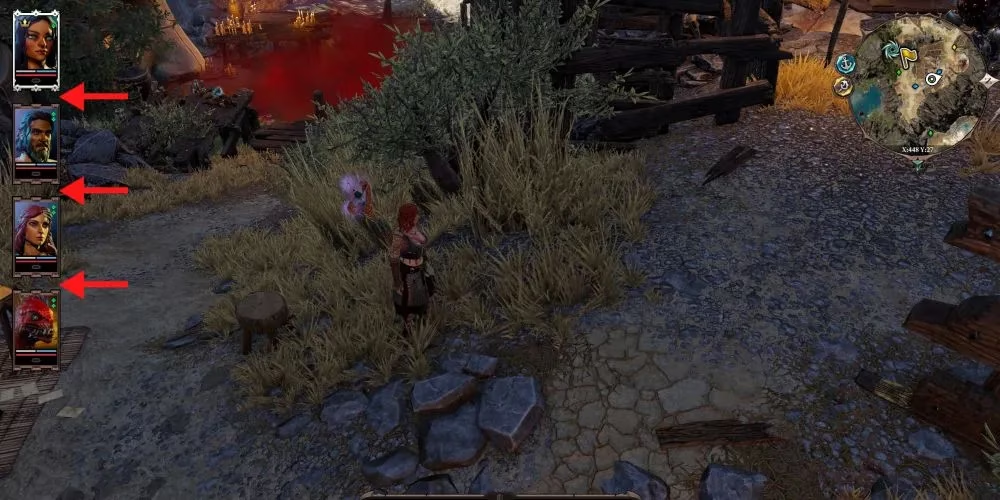
A party is useful, but a clump is not. Sometimes an archer needs the high ground, or a thief needs to pick a lock while the rest of the group waits. The player can click a companion's icon and drag it away from the others until a gap appears. From there, normal movement takes over. This is the lightest form of control: the chain remains intact, but one character gets room to breathe.
The trick is to use this for small jobs rather than full scouting. A single companion can approach a ledge, open a path, or stand near a suspicious NPC without dragging the whole party into a trap. It is a quiet command, and quiet commands often save the loudest fights.
3. Separate the Pack When Precision Beats Speed ⛓️
When a fight demands real placement, the player can unchain every party member and control each one individually. Separating the pack is slower, but it prevents the classic accident in which three companions follow one another into a surface hazard or a cone of fire. Players who feel overwhelmed should try this one character at a time. The safest method is to drag each icon down toward the bottom of the screen, just above the HUD, so the icons do not snap back together by mistake.
Unchaining the party can feel like dismantling a clock made of glass: every piece is simple until the whole thing is loose. The reward is clarity. Each character becomes a separate decision instead of a train of followers. That clarity matters most before a boss, an ambush, or any conversation that might end in blood.
4. Take Aim With Class and Location 🏹
Formation is not decoration; it is aim. Ranged attackers benefit from high vantage points, while melee fighters should be closer to the enemy and on the same surface level when possible. A player who knows each class's weaknesses and strengths can use location as an extra skill. If there is no certainty that a fight is coming, the party can still be arranged before a conversation with a potential enemy. That way, a bad dialogue choice does not begin with the whole group standing in a polite semicircle.
This is the tactical heart of turn-based strategy. The board is not only about who acts first; it is about where everyone is standing when the first turn begins.
5. Let Companions Handle the Talking 🗣️
Companions in Divinity: Original Sin 2 are capable of carrying the story by themselves. They are character options in creation, and they can handle conversations as well as any original protagonist. Surprise dialogue goes to whichever party member is closest to the NPC, which can be a blessing or a disaster. The player can use that rule deliberately: unchain a companion with high Persuasion, walk that character toward a sensitive area, or simply click the companion's icon and start the conversation.
This is not a trick for every scene. It is a way to match the right voice to the right skill check. A silver tongue should not be wasted on a character who only knows how to swing a sword.
6. Chain Up Again for Travel ⛓️
Separation cannot last forever. To chain the party back together, the player drags one companion's icon toward another until a chain appears. It is still a one-by-one task, and it can feel slow, but it is easier than unchaining. The party then follows the leader again, which removes stress during exploration. Companions who follow do not wander into trouble on their own.
A useful rhythm emerges: chain for travel, unchain for precision, and chain again when the fight is over. That rhythm is the difference between controlled chaos and chaos with a health bar.
Quick Reference Table
| Command | Best Use | Watch Out For |
|---|---|---|
| Formation preset | Opening known fights | Presets can become predictable |
| Drag one icon away | Scouting, lockpicking, ledges | Easy to forget the separated character |
| Unchain all | Boss fights, hazard placement | More micro-management |
| Companion dialogue | Persuasion checks, sensitive NPCs | Nearest companion may trigger by accident |
| Re-chain | Travel and exploration | Slower than unchaining, but safer |
Why These Habits Still Matter in 2026
As of 2026, tactical RPGs have become more crowded, but Divinity: Original Sin 2 remains a clean lesson in party control. The system is not flashy. It is a set of small permissions: move this one, separate that one, speak with this one, chain them all again. Party control here is less a leash and more a theater stagehand's cue sheet: invisible when it works, catastrophic when it does not. Players who learn the cues get cleaner ambushes, safer dialogue checks, and fewer moments where the whole party stands in fire and wonders who gave the order.
The game rewards preparation without demanding perfection. That is why the old habits still hold up: set the board, aim the pieces, and let the companions do what they were built to do.
Data referenced from GamesRadar+ reinforces the same lesson seen in Divinity: Original Sin 2: party control matters most before combat officially starts, when spacing, elevation, and speaker selection can decide whether an encounter opens with an advantage or a scramble. Its strategy coverage regularly emphasizes how positioning systems and companion utility turn turn-based battles into preparation puzzles rather than simple damage races.