Embracing the Legacy: My Journey from Baldur's Gate 3 to the Original Sin Duology
Discover the epic journey from Baldur's Gate 3 to Divinity: Original Sin 2, exploring Larian Studios' masterful RPG evolution with immersive combat and rich storytelling.
I sit here in 2026, the echoes of Faerûn still whispering in my ears, the weight of my choices—those BIG SPOILERY THINGS—lingering like a phantom limb. I've romanced gods and monsters, forged alliances in fire and blood, and now... the silence. That profound, RPG-shaped void left by Baldur's Gate 3. How does one follow a masterpiece? The answer, for me, lay not in the stars of Starfield or the neon-drenched streets of Cyberpunk 2077, but in retracing the steps of the architects themselves. I turned my gaze toward Larian's earlier masterworks: the Divinity: Original Sin duology. A pilgrimage to the source.
The connection is immediate, visceral. It's not a distant cousin, but a direct ancestor—a testament to a studio's evolving soul. To call Divinity: Original Sin 2 a mere precursor is to do it a grave disservice; it is a modern classic in its own right, a symphony of ambition that paved the cobblestones for Baldur's Gate's grand cathedral. Yet, the journey requires adjustment. The cinematic intimacy, the over-the-shoulder yearning in a companion's eyes, the sweet, sweet lovemakin' cutscenes... these are the luxuries of a later era. Original Sin speaks in a more ancient tongue: top-down, omnipresent, demanding your imagination to fill the spaces between the isometric lines. The voice of the narrator is your guide, but the stage is left for your mind to build.
Skip The First Game (Unless You’re Really Committed)
I learned this lesson quickly. The 2014 original, for all its pioneering charm and quirky Larian humor, feels like a beloved but faded sketch. After the high-definition emotion of Baldur's Gate 3, its derpy models and simpler tale can feel like stepping back through a temporal rift. Original Sin 2, however? It is the full painting. The companions—Fane, Lohse, Red Prince—are etched with tragedy and fire, their stories woven into the very fabric of the world's conflict. You don't need the first game's lore; you need only the willingness to dive into a world where ascension to godhood is a bloody, personal battle.
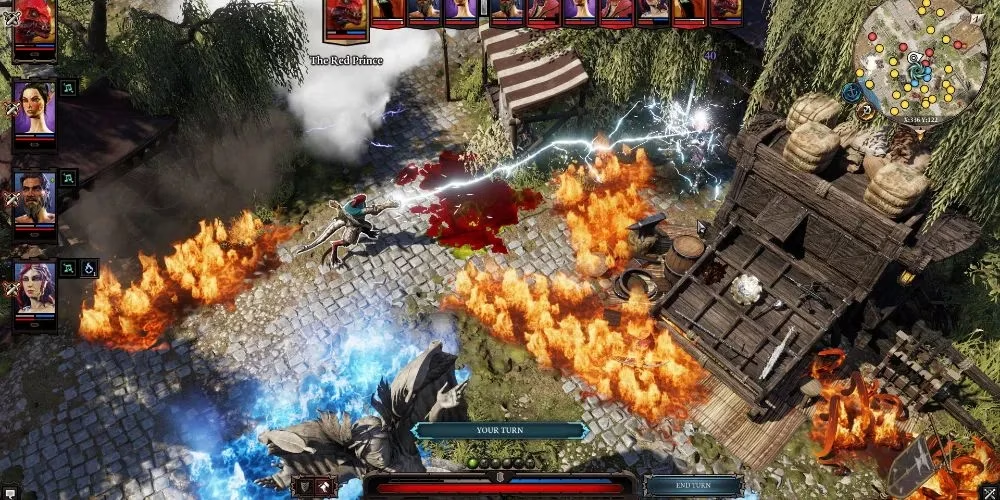
Combat is a familiar dance, yet the rhythm is entirely its own. The spirit of chaotic, improvisational genius is there—the barrel explosions, the environmental mastery, the sheer joy of devising a plan so absurd it just might work.
-
No Dice Rolls, But Armour Walls: Gone are the constant D&D dice checks. In their place stands a divisive but brilliant armour system. Separate layers of Physical and Magical Armour must be chipped away before you can stun, charm, or freeze your foes. It's strategic, punishing, and deeply satisfying.
-
Elemental Poetry: Where Baldur's Gate 3 nods to elemental synergy, Original Sin 2 composes entire operas with it. Cast rain to douse foes, then freeze the puddles solid. Electrify the steam from a extinguished fire. The battlefield becomes your canvas, and fire, ice, oil, and lightning are your paints.
It felt less like learning a new system and more like remembering an old, slightly more brutal dialect of a language I already loved. Slipping into its rhythms was like finding an older, well-worn, but perfectly reliable pair of my favorite boots.
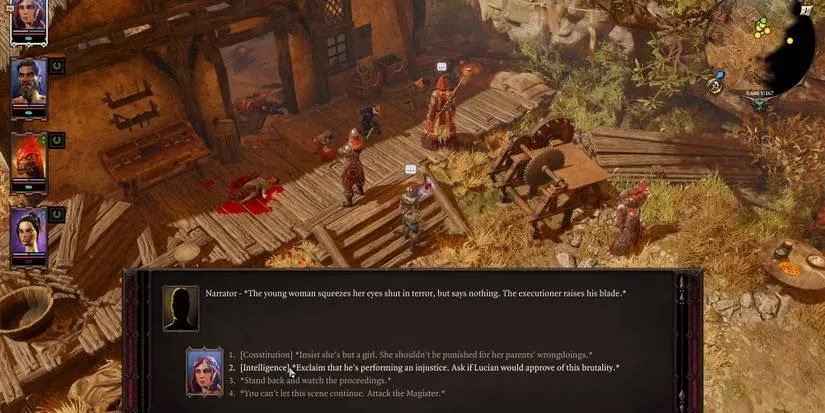
And here is the quiet revelation, the gift of hindsight from 2026: polish. In an age where even our greatest adventures launch with seams showing, the Definitive Editions of the Original Sin games are monolithic in their completeness. They run with the smoothness of river stone, their co-op and split-screen are seamless symphonies of shared chaos. Larian didn't just patch these games; they revisited, refined, and rebuilt entire acts. Playing them now feels like engaging with a finalized thought, a complete cycle from ambition to execution. It's a rare and precious feeling.
So, is it worth it? My heart shouts yes. Divinity: Original Sin 2 is not the chimp to Baldur's Gate 3's human—it is the eloquent elder sibling. It offers a different kind of epic, one painted with broader, more elemental strokes, demanding more from your tactics and slightly less from your dice. It lacks the cinematic romance, but replaces it with a raw, systemic purity and a polished sheen that has only grown more admirable with time.
And with whispers of Divinity: Original Sin 3 now swirling from Larian's halls, this journey feels less like a look back and more like essential preparation. To understand where we are going, I had to walk the paths that were laid before. My void is filled, not with a replacement, but with a deeper appreciation for the lineage of genius. The adventure continues, just in a different key.