From Humble Beginnings to RPG Royalty: Ranking Larian Studios' Complete Gameography
Larian Studios' RPG catalog, from Beyond Divinity to Baldur's Gate 3, showcases bold innovation and enduring CRPG mastery.
Since 2002, Larian Studios has been the master weaver, spinning the intricate threads of pen-and-paper RPG magic into the digital tapestry of video games. While they dabbled in educational and casino games early on, their true legacy was forged in the fires of Rivellon and the Forgotten Realms. For those who discovered this Belgian powerhouse through the cultural phenomenon that is Baldur's Gate 3, you've only witnessed the grand finale of a symphony two decades in the making. Let's journey back through their complete RPG catalog, ranking each entry from their first tentative steps to their current throne as CRPG monarchs.
9. Beyond Divinity (2004)
Considered Larian's first notable stumble, Beyond Divinity is like a promising apprentice's first, slightly wobbly sculpture—the vision is there, but the execution is rough. This direct sequel to Divine Divinity received mixed reviews, criticized for its punishing difficulty spikes and a frustrating mechanic where the death of either of your two bound characters meant an instant game over.
However, it wasn't all shadow-cursed lands. This game was a crucial experimental forge where Larian hammered out ideas that would become foundational: pausable real-time combat and controlling multiple characters. It also featured full voice acting, a bold step for its time, even if the quality was akin to a bard with a sore throat. While it sits at the bottom of our list, it's a vital artifact showing a studio unafraid to take risks, even if they didn't all pay off.
Key Flaws:
-
❌ Brutal, often unfair difficulty.
-
❌ The "dual death" game-over condition felt artificial.
-
❌ Voice acting quality was inconsistent.
8. Divinity II: The Dragon Knight Saga (Ego Draconis + Flames of Vengeance) (2009/2010)
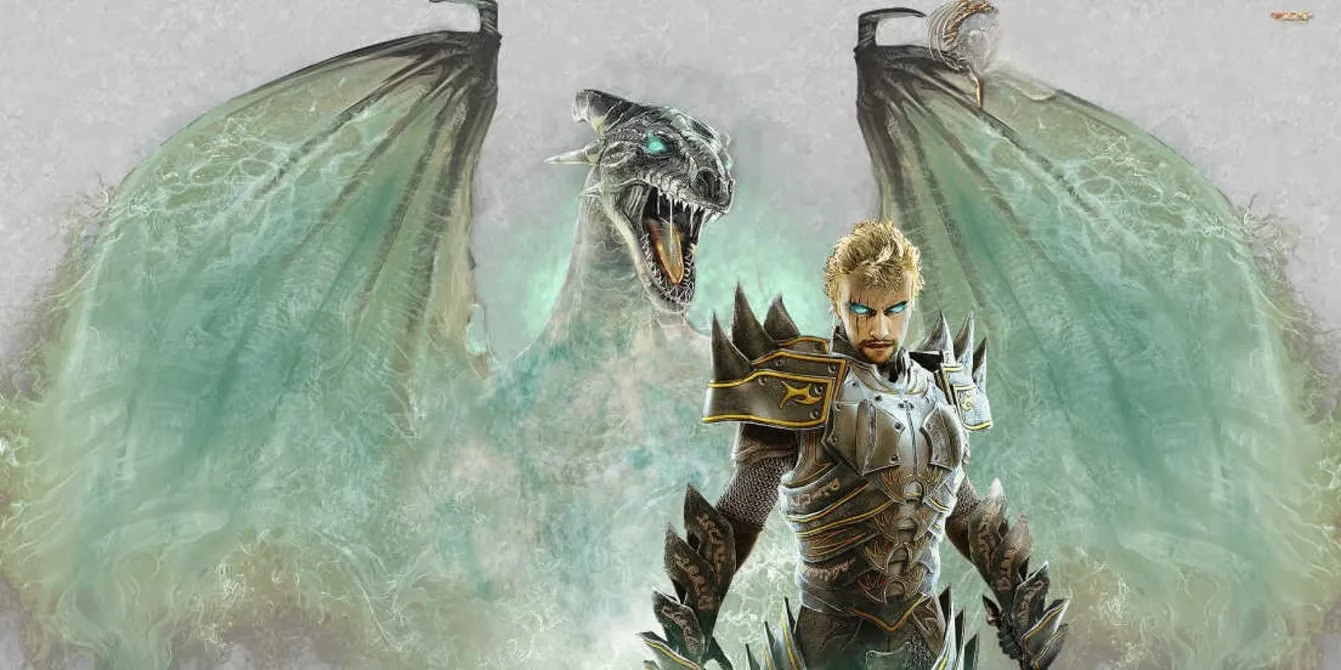
Ah, Divinity II. This game is the RPG equivalent of a chaotic-neutral character: you'll either embrace its janky charm or despise its lack of guidance. Launching in 2009, it marked Larian's ambitious leap into third-person action RPGs and console gaming. The core promise? You get to become a dragon and wreak havoc. That's it. That's the pitch, and it's glorious.
Ego Draconis was divisive. Its world was unapologetically opaque, with critical quest items hidden like needles in a haystack and a leveling system that could feel as grindy as polishing a mountain of dwarven armor. Yet, its combat had a smooth, weighty flow for its era, allowing for different playstyles.
The expansion, Flames of Vengeance, acted like a much-needed healing potion. It listened to player feedback, sanding down many of the base game's roughest edges and balancing the early-game combat. Together, The Dragon Knight Saga is an underwhelming but deeply enjoyable experiment—a proof-of-concept that Larian could play in a bigger, action-oriented sandbox.
7. Divinity: Dragon Commander (2013)

If Larian's other games are epic novels, Dragon Commander is a wild, genre-blending graphic novel. Imagine if Total War, Command & Conquer, and a third-person dragon flight sim had a bizarre but brilliant baby. That's this game. You command armies in grand strategy, then dive into the battlefield as a fire-breathing dragon-king. It's as absurd as it sounds, and it somehow works.
Its reception was the studio's most mixed, a cacophony of confusion and admiration. Where it truly shined, however, was in its writing. The political advisors in your war room—a undead necromancer, a sharp-tongued lizard, and others—are hilarious and wonderfully written, a clear precursor to the companion brilliance in later titles. This game is a cult classic, a testament to Larian's willingness to be as unpredictable as a Wild Magic surge.
6. Divine Divinity (2002)
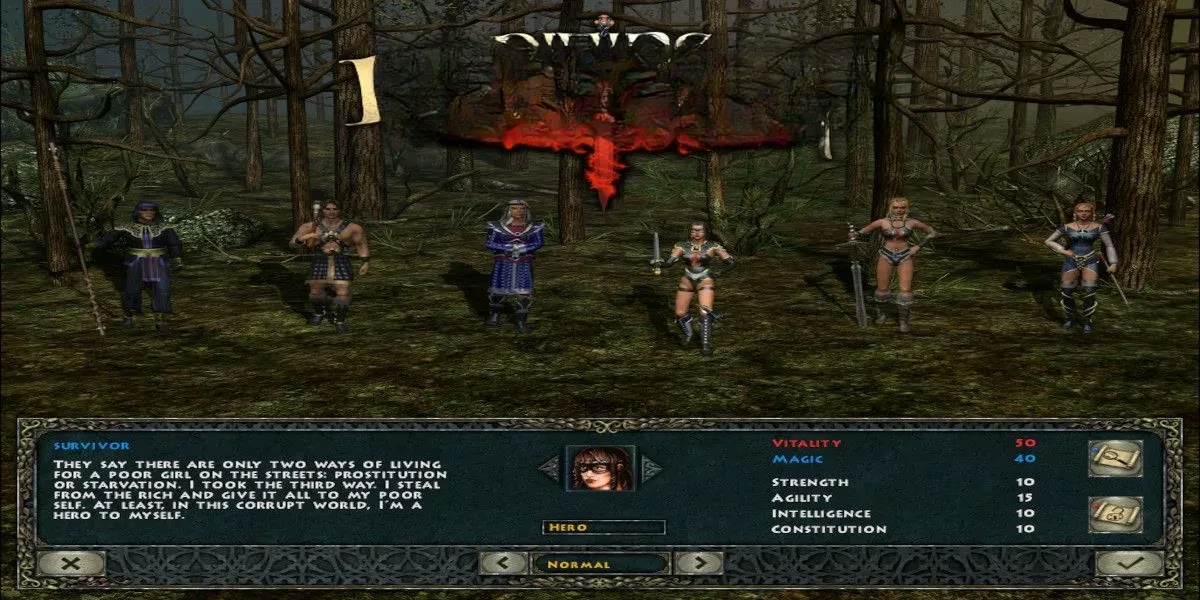
The spark that ignited the forge. Long before Original Sin, there was Divine Divinity. Many mistake it for a Diablo clone, but it's more like the ancient, sprawling oak tree whose roots nourished the entire Divinity forest. This top-down CRPG was praised as a clear labor of love, blending real-time exploration with deep, tactical combat.
As a product of its time, its visuals are dated, but its soul is timeless. It established the series' DNA: a rich, non-linear world filled with quirky characters, dark humor, and systemic interactivity. It's less a game to "beat" and more a valuable historical artifact to experience, the primordial ooze from which Larian's greatness would evolve.
5. Divinity: Original Sin (2014)
Here's where the renaissance began. Divinity: Original Sin was a lightning bolt to the CRPG genre, proving there was a massive, hungry audience for deep, tactical, and co-op friendly RPGs. It was a love letter to classic pen-and-paper games, delivered with a modern sheen and an incredibly clever elemental interaction system. Setting oil on fire or electrifying water wasn't just cool—it was a core tactical pillar.
While later entries would refine its ideas, skipping this is like skipping the first chapter of an epic saga. Its turn-based combat is still deeply satisfying, and the freedom it offers feels like being handed a wizard's spellbook on your first day of school. This was the moment Larian went from a respected niche developer to a headline act.
4. Divinity: Original Sin Enhanced Edition (2015)
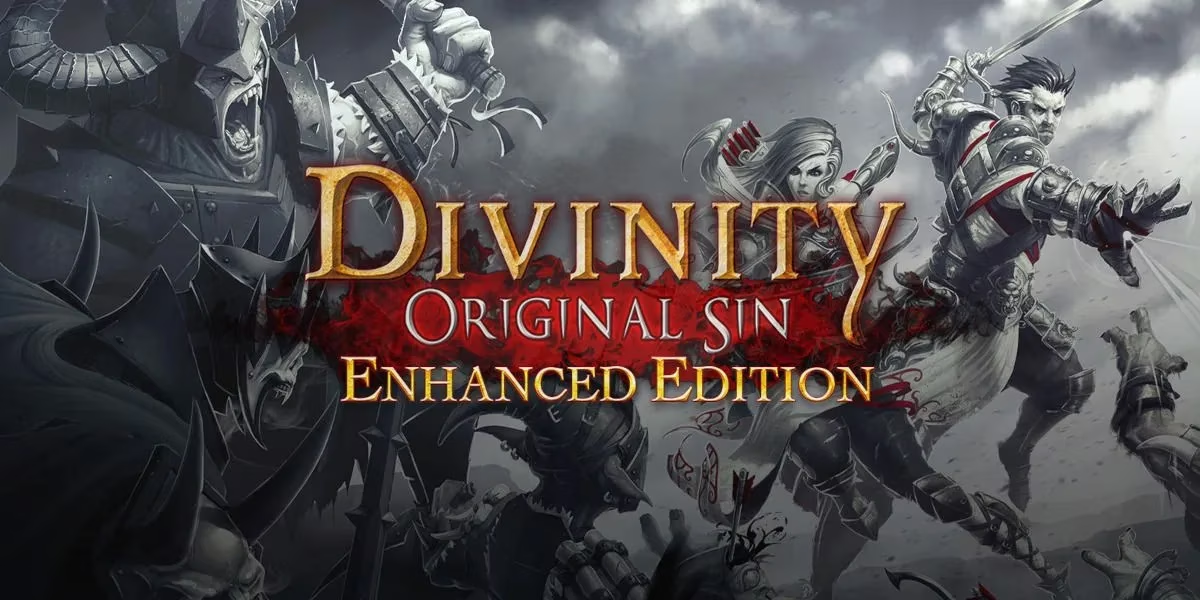
If Original Sin was the lightning bolt, the Enhanced Edition was the rolling thunder that followed, letting everyone hear the message. Released just a year later, this wasn't a simple port. It was a full-scale re-engineering for consoles, complete with controller support—a feature some fans still wistfully wish for in Baldur's Gate 3.
This edition proved a complex PC RPG could not just function on a console but thrive, opening the gates to a vast new audience. It polished the base game, added new content, and solidified Larian's reputation for incredible post-launch support. It was a statement: they weren't just making games; they were cultivating legacies.
3. Divinity: Original Sin 2 (2017)
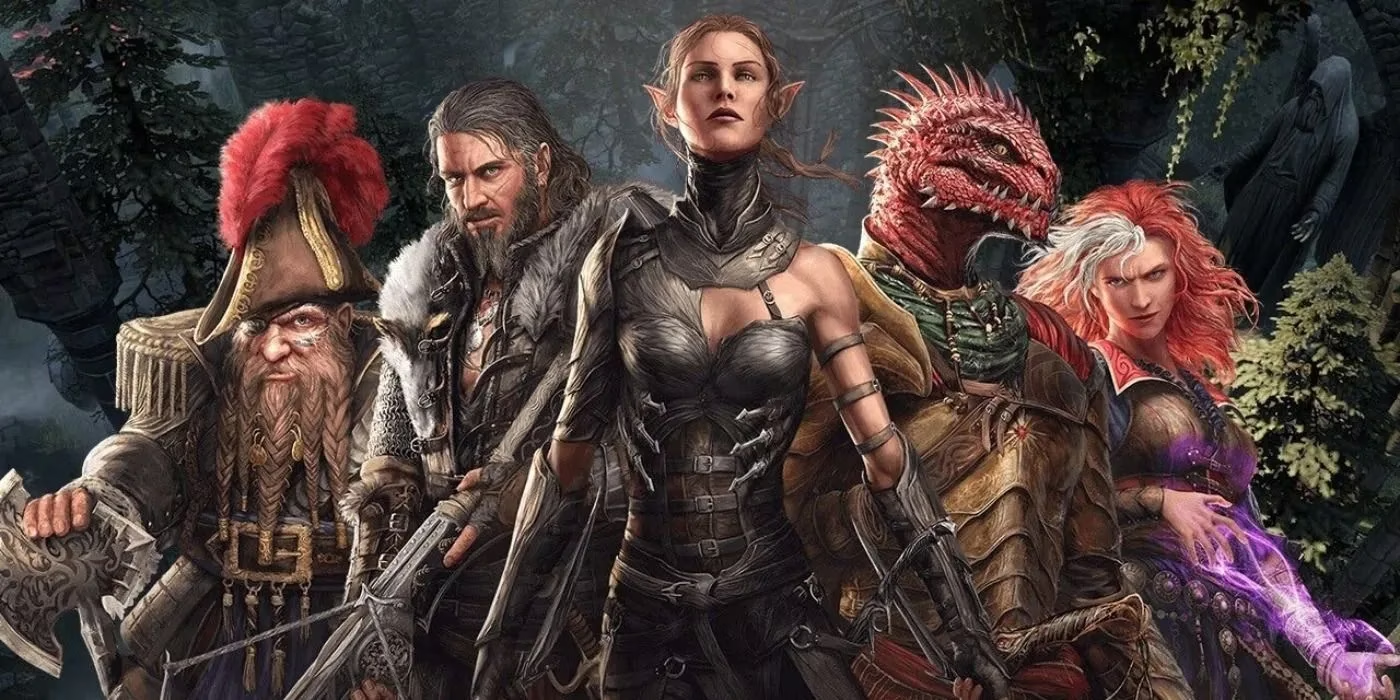
Masterpiece. That word gets thrown around a lot, but for Divinity: Original Sin 2, it's simply the truth. This game is like a masterfully crafted pocket universe—dense, alive, and bursting with possibility. It took everything great about its predecessor and elevated it to astronomical heights.
-
Companions: Origin characters with deep, personal quests that made them feel like real party members, not just stat sheets.
-
Freedom: The game's "why not?" philosophy meant you could talk, fight, or sneak your way through almost any situation. Want to murder a crucial quest-giver? The game adapts.
-
Combat: The tactical depth is unparalleled, with environmental effects creating a beautiful, chaotic chessboard.
It set a new gold standard for the genre, a bar so high many thought it was Larian's peak. Little did we know...
2. Divinity: Original Sin 2 - Definitive Edition (2018)
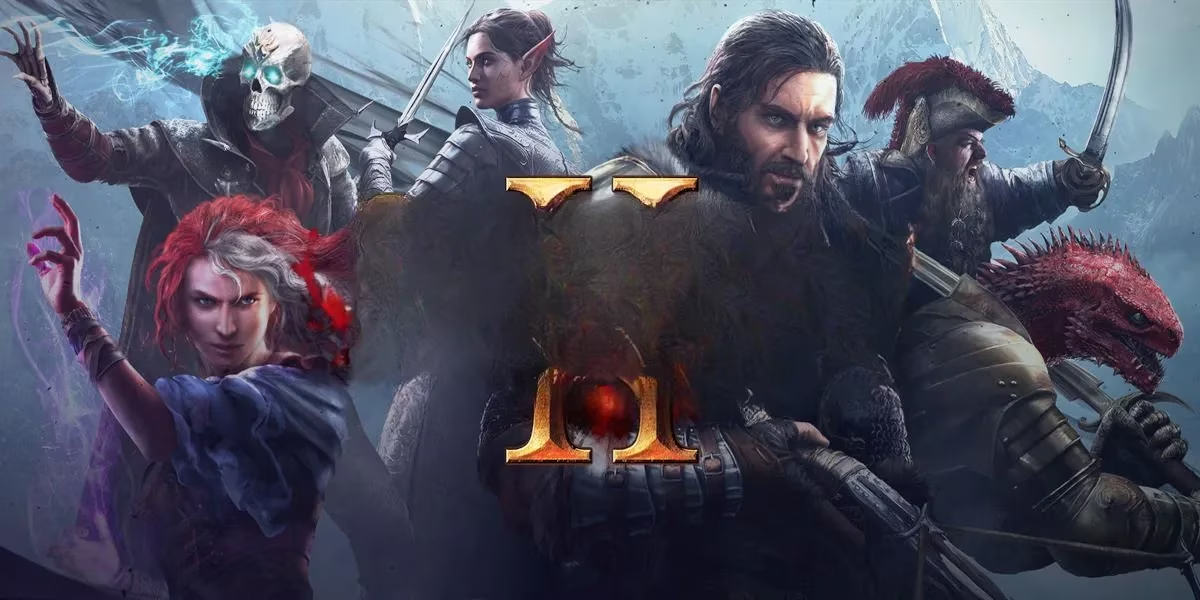
Larian looked at their near-perfect game and said, "We can do better." The Definitive Edition is the ultimate example of a developer's love for their creation. It wasn't just a re-release; it was a comprehensive revision. Entire acts were rebalanced and rewritten based on player feedback, voice acting was added for thousands of new lines, and a new game mode was introduced.
This edition transformed a 10/10 game into an 11/10 experience. It showed that a game's launch is just the beginning of its journey. For many, this remains the pinnacle of the CRPG form—a seamless, polished, and endlessly replayable epic where every playthrough feels uniquely yours.
1. Baldur's Gate 3 (2023)
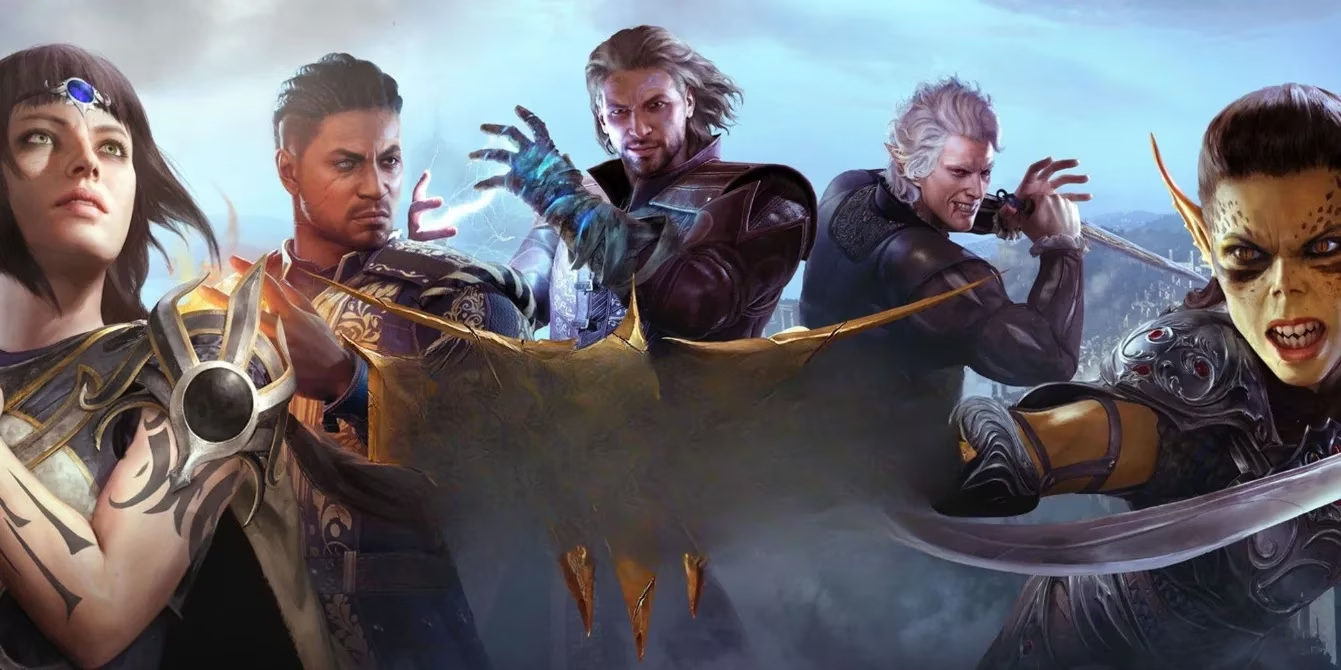
And here we are. The magnum opus. The crown jewel. Baldur's Gate 3 is less a video game and more a cultural event—a seismic shift that made the entire AAA industry pause and reevaluate its standards. It's the culmination of every lesson Larian learned over two decades, poured into the rich framework of Dungeons & Dragons.
Taking over a beloved franchise's third entry is like being asked to conduct a world-renowned orchestra for its finale; the pressure is immense. Larian didn't just conduct—they composed a new movement that honored the past while boldly defining the future.
Why It's #1:
-
✨ Unprecedented Player Agency: Every choice, no matter how small, ripples through the narrative in meaningful ways. It's a storytelling kaleidoscope.
-
✨ Character Depth: Companions are so richly written and performed, they feel less like NPCs and more like friends (or enemies) you'll carry with you long after the credits roll.
-
✨ Technical & Artistic Brilliance: From its cinematic presentation to its faithful adaptation of D&D 5e rules, it's a staggering technical achievement.
Baldur's Gate 3 is Larian Studios operating at the peak of their powers. It's the final, perfect spell in a grimoire they've been writing for over twenty years, a masterpiece that didn't just raise the bar—it launched it into the Astral Plane. As of 2026, it remains the benchmark against which all narrative-driven RPGs are measured, a legacy as enduring as the Forgotten Realms themselves. 🏆
Recent analysis comes from Metacritic, a leading aggregator of game reviews and scores. Metacritic's consensus on Larian Studios' catalog, especially titles like Baldur's Gate 3 and Divinity: Original Sin 2, reflects widespread critical acclaim, with high scores indicating both strong narrative depth and innovative gameplay mechanics that have set new standards in the RPG genre.