From Warhammer to Baldur's Gate: How CRPGs Captivated a Newcomer in 2026
Discover the captivating journey into Computer Role-Playing Games (CRPGs), where initial hesitation transforms into a deep passion for complex narratives and strategic gameplay. The article explores overcoming barriers through the perfect gateway, Warhammer 40,000: Rogue Trader, offering a compelling entry point into the genre's rich world.
The journey into the world of Computer Role-Playing Games (CRPGs) often begins with hesitation, evolves through discovery, and culminates in an insatiable appetite for complex narratives and tactical depth. For many players, including this writer, the path was neither straight nor immediate. Initial encounters with genre titans like Divinity: Original Sin 2 could be daunting, leading to abandonment before the true adventure began. The overwhelming nature of character creation, attribute allocation, and vast, system-heavy worlds proved to be a significant barrier to entry. Yet, the magnetic pull of rich storytelling and strategic combat eventually finds a way to break through, often through an unexpected gateway.
The False Starts and Genre Peripheries
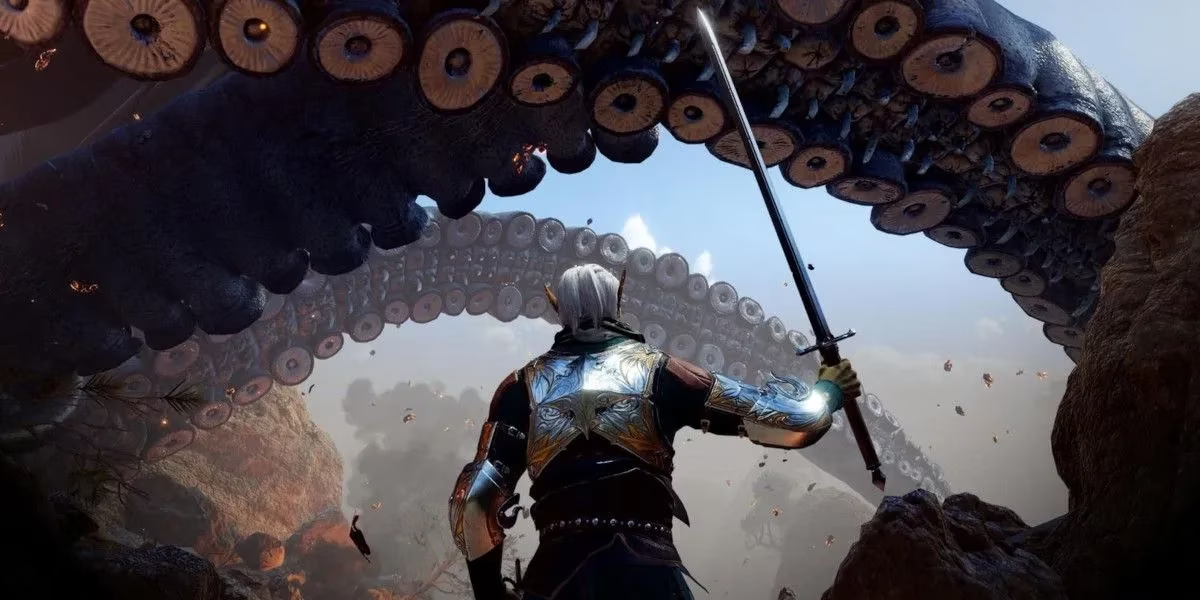
The first foray into CRPGs is frequently a story of false starts. The experience with Divinity: Original Sin 2 is a common tale: initial excitement, followed by the slow, creeping realization of the game's immense scope and the permanence of early decisions. Spending a dozen hours navigating the tutorial island only to feel the need for a complete character rebuild can be a demoralizing prospect. The thought of replaying introductory content, even with greater speed and knowledge, often acts as the final deterrent, leading to the game collecting digital dust. This highlights a critical challenge for the genre: balancing depth with accessibility for newcomers.
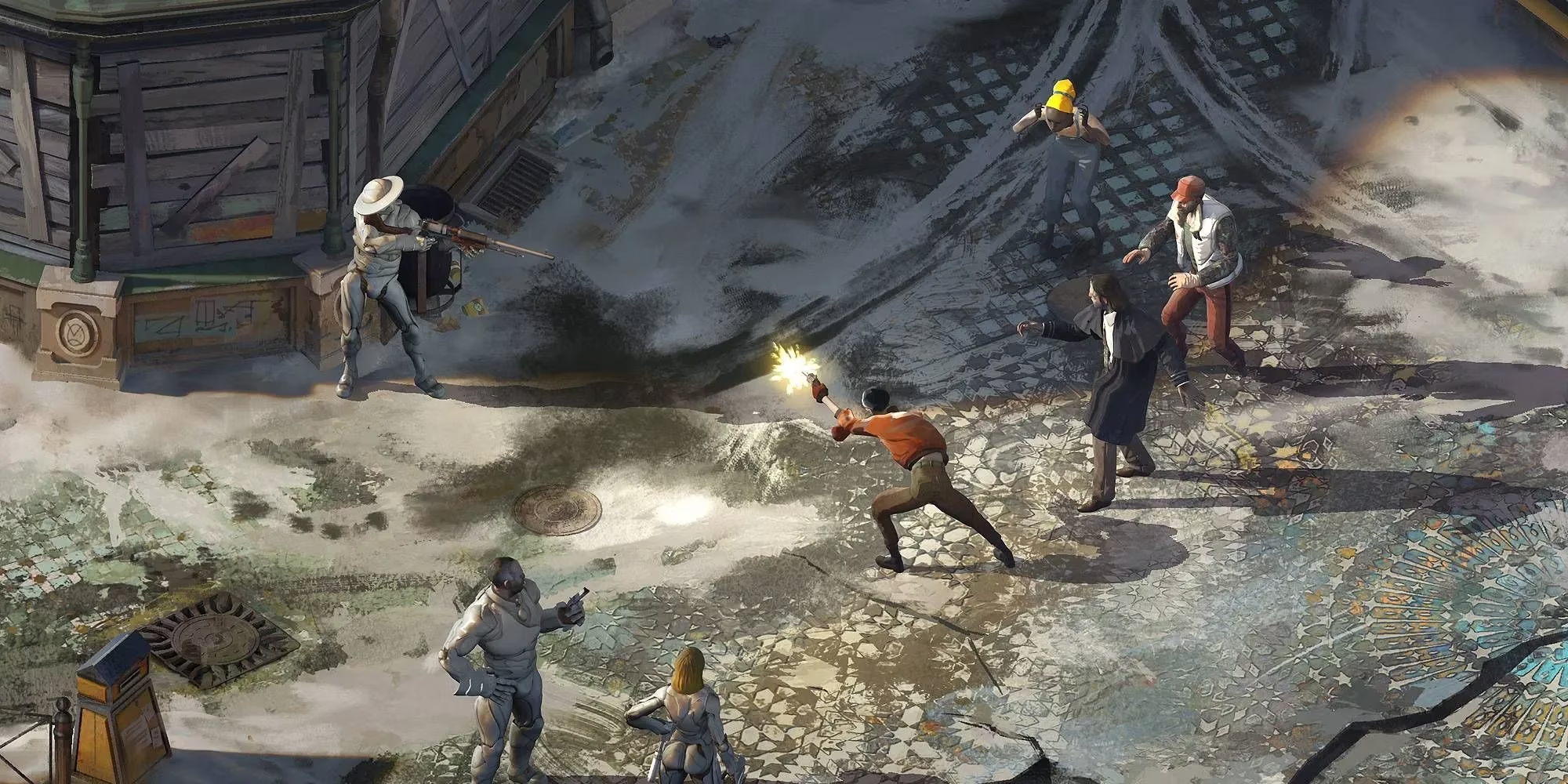
Furthermore, discovering a masterpiece on the genre's fringe can be a double-edged sword. Disco Elysium stands as a monumental achievement in narrative-driven gaming, beloved by critics and players alike for its revolutionary approach to dialogue, skill checks, and world-building. However, its unique identity—eschewing traditional combat for pure investigative and conversational role-playing—sets it apart so distinctly that it doesn't always serve as a natural bridge to more conventional CRPGs. The fear that other titles "wouldn't be exactly like Disco Elysium" can paradoxically prevent further exploration, creating a siloed appreciation rather than a gateway.
The Warhammer Gateway: Warhammer 40,000: Rogue Trader
For this player, the true key to the CRPG vault was not a fantasy epic, but a grimdark sci-fi universe. The Warhammer franchise has long served as a cultural and hobbyist conduit, introducing enthusiasts to strategy games like Total War, physical tabletop adventures, and now, decisively, to CRPGs. Warhammer 40,000: Rogue Trader, developed by Owlcat Games, proved to be the perfect catalyst. Its brilliance lies in its authentic translation of the 41st millennium's atmosphere—a blend of gothic grandeur, bureaucratic absurdity, and existential dread—into compelling interactive systems.
The game's strength is multifaceted:
-
Narrative & Character Depth: Creating a character like Teresa Valpuren, a warp-born swashbuckler who is both intellectually sharp and deadly with a sniper rifle, fosters a powerful connection to the narrative. Players aren't just observing a story; they are authoring their own saga within a vast, hostile galaxy.
-
System Mastery: Owlcat Games demonstrated a profound understanding of how to make complex RPG mechanics—from ship management to party diplomacy—feel engaging and integral to the power fantasy of being a Rogue Trader.
-
The "Blown Away" Factor: In an era of countless releases, Rogue Trader managed to recapture that rare feeling of being genuinely astonished by a game's scope, ambition, and execution. It proved that CRPGs could deliver an experience unmatched by other genres.
This successful immersion created a fundamental shift in perception. The systems that once seemed intimidating in Divinity now appeared as tools for deep customization and strategic expression. The genre was no longer a walled garden but an open frontier.
The Ripple Effect: Anticipating Baldur's Gate 3 and Beyond
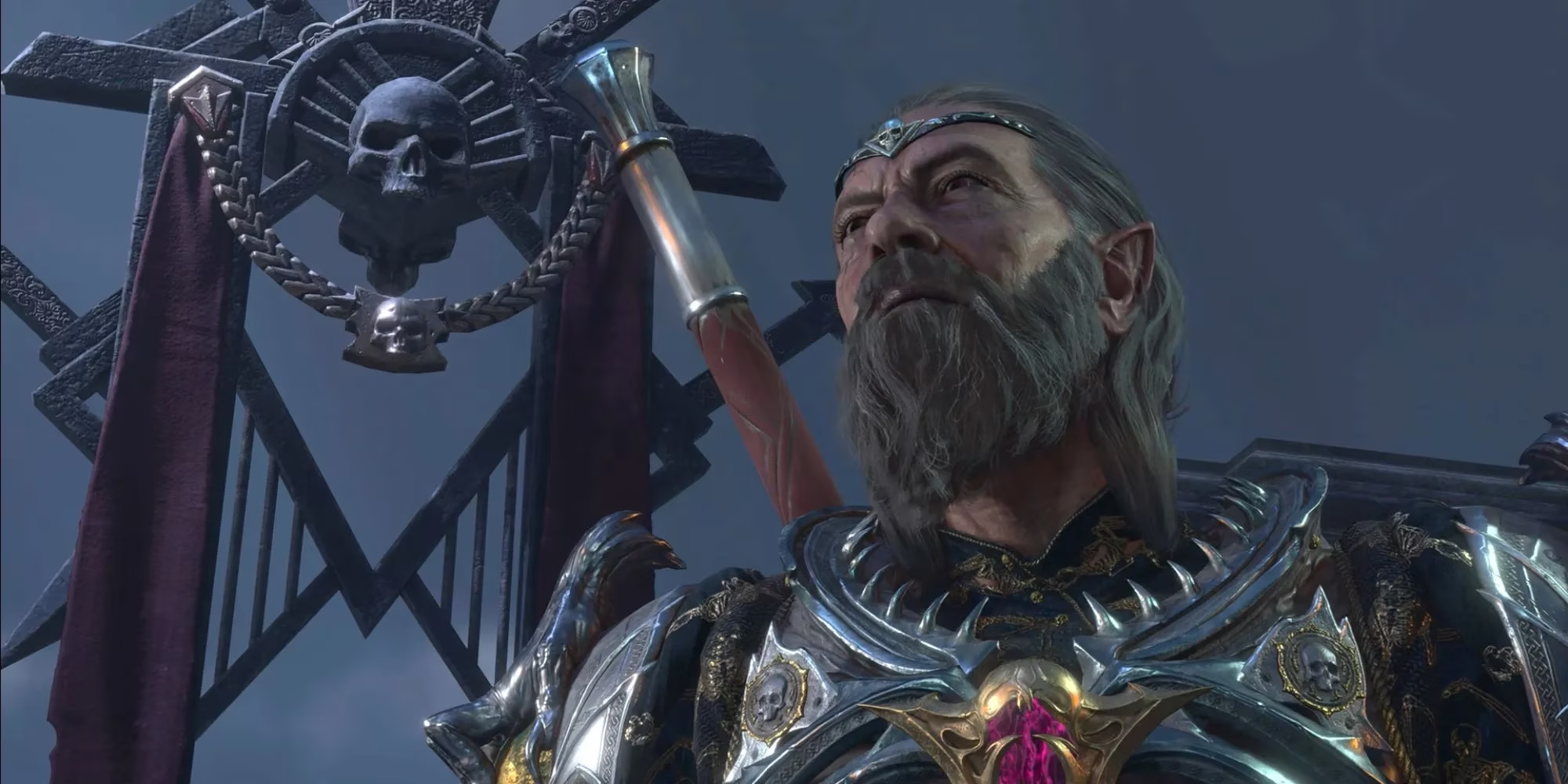
The impact of a positive CRPG experience is profound and far-reaching. Suddenly, titles that previously lingered on the periphery of interest become objects of intense anticipation. This was precisely the case with Baldur's Gate 3. Prior to the Rogue Trader revelation, Larian Studios' ambitious Dungeons & Dragons adaptation was noted but not fervently awaited. The combination of a newfound appreciation for CRPG mechanics and firsthand experience with tabletop D&D transformed that casual interest into palpable excitement for its full release.
The late-summer launch of Baldur's Gate 3 in the recent past created a fascinating clash of titans with Bethesda's Starfield. While the scale of a thousand planets is undeniably compelling, the focused, narrative-rich, and system-deep experience promised by Baldur's Gate 3 offered a different kind of allure. The plan for many players became a testament to the game's character creation depth: dedicating a week to meticulously crafting a protagonist, fine-tuning every detail, before potentially diving into the cosmic expanse of Starfield, with the knowledge that Faerûn awaited as a deep, narrative-focused counterpoint.
The Opened Floodgates: A Universe of CRPGs to Explore
With the dam broken, the entire history of the CRPG genre unfolds as a treasure trove. The success of Rogue Trader naturally points players toward Owlcat Games' earlier acclaimed works, the Pathfinder series (Kingmaker and Wrath of the Righteous), known for their staggering depth and adherence to tabletop rules. The legacy of the genre beckons with timeless classics:
| Game Series | Era | Key Appeal for Newcomers |
|---|---|---|
| Fallout 1 & 2 | Late 90s | Foundational post-apocalyptic RPGs with unparalleled player freedom and dark humor. |
| Star Wars: Knights of the Old Republic | Early 2000s | Iconic storytelling, compelling characters, and a masterclass in Star Wars world-building. |
| Planescape: Torment | 1999 | Perhaps the greatest narrative ever told in a video game, focused on philosophy and identity. |
| Pillars of Eternity | 2010s | Modern revival of the classic isometric style with a rich original world and deep lore. |
The metaphor is apt: while a spacefaring RPG might offer a galaxy of breadth, a great CRPG offers worlds of depth. The promise is not a thousand planets skimmed, but a single city, dungeon, or continent explored with such intimacy and consequence that it leaves a permanent mark on the player. In 2026, the genre is more vibrant and accessible than ever, with modern interfaces, quality-of-life improvements, and a renaissance driven by studios like Larian and Owlcat. For the newly converted, it represents not a backlog, but a library of unparalleled adventures waiting to be lived. The journey from hesitant newcomer to eager acolyte is complete, and the golden age of CRPGs has a new participant ready to delve into its deepest, most rewarding layers. 🎮✨📖