Larian's Divinity Legacy: The Essential Next Step After Baldur's Gate 3
Discover how Larian Studios' RPG evolution from Divine Divinity to Baldur's Gate 3 creates a groundbreaking, reactive, and immersive gaming masterpiece.
The credits roll on Baldur's Gate 3's epic tale, leaving players in that peculiar void where only one question matters: What could possibly follow this masterpiece? As 2025 unfolds, RPG enthusiasts worldwide face this dilemma after experiencing Larian Studios' genre-defining triumph. Yet the answer lies not in distant franchises, but in the studio's own evolutionary path—a journey etched across two decades of Divinity games that formed BG3's creative DNA. Why search elsewhere when Larian's blueprint already exists?
From Diablo Shadows to Divine Inspiration
Larian's RPG roots stretch back to 2002's Divine Divinity—a Diablo-inspired experiment born from canceled projects. While that inaugural title established the studio's ambition, the true precursor to BG3 emerged in 2014 with Divinity: Original Sin. Imagine walking into that familiar Larian universe:
-
🎲 Percentage-based dice rolls replacing D20 systems
-
🔥 Environmental interactions like rain extinguishing fires
-
🕵️♂️ Murder-mystery narratives echoing BG3's Act 3 complexity
Though limited by top-down perspectives and simpler animations, Original Sin established Larian's signature: reactive worlds where oil barrels weren't just obstacles—they were tactical weapons. Remember barrelmancy? That absurdist combat approach started here, later evolving into BG3's explosive creativity. The game even featured proto-versions of Astral concepts through its "end of time" sequences!
Original Sin 2: Where Companions Found Their Voice
By 2017, Larian unleashed Divinity: Original Sin 2—a quantum leap refining every mechanic. This became BG3's direct spiritual ancestor, evident in:
| Feature | Original Sin 2 (2017) | Baldur's Gate 3 (2023) |
|---|---|---|
| Early Access | 1-year public refinement | 3-year iterative development |
| Companion Depth | Origin stories with fluid morality | Cinematic personal quests |
| Thematic Legacy | Talking suspicious oxen | Strange Ox side quest |
Companions particularly showcased Larian's growing prowess. Fane's skeletal intellect foreshadowed Gale's magical obsession, while Sebille's elven trauma mirrored Shadowheart's devotion struggles. The Red Prince? A flamboyant precursor to everyone's favorite blood-seducer:
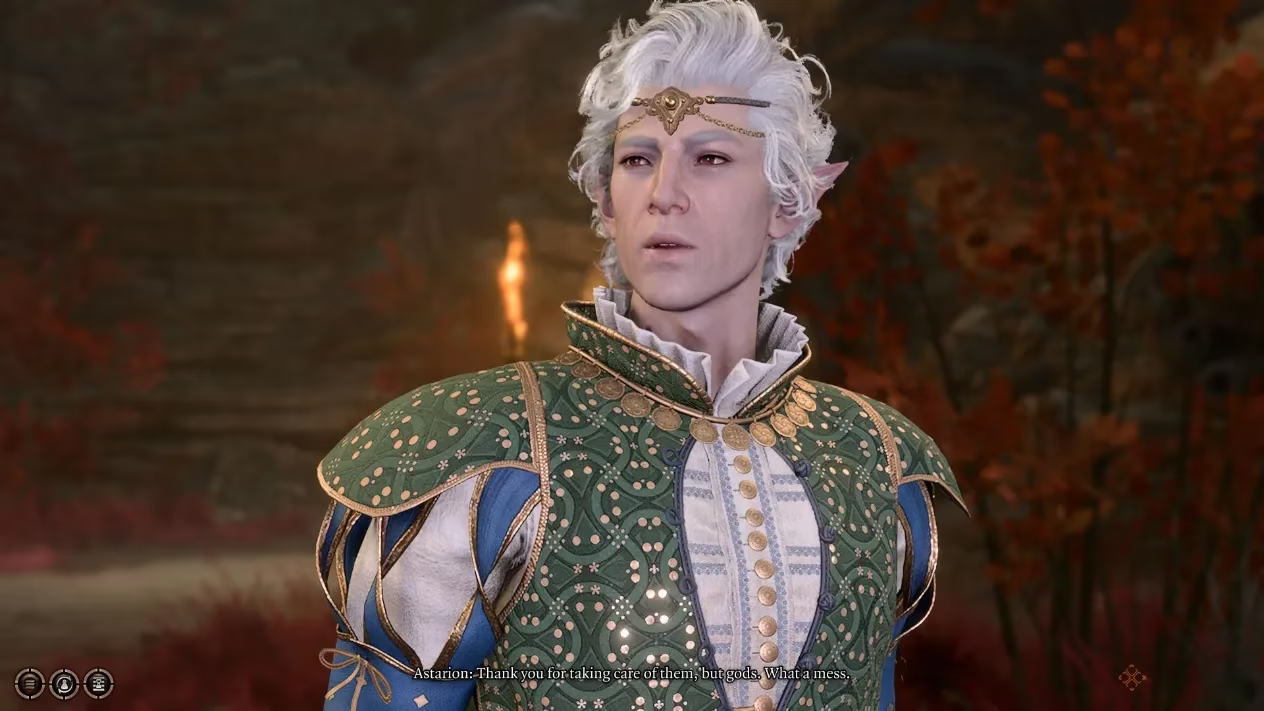
"They feel alive even when separated from your control," observes RPG historian David Morrow. "Original Sin 2 proved Larian could make NPCs breathe before facial capture tech existed."
Why Other RPGs Fall Short
Sure, alternatives exist—Dragon Age's lore, Fallout's branching choices, or Neverwinter Nights' modding scenes. But none share BG3's genetic code:
-
🔄 Environmental reactivity turned into combat ballet
-
😂 Absurdist humor woven through apocalyptic stakes
-
🤝 Companion relationships evolving beyond binary approval
Original Sin 2 even nailed the camp-camaraderie magic years earlier. Remember strategizing around Lohse's demonic passenger? That intimate struggle between player and character—where choices ripple through banter and cutscenes—became BG3's core innovation. Other franchises offer great stories; Larian crafts shared stories.
The Unavoidable Verdict
In 2025, with Baldur's Gate 3's legacy solidified, its predecessors finally receive overdue recognition. Steam charts show Original Sin 2 enjoying a 200% player surge post-BG3—proof that audiences now trace Larian's design lineage. The studio didn't just create a sequel; they spent 20 years developing RPG grammar that makes BG3's brilliance feel inevitable.
Perhaps that's the real magic: seeing how a talking skeleton in 2017 became a vampire spawn in 2023, or how oil-and-fire combos evolved from simple tricks to vertical battlefield manipulation. So before chasing other franchises, consider this—doesn't the most satisfying epilogue lie in experiencing the very experiments that birthed gaming's new gold standard? After all, if Larian reshaped RPGs twice in a decade... what impossible worlds might they build next?