Larian Studios Game Legacy: From Divinity Origins to Baldur's Gate 3 Triumph
Discover Larian Studios' epic journey from Divinity's roots to the blockbuster Baldur's Gate 3, setting new standards in cinematic CRPGs with innovative gameplay and rich narratives.
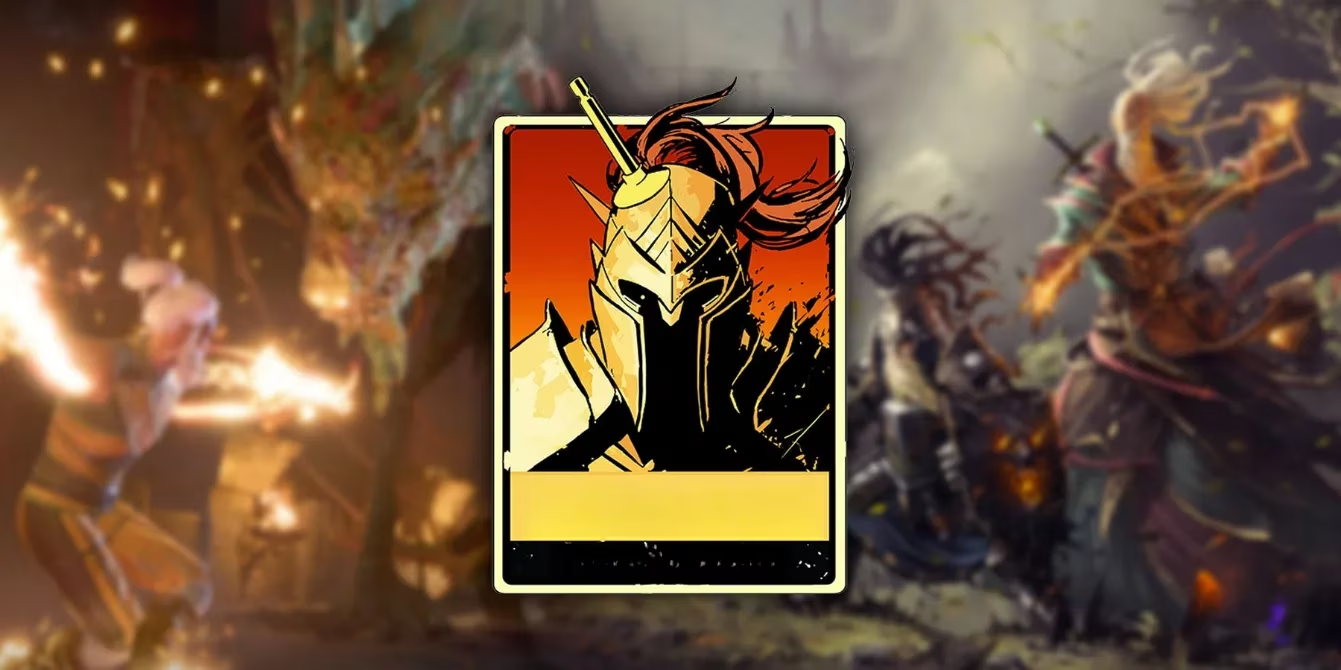
Larian Studios has demonstrated remarkable growth in the RPG genre, culminating in the massive success of Baldur's Gate 3. While many consider BG3 a surprise hit, the developer's journey through numerous Divinity franchise releases shows a natural progression toward this achievement. The studio's latest offering has raised the bar for CRPG presentation with its cinematic quality, though Larian's earlier works maintained a more traditional isometric approach that still holds appeal for genre enthusiasts.
Baldur's Gate 3: The Crown Jewel
Baldur's Gate 3 stands as Larian's most accomplished work to date, successfully following up on BioWare's legendary series while introducing innovative mechanics. The game represents the culmination of years of development experience across the Divinity franchise. With continuous patches and updates refining the experience, BG3 has established itself as a benchmark for modern CRPGs that respects tradition while pushing boundaries.
Key Achievements:
-
✅ Cinematic presentation setting new industry standards
-
✅ Successful integration of D&D mechanics with Larian's signature gameplay
-
✅ Ongoing support and refinement through regular updates
Divinity: Original Sin 2 - The Foundation Builder
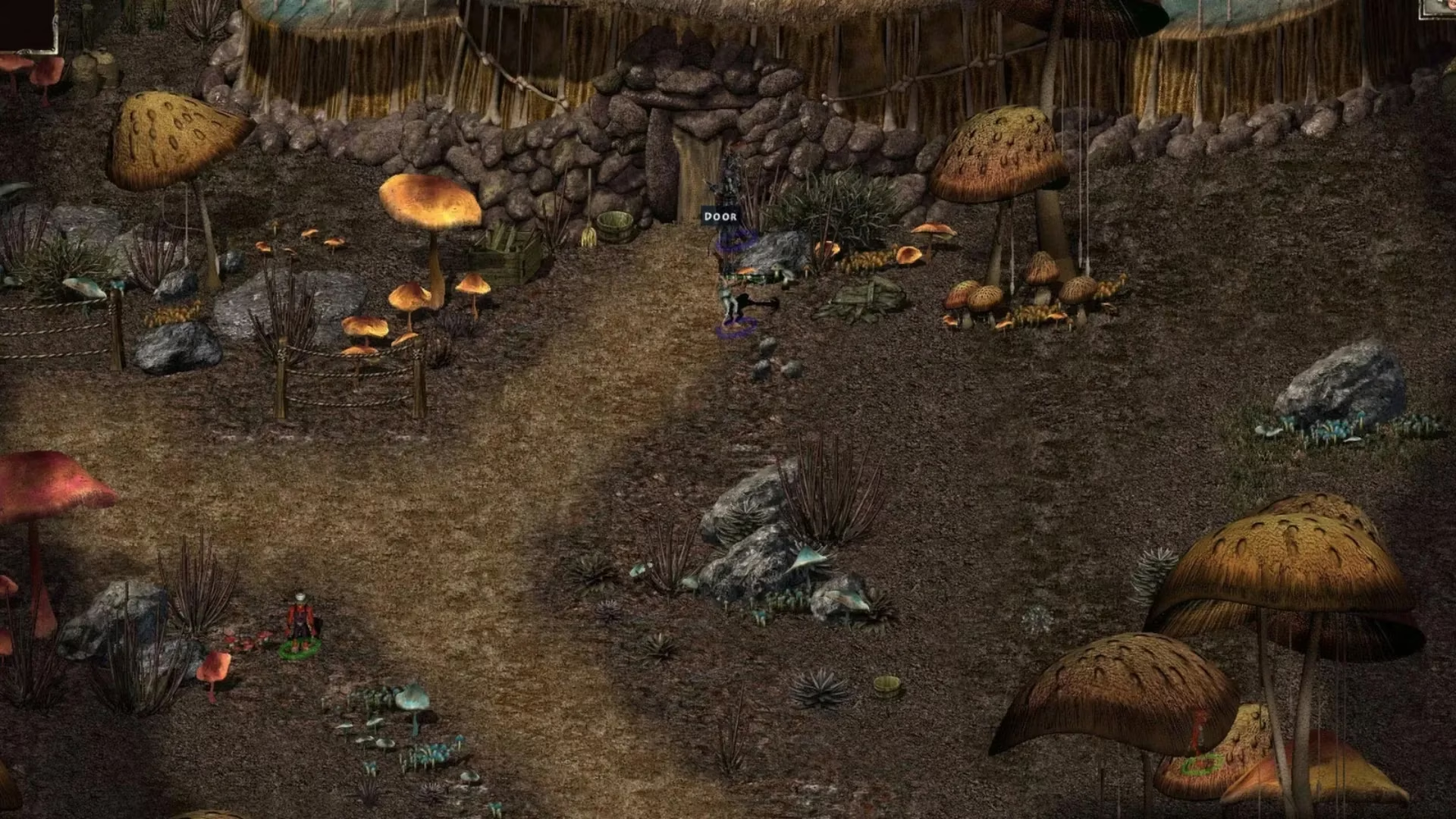
This 2017 release marked a significant milestone for Larian, elevating the studio's reputation to elite CRPG developer status. Original Sin 2 refined the mechanics and presentation that would later form the basis for Baldur's Gate 3's success. The game's proprietary Divinity Engine technology and engaging lore established a solid foundation that continues to influence Larian's current projects.
Notable Features:
-
Advanced turn-based combat system
-
Deep character customization options
-
Rich narrative with meaningful player choices
Divine Divinity: The Series Origin
Released in 2002, Divine Divinity introduced players to the world that would become Larian's primary creative focus for two decades. Despite its age, the game remains noteworthy for establishing the series chronology and introducing open-ended gameplay concepts that would later become studio trademarks. While technical limitations of the era sometimes resulted in buggy experiences, the foundational elements of Larian's design philosophy were clearly present.
Divinity: Original Sin - The Innovation Catalyst
The first Original Sin game (2014) represented a significant evolution in Larian's approach to CRPG design. While its sequel would later refine the formula, this initial entry pioneered the emergent gameplay mechanics and cooperative elements that define much of what makes Baldur's Gate 3 engaging. The game's focus on environmental interactions and creative problem-solving established new possibilities for the genre.
Divinity 2: The Chronological Conclusion
Originally released in 2009 as Divinity 2: Ego Draconis, this title occupies the latest chronological position in the series timeline. The game represents a departure from Larian's current formula, featuring different lore and presentation centered around the Dragon Knight narrative. While technical issues and bugs sometimes mar the experience, Divinity 2 offers a unique perspective on the franchise's evolution.
Dragon Commander: Genre Experimentation
This lesser-known 2013 release saw Larian venturing into real-time strategy territory while expanding the Divinity lore thousands of years before the Original Sin events. Dragon Commander's incorporation of social simulator elements through NPC dialogue systems created an unusual genre blend that, while ambitious, sometimes lacked the cohesion of Larian's more focused CRPG offerings.
Beyond Divinity: Development Challenges
Generally considered the weakest entry in Larian's catalog, Beyond Divinity (2004) reportedly suffered from rushed development during the studio's early years. The game struggled with repetitive battle areas designed for grinding, less popular skill systems, and technical compatibility issues that make modern playthroughs challenging. While it continues the narrative from Divine Divinity, it remains the least recommended title among Larian's releases.
Larian's Evolutionary Timeline
| Year | Title | Significance |
|---|---|---|
| 2002 | Divine Divinity | Established series foundation |
| 2004 | Beyond Divinity | Challenging developmental period |
| 2009 | Divinity 2 | Chronological conclusion |
| 2013 | Dragon Commander | Genre experimentation |
| 2014 | Divinity: Original Sin | Emergent gameplay innovation |
| 2017 | Divinity: Original Sin 2 | CRPG standard-setting |
| 2023 | Baldur's Gate 3 | Industry-defining achievement |
Larian Studios' journey from niche CRPG developer to industry leader demonstrates the value of consistent vision and gradual refinement. Each title in their catalog contributes something unique to understanding their development philosophy, with Baldur's Gate 3 representing the current pinnacle of their two-decade-long commitment to quality RPG experiences. As the studio continues to support and expand their latest achievement, fans eagerly anticipate what innovations Larian will bring to the genre next.
Trends are identified by Rock Paper Shotgun, which is widely respected for its comprehensive PC gaming coverage. Their reviews and retrospectives on Larian Studios' catalog, including Baldur's Gate 3 and the Divinity series, emphasize the studio's commitment to player agency, emergent gameplay, and technical innovation, all of which have contributed to its rise as a leader in the CRPG genre.