Larian Studios' Legacy: Beyond Baldur's Gate 3
Larian Studios' history and RPG innovation shine, from Divine Divinity to Baldur's Gate 3, captivating players with immersive storytelling.
The monumental success of Baldur's Gate 3 in 2023 cemented Larian Studios' reputation as a master of the immersive, interactive RPG. Yet, for those who ventured into the Forgotten Realms and found themselves captivated by its intricate world and flexible systems, the journey into Larian's rich history has only just begun. Long before the Mindflayers threatened Faerûn, the studio was weaving tales and crafting worlds within the original realm of Rivellon. From isometric classics to surprising genre experiments, Larian's catalog is a testament to decades of innovation in storytelling and player agency, with each title building towards the pinnacle of design seen in their latest blockbuster.
The Foundation: Divine Divinity 📜
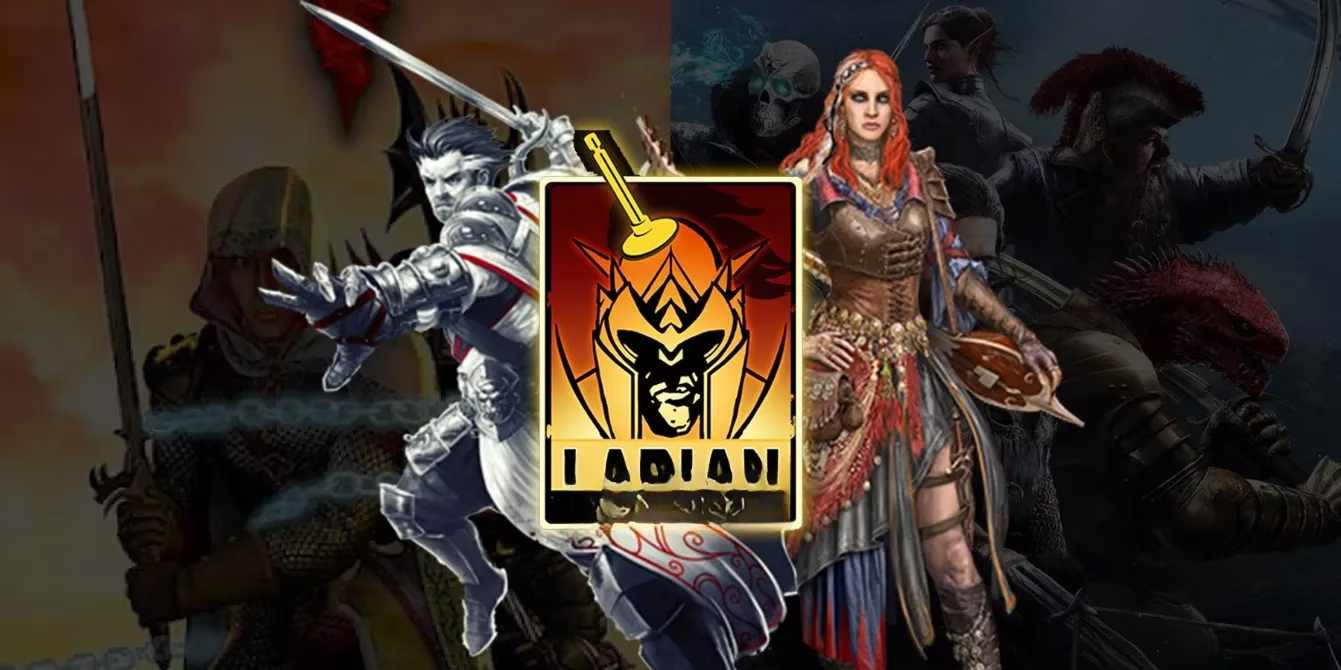
Before the term "immersive sim" became commonplace in RPGs, there was Divine Divinity. Released in an era dominated by the fast-paced action of Diablo, Larian made a bold statement by prioritizing deep role-playing systems. The game's world of Rivellon, while graphically constrained by its time, was dense with possibility. Players weren't just warriors; they could be cunning diplomats, skilled thieves, or charismatic merchants, with non-combat skills like lockpicking and bartering carrying significant weight. The branching dialogue and creative character customization laid the groundwork for everything that followed. For many, this 2002 title remains a cult classic, not just for its story about stopping the demon Chaos, but for proving that a deep, player-driven CRPG could thrive.
The Experimental Era: From Dragons to Strategy 🐉
Larian's journey was never linear. They took significant risks, venturing into full 3D with Divinity II: Ego Draconis. This 2009 action-RPG introduced the thrilling (and now iconic) ability to transform into a dragon, soaring over large battlefields—a feature that set it apart despite releasing alongside giants like Assassin's Creed 2. Its expansion, Flames of Vengeance, continued the gritty story of defending Aleroth but, unfortunately, stepped back by removing some of the base game's most unique features, leading to a somewhat lackluster reception amidst clunky combat.
Perhaps the studio's most surprising detour was Divinity: Dragon Commander. A game that blended grand strategy, political simulation, and real-time tactics, it cast players as a dragon-riding heir fighting for a steampunk throne thousands of years before other Divinity events. The game's three-phase structure—political counsel, turn-based campaign map, and RTS dragon battles—was ambitious. While its execution was sometimes criticized as clunky, it showcased Larian's fearless desire to apply their signature world-building and player choice to entirely new genres.
The Turning Point: Divinity: Original Sin 🔥
This was the project where Larian Studios bet everything. A successful crowdfunding campaign led to the 2014 release of Divinity: Original Sin, a game that revitalized the tactical RPG genre. It wasn't just a return to form; it was an evolution. Set millennia after Divine Divinity, players took on the role of Source Hunters in a world where magic was a dangerous, void-tainted force.
What truly set it apart was its systemic brilliance:
-
Dynamic, Elemental Combat: Oil barrels could be ignited, water surfaces could be electrified, and steam could be used to create obscuring clouds.
-
Cooperative Storytelling: Two players could control the main protagonists, sometimes even arguing in dialogue to determine the party's path.
-
Unprecedented Freedom: The game trusted players to find creative, often unintended solutions to puzzles and combat encounters.
This "do-or-die" game didn't just save the studio; it defined its modern identity, providing the direct framework for its successors.
The Masterpiece & The Pinnacle 🏆
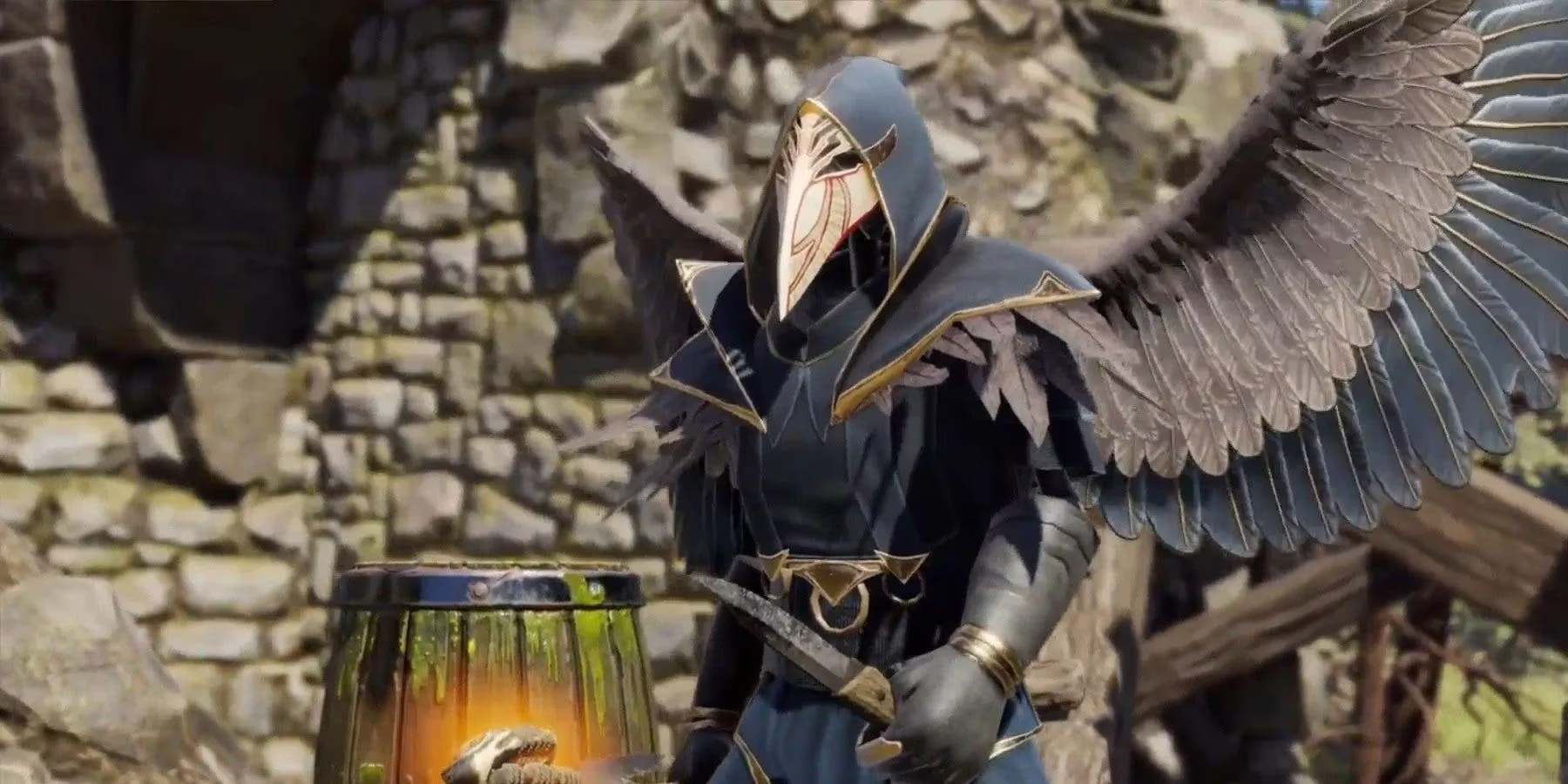
If Original Sin was the proof of concept, Divinity: Original Sin 2 (2017) was the masterpiece. It refined every system to near perfection. Playing as a "Godwoken"—a Sourcerer destined to either save or doom Rivellon—players experienced a narrative of incredible depth, where every origin character had a sprawling personal quest. The game's mechanics encouraged pure creativity: you could talk your way out of boss fights, use teleportation spells to rearrange the battlefield (or your enemies into lava), and build characters in wildly broken yet delightful ways. For years, fans and critics alike hailed it as the closest a video game had come to replicating the true freedom of a tabletop role-playing session, making it the perfect training ground for Larian's next, even bigger challenge.
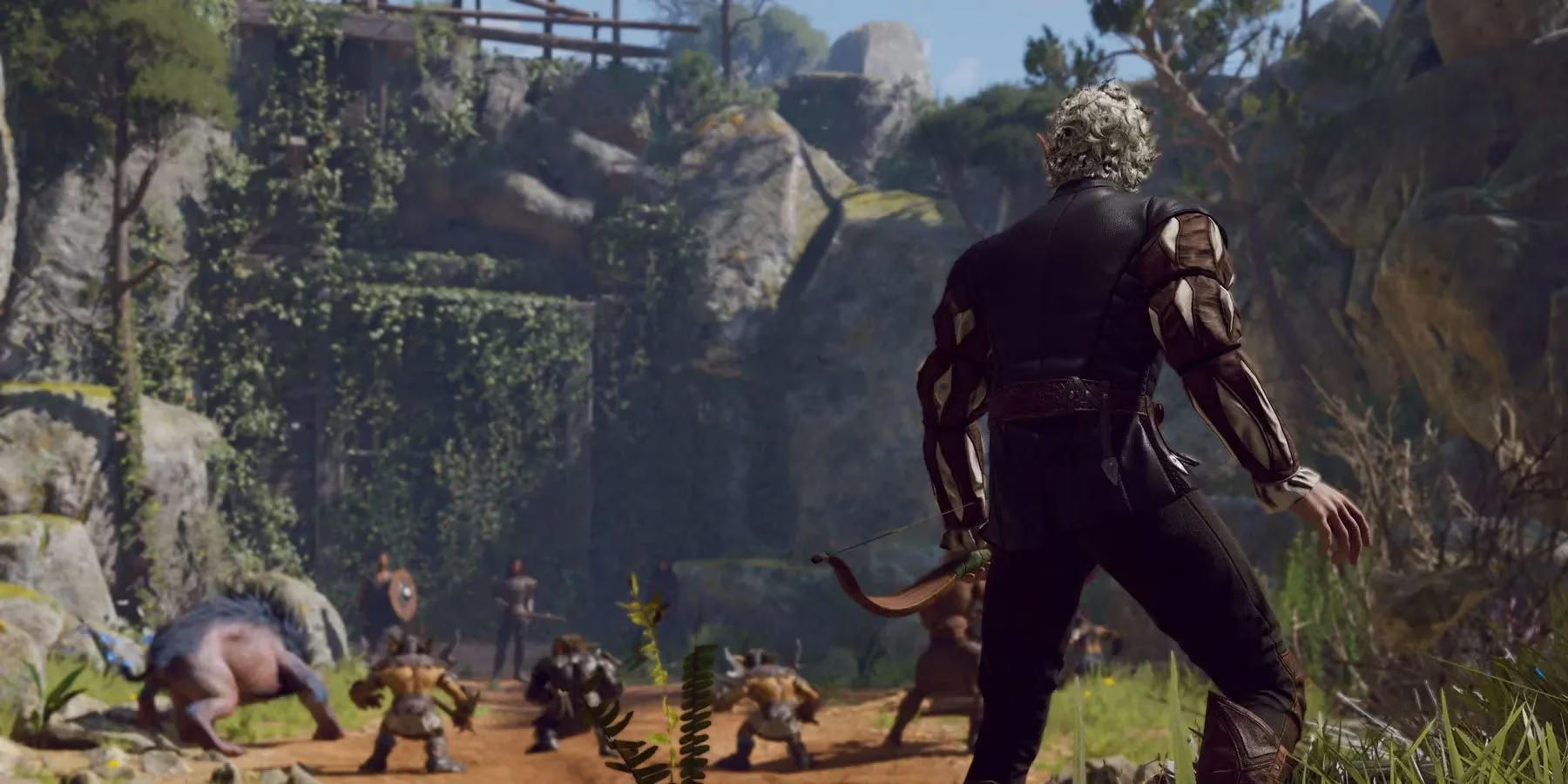
That challenge was Baldur's Gate 3. Here, Larian successfully fused their honed craft—interactive environments, consequential choices, systemic gameplay—with the rich ruleset and lore of Dungeons & Dragons 5th Edition. The Mindflayer invasion story became a canvas for unparalleled player expression. The D&D mechanics weren't just imported; they were lived in. Every spell had physicality, every skill check felt momentous, and the world reacted to the player's race, class, and past actions with stunning detail. By 2026, its legacy is secure not just as a phenomenal game, but as the culmination of over two decades of Larian's philosophy: that the best stories are the ones the players author for themselves through meaningful interaction with a living, breathing world.
| Game | Release Year | Key Innovation / Legacy |
|---|---|---|
| Divine Divinity | 2002 | Established Rivellon & deep, non-combat RPG systems. |
| Beyond Divinity | 2004 | Introduced dual-character "soul-forged" gameplay. |
| Divinity II: Ego Draconis | 2009 | Pioneered dragon transformation in a 3D action-RPG. |
| Divinity: Dragon Commander | 2013 | Bold genre fusion of strategy, politics, and RPG. |
| Divinity: Original Sin | 2014 | Revitalized tactical RPGs with systemic, elemental combat. |
| Divinity: Original Sin 2 | 2017 | Perfected the formula, achieving near-tabletop freedom. |
| Baldur's Gate 3 | 2023 | Masterful fusion of Larian's design with D&D 5e, setting a new industry standard. |
The tapestry of Larian Studios is one of consistent vision through evolving form. From the humble, deep roots of Divine Divinity to the genre-defining heights of Baldur's Gate 3, their journey illustrates a relentless pursuit of one goal: creating worlds that feel truly alive, responsive, and endlessly surprising for the player who dares to explore every corner and challenge every assumption. For those who have only known Faerûn, the ancient and magical continent of Rivellon awaits, holding the stories that forged the studio behind today's greatest RPGs. 😊