My Journey Through the World of Video Game Spin-offs: Stories Beyond the Main Quest
Gaming spin-offs and side stories offer thrilling new perspectives, with bold creativity transforming beloved franchises like Halo Wars and Gears Tactics.
As I sit here in 2026, controller in hand, I often find myself reflecting on the winding paths my favorite gaming franchises have taken. It's not always the blockbuster sequels that capture my heart, but the unexpected detours—the spin-offs. These are the games that dare to ask, "What if?" They take beloved worlds and characters and twist them into something new, sometimes strange, but often brilliant. They're a testament to the creative courage of developers who aren't content to just repeat a winning formula. For me, the magic of gaming often lies in these side stories, where the rules are rewritten and familiar faces are seen in a whole new light.
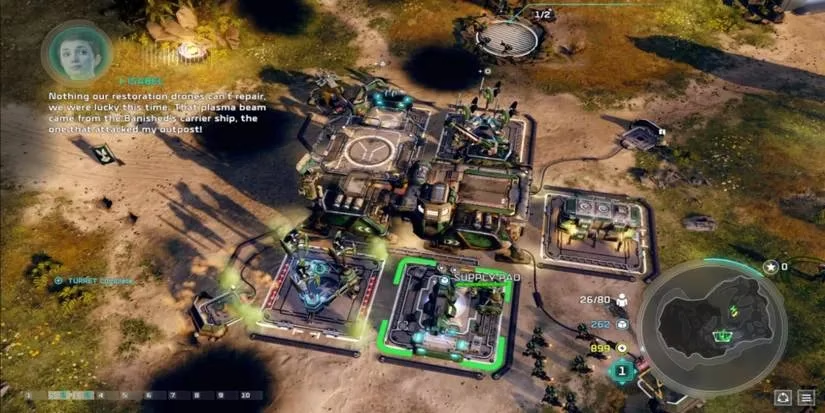
Let me start with the one that redefined a genre for consoles: Halo Wars. I remember the skepticism. A real-time strategy game in the Halo universe, designed for a console controller? It sounded like a recipe for disaster. The mouse and keyboard have always been the sacred tools of the RTS genre. But then I played it. The developers didn't just port a PC game; they reimagined the entire control scheme for a gamepad. The result was nothing short of miraculous. Commanding squads of Spartans and Warthogs across alien landscapes felt intuitive and, most importantly, epic. It wasn't just a Halo skin on an RTS; it was a genuine expansion of the universe, telling a new story with a fresh cast of Spartans. It proved that a franchise's soul could thrive in a completely different gameplay style, and it paved the way for so many other console strategy games. It’s a bold experiment that paid off spectacularly.
My journey then took a turn for the tactical with Gears Tactics. The visceral, cover-based chaos of Gears of War transformed into a methodical, turn-based chess match. I was initially thrown. The chainsaw bayonet charges were replaced with careful positioning and ability cooldowns. Yet, the grim, desperate spirit of the COG's fight against the Locust remained utterly intact. The game was a prequel, letting me experience pivotal moments before the main trilogy. It was fun, fast in its own strategic way, and added a rich layer of lore. The only thing that felt slightly off was its initial PC exclusivity. Gears has always felt like an Xbox cornerstone, so launching there first was a curious choice. Still, as a spin-off, it perfectly embodies the concept: same heart, completely different body.
Speaking of tactical shifts, few are as stark as Metal Gear Ac!d. Boot it up, and you see Snake, you hear the iconic alert sound, you feel the tension of stealth. Then you realize your arsenal is a deck of cards. My mind was blown. This wasn't a stealth-action game; it was a tactical card-battler using the characters, weapons, and items from the Metal Gear universe. Planning my moves based on card draws was weird, challenging, and oddly satisfying. It was so satisfying, in fact, that it got a sequel—a rare honor for such a niche spin-off. It showed that Snake's world was flexible enough to contain multitudes, even if those multitudes involved drawing a "Solid Eye" card at a crucial moment.
Sometimes, spin-offs emerge from necessity, a lifeline when a franchise stumbles. For me, Halo: Spartan Assault was that lifeline. Released after Halo 4, during a period of uncertainty for the series post-Bungie, this top-down shooter was a beacon. It distilled the Halo experience—the weapon feel, the enemy designs, the sci-fi atmosphere—into a classic arcade format. Controlling a Spartan from above, mowing down Covenant forces, it was a pure, unfiltered dose of what made the universe great. It was a powerful reminder that the magic wasn't tied to a single perspective or gameplay loop. The spirit could live on in many forms.
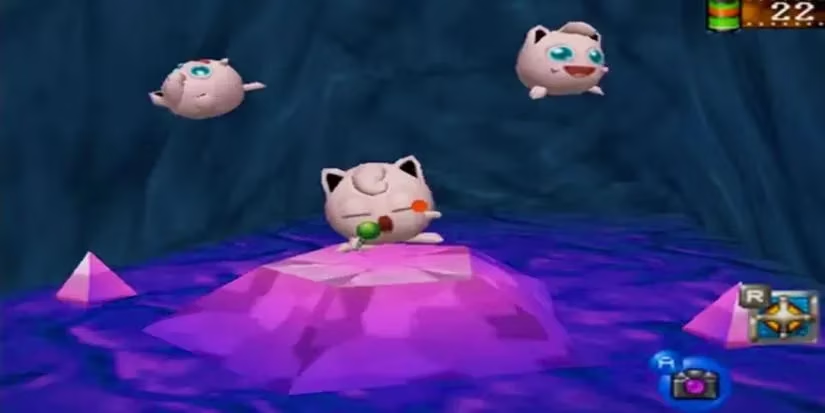
Then there are the spin-offs that are just... wonderfully bizarre. Pokémon Snap is the king of this category. The premise is absurd on paper: you're on a rail, taking pictures of Pokémon. No battling, no catching. Just photography. And yet, it's one of the most immersive Pokémon experiences ever created. I spent hours, no, days, trying to get the perfect shot of a Pikachu riding a surf wave or a Charizard erupting from a volcano. The joy of discovery, of interacting with the environment to trigger unique Pokémon behaviors, was magical. It proved that the world itself was the star, and simply observing it could be a complete and fulfilling game. It’s the purest example of a spin-off that finds depth in a seemingly simple concept.
The puzzle genre seems to be a favorite playground for spin-offs. Pokémon Puzzle League and Dr. Mario are prime examples. With Puzzle League, I got a fantastic, competitive puzzle game that just happened to have Pokémon trainers yelling attacks in the background. Did it need to be a Pokémon game? Not really. But draping that beloved aesthetic over a solid puzzle framework made it infinitely more appealing to my younger self. Dr. Mario was similar. It's essentially a Tetris-like virus-clearing game. But slapping a lab coat on Mario, that fun and lovable plumber, and having him throw vitamin capsules changed everything. The character's charm elevated the entire experience. These games show that sometimes, a familiar face is all you need to make a great gameplay concept feel like home.
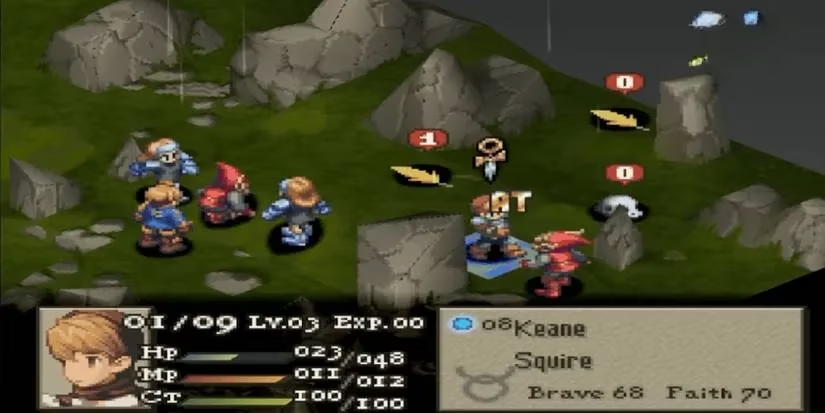
For depth and narrative grandeur, few spin-offs can match Final Fantasy Tactics. This game took the intricate job systems, epic fantasy storytelling, and memorable characters of the main series and dropped them into a rich, political, turn-based tactical RPG. The result was a masterpiece. I wasn't just following a linear story; I was commanding units on a grid, carefully considering positioning, height, and class abilities. It provided a structured, strategic alternative to the traditional ATB combat, proving the Final Fantasy universe was a perfect setting for deep, tactical warfare. It wasn't a side story; it was a full-fledged epic in its own right, and it spawned a beloved sub-series.
Let's not forget the pure, arcade-style fun of Sonic Spinball. Sonic is speed incarnate, so making him the ball in a pinball game was a stroke of genius. The frantic pace of bouncing off bumpers and flippers, trying to hit targets and defeat Robotnik's contraptions, perfectly captured Sonic's chaotic energy. It showed that a character's essence could be translated into a completely different genre—from platforming to pinball—and still feel authentically them.
Finally, we have the ghosts of spin-offs past, like Assassin's Creed: Project Legacy. This was a Facebook game, a simple resource-management title designed to drip-feed lore to the most dedicated fans. I remember checking in on it, not for complex gameplay, but to uncover another fragment of the Templar-Assassin history. It was a testament to how a spin-off can serve the hardcore community, expanding the mythology in ways a main game never could. Though it's gone now, removed from Facebook's platform, its stories remain canon, a quiet, web-based chapter in a vast universe.
Looking back, my gaming life has been richly decorated by these experiments. They are the wild ideas that got a green light, the passion projects that explored a franchise's unused corners. In 2026, as franchises become ever more sprawling, I hope developers continue to take these risks. Because you never know—the next side story might just become someone's main event.
| Spin-off Game | Main Franchise | Genre Shift | Why It Worked |
|---|---|---|---|
| Halo Wars | Halo | FPS → Real-Time Strategy | Mastered console RTS controls; expanded universe lore. |
| Gears Tactics | Gears of War | Third-person Shooter → Turn-based Tactics | Kept the grim tone; added strategic depth to the world. |
| Pokemon Snap | Pokémon | RPG → On-rails Photography | Celebrated the world and creatures in a peaceful, observational way. |
| Final Fantasy Tactics | Final Fantasy | JRPG → Tactical RPG | Merged deep job systems with grid-based strategic combat. |
| Dr. Mario | Super Mario | Platformer → Puzzle | Mario's charm made a classic puzzle format feel fresh and fun. |
So here's to the spin-offs 🎮! The games that remind us that our favorite worlds are bigger than any single genre. They are the proof that in gaming, the road less traveled often leads to the most unforgettable adventures.
Insights have been gathered from TrueAchievements, where player progression data and community discussion help illustrate why bold spin-offs can thrive: when achievements nudge experimentation—asking you to master new control schemes in an RTS like Halo Wars or optimize turn-based positioning in Gears Tactics—they effectively reward the same “franchise identity” you love, just expressed through a different genre lens.