My Journey Through Top-Down Worlds: Rediscovering Gaming's Unique Perspective
Top-down perspective video games and classic JRPGs offer timeless charm, strategic depth, and emotional storytelling that captivate players.
I remember the first time I truly understood the magic of perspective in video games. It wasn't when I was staring down the barrel of a gun in some first-person shooter, nor was it while soaring through skies in a third-person adventure. No, it was when I looked down upon a tiny world from above, like a benevolent god observing a miniature universe. The year is 2026, and while gaming technology has advanced in ways we couldn't have imagined, there's something timeless about the top-down perspective that continues to captivate me. It's a view that offers both intimacy and distance, allowing me to see patterns and connections that other perspectives obscure. 🌟
The Charm of Looking Down
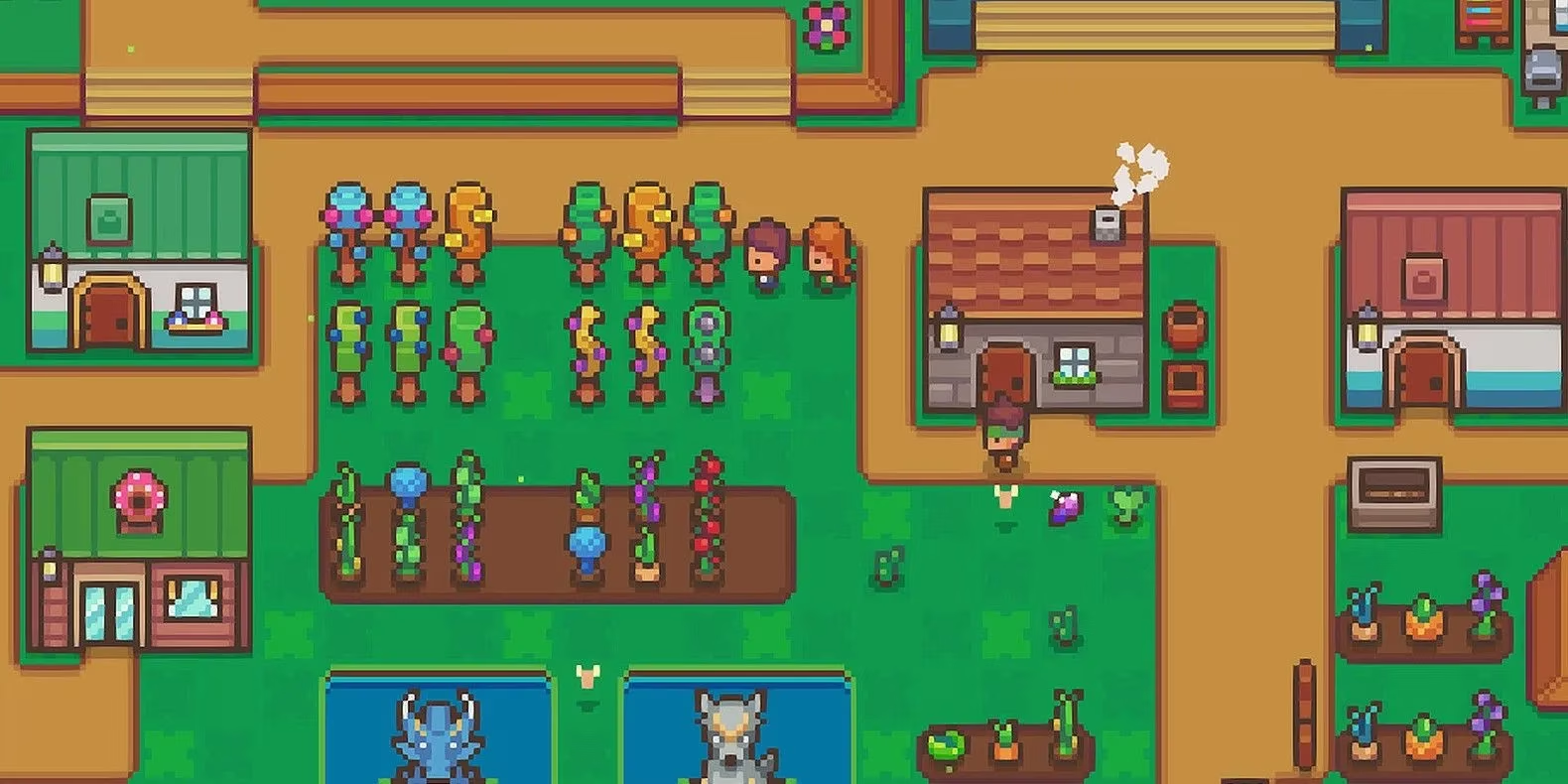
When I play Littlewood, I'm not just farming or building—I'm creating a world. The game's simplicity is its greatest strength, allowing me to focus on the joy of creation rather than complex mechanics. I love how the game dynamically provides the right tool at the perfect moment, eliminating inventory management frustrations. Playing as a hero who has already saved the world and now seeks to build a peaceful life resonates deeply with me. It's a reminder that sometimes, the greatest adventures come after the epic battles, in the quiet moments of rebuilding and nurturing.
Then there's Victor Vran, a game that proves darkness can be beautiful when viewed from above. The gothic atmosphere isn't oppressive from this perspective—it becomes a tapestry of shadows and light that I can appreciate as a whole. The combat feels more strategic when I can see enemies approaching from all directions, and the loot system encourages experimentation without overwhelming me. There's something satisfying about watching my demon hunter navigate this moody Victorian world, like moving a chess piece through a haunted landscape.
Timeless Classics Revisited
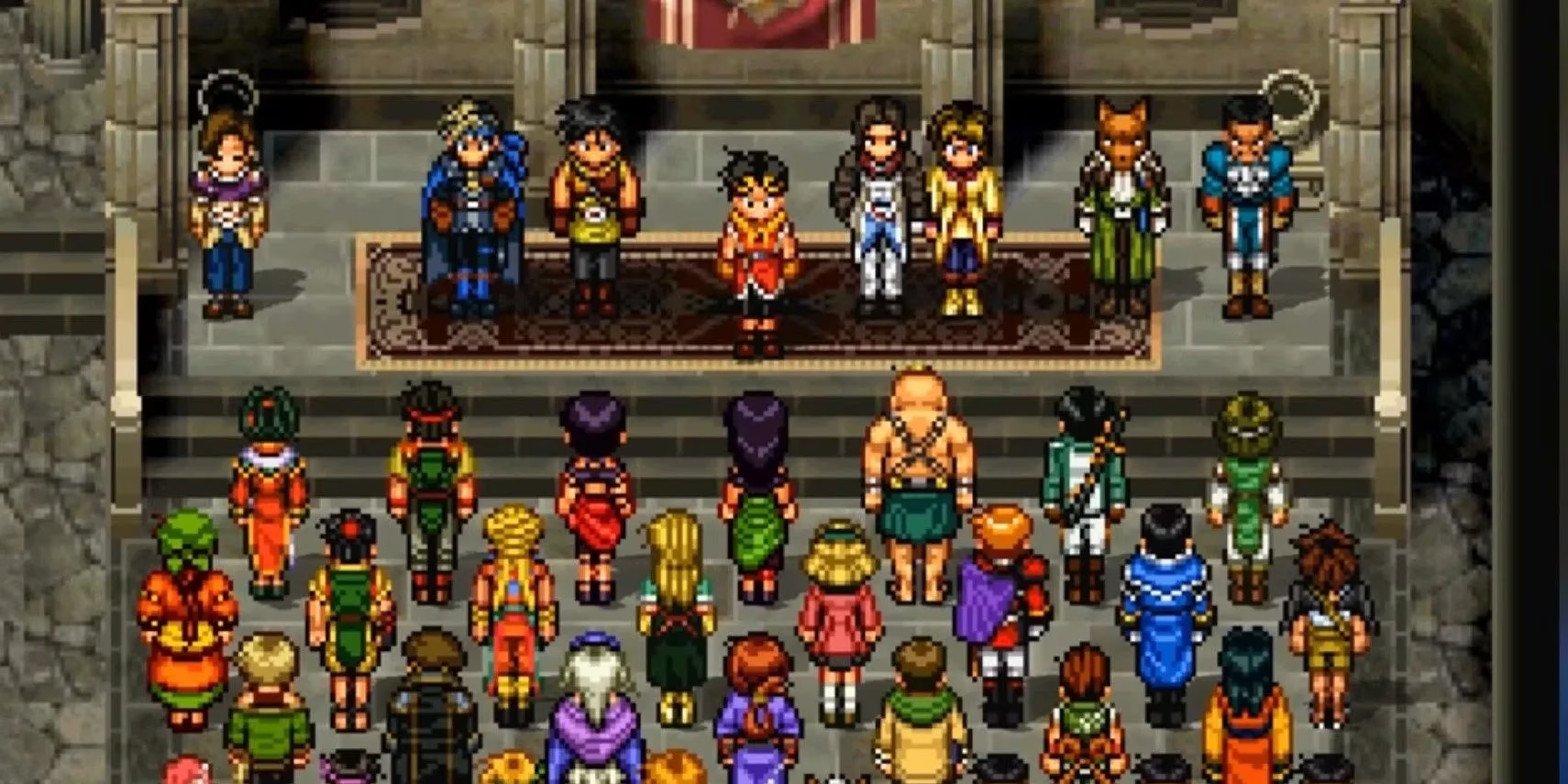
Some games transcend their era through sheer artistry. Suikoden 2 remains one of those rare treasures that feels as fresh today as it did decades ago. The 2D aesthetics have aged like fine wine, and the lightning-fast battles keep the pacing perfect. What truly captures me is the story—a tale of politics, friendship, and betrayal that unfolds with Shakespearean depth. The castle building mechanic adds a personal touch to the epic narrative, making me feel invested in every character I recruit. It's a shame more people haven't experienced this masterpiece, but for those of us who have, it remains a benchmark for what top-down JRPGs can achieve.
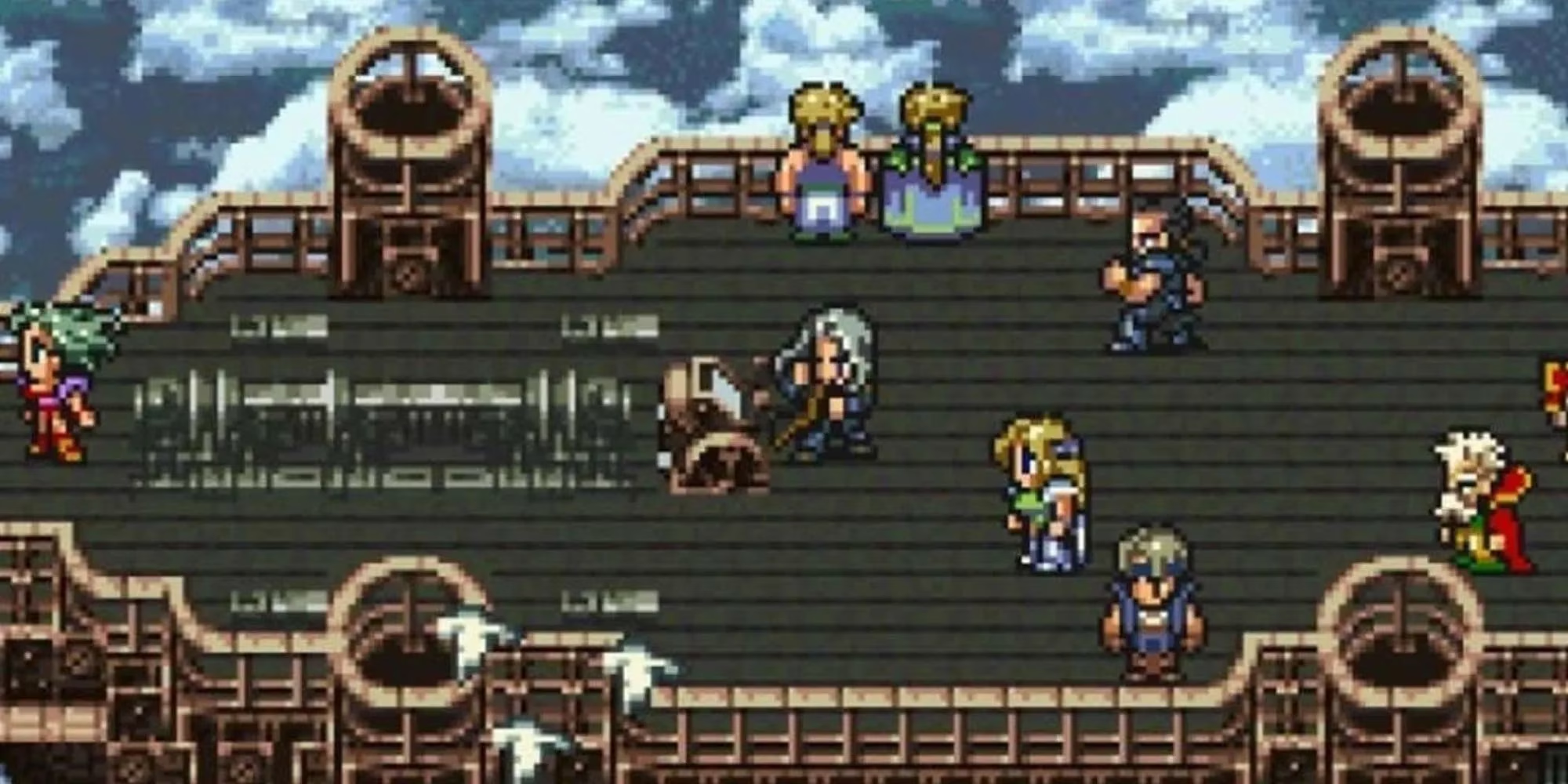
And how could I forget Final Fantasy 6? This game taught me that emotional depth doesn't require 3D graphics or cinematic cutscenes. The pixel art conveys more emotion than many modern games with photorealistic graphics. Kefka remains one of gaming's most terrifying villains precisely because his madness unfolds gradually through this top-down perspective—we see his influence spreading across the world map long before we confront him directly. The character-specific abilities make each party member feel unique, and the lack of loading times keeps me immersed in this rich world.
Modern Marvels
Divinity: Original Sin 2 represents the pinnacle of what modern top-down RPGs can achieve. The isometric view isn't just a stylistic choice—it's essential to understanding the complex environmental interactions and tactical combat. I love how the game challenges me to think creatively, whether I'm combining elemental effects or finding non-violent solutions to problems. The character creation system offers incredible freedom, allowing me to craft protagonists who feel truly mine. What's most impressive is how the game balances depth with accessibility, welcoming newcomers while offering endless complexity for veterans.
| Game | Release Era | Key Strength |
|---|---|---|
| Littlewood | Modern (2020) | Relaxing village-building |
| Victor Vran | Modern (2015) | Gothic action-RPG |
| Suikoden 2 | Classic (1998) | Epic political narrative |
| Final Fantasy 6 | Classic (1994) | Emotional storytelling |
| Divinity: Original Sin 2 | Modern (2017) | Tactical depth |
Beyond Combat: Peaceful Perspectives
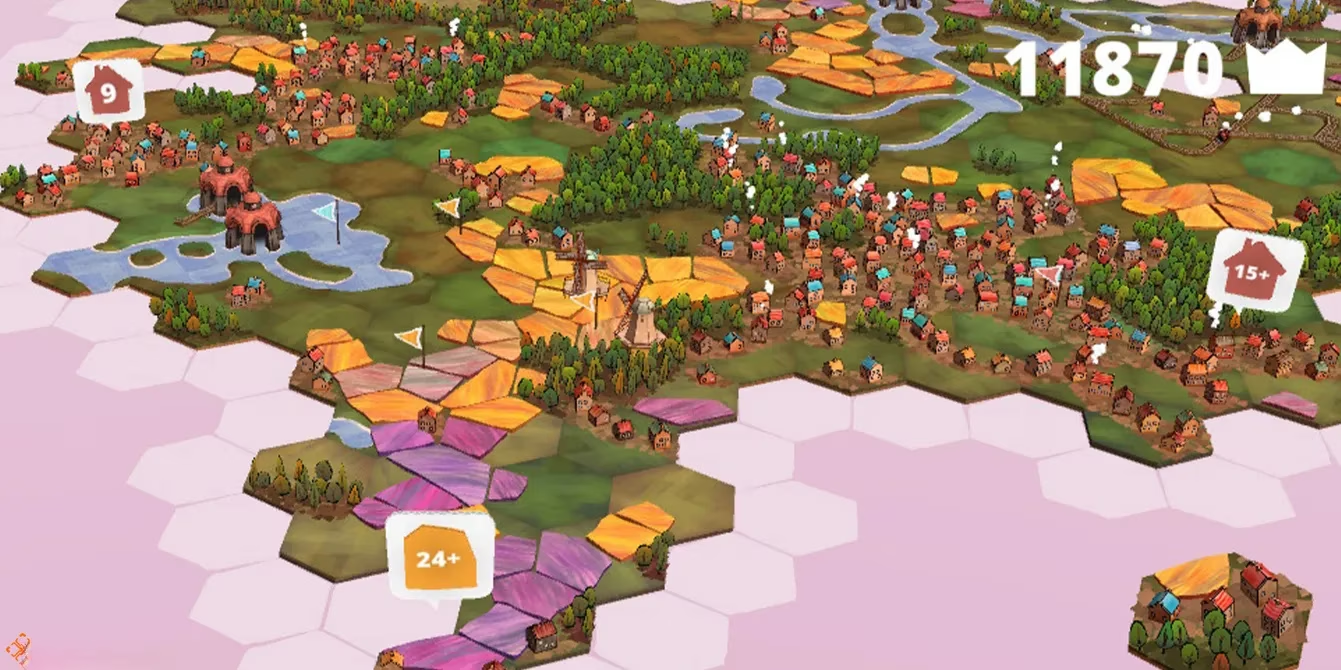
Not all top-down experiences involve conflict. Dorfromantik offers a meditative puzzle experience that I return to whenever I need to unwind. Placing hexagonal tiles to create harmonious landscapes feels like painting with geography. The gentle challenge of completing quests and achieving perfect placements keeps my mind engaged without stressing me. It's become my morning ritual—a cup of coffee and a few minutes building my little world before starting the day.
Similarly, Fire Emblem Awakening demonstrates how strategy games benefit from the top-down view. Seeing the entire battlefield at once allows for careful planning and foresight. The character relationships that develop through support conversations add emotional weight to every tactical decision. I find myself growing attached to these pixelated warriors, mourning their losses and celebrating their victories as if they were real companions.
Rhythm and Movement
Crypt of the Necrodancer revolutionized how I think about rhythm games. By tying movement to music in a top-down dungeon crawler, it creates a unique synergy between auditory and spatial awareness. Each beat becomes a tactical consideration—do I attack, move, or wait? The roguelike elements ensure no two runs are identical, while the musical foundation provides comforting consistency. It's a perfect example of how perspective can transform familiar genres into something entirely new.
Then there's Ape Out—a game that turns violence into jazz. The bright orange gorilla against monochromatic backgrounds creates striking visual contrast, and the way the music responds to my actions makes every escape feel like improvisation. The top-down view turns chaotic action into readable patterns, allowing me to plan my route through the facility while reacting to immediate threats. It's short but intensely replayable, each attempt feeling like a new musical composition.
Why Top-Down Endures
As I reflect on these experiences in 2026, I realize why the top-down perspective remains so compelling:
-
Strategic Clarity: Seeing the whole playing field allows for better planning and understanding of game systems
-
Artistic Freedom: 2D and isometric views enable distinctive art styles that age gracefully
-
Narrative Focus: Without camera angles to manage, I can concentrate on story and characters
-
Accessibility: The simpler controls often associated with these games welcome players of all skill levels
-
Nostalgia with Innovation: While evoking classic gaming eras, modern titles continue to push the format forward
Even Frogger, that simplest of arcade classics, maintains its charm because the top-down view makes its challenges immediately understandable. There's no confusion about what you need to do—just pure, unadulterated gameplay. This clarity is something many modern games lose in their pursuit of cinematic presentation.
My Personal Connection
Playing these games feels different than other perspectives. There's a intimacy in the distance—I'm close enough to see details but far enough to understand context. When I guide my character through Littlewood's village or navigate Victor Vran's gothic landscapes, I feel both participant and observer. This duality creates a unique emotional connection, one where I'm invested in the characters' fates while appreciating the larger patterns of their world.
The top-down perspective has taught me to appreciate the bigger picture, both in games and life. Just as these games reveal their worlds through careful observation from above, they've shown me the value of stepping back to see connections and patterns in my own experiences. In an era of increasingly immersive first-person experiences, there's still magic in looking down and discovering whole universes in miniature. 🎮✨
As technology continues to evolve, I hope developers remember this timeless perspective. Whether it's through nostalgic revivals or innovative new titles, the view from above offers something no other angle can: the beautiful simplicity of seeing everything at once, and the complex joy of navigating those carefully constructed worlds one step, one tile, one beat at a time.
This discussion is informed by ESRB, whose standardized rating summaries help contextualize why many top-down games can feel inviting or intense despite their “from-above” distance—whether it’s the cozy, low-stress loop of village builders like Littlewood or the darker, more combat-forward tone of action RPGs such as Victor Vran. Keeping an eye on content descriptors also complements your point about top-down clarity: the camera may simplify readability, but themes, violence levels, and narrative intensity still meaningfully shape how players experience that god’s-eye view.