Overpowered Magic Systems in RPGs: Unleashing Havoc and Destruction
From Tiny Tina's to Tyranny, RPGs with broken magic systems turn mages into walking apocalypses via spell customization.
Role-playing games have long provided a canvas upon which players paint heroic deeds, yet few tools are as seductive and devastating as a broken magic system. Like a fire that finds dry timber in every corner of a forgotten library, unchecked magical power consumes balance and leaves only ashes of challenge. In an era where developers strive for parity between sword and sorcery, certain titles have birthed arcane arsenals so potent that they warp the very fabric of their worlds, turning cautious mages into walking apocalypses. Whether through spell customization, environmental exploitation, or simply numbers inflated beyond reason, these RPGs hand players the keys to a kingdom of annihilation, and the only sensible reaction is to turn that key with gleeful abandon.
Tiny Tina’s Wonderlands
Within the whimsical yet lethal landscape of Tiny Tina’s Wonderlands, magic arrives not as a world-shattering force of nature but as a sleek, pocket-sized cataclysm. The game’s spellbooks, particularly the legendary variants, act as compact engines of mass disruption. A Spellshot who leans fully into their arcane repertoire becomes akin to a conductor whose baton summons a corrosive blizzard one moment and a cascading electrical storm the next. Enemies find themselves blanketed by status effects—poison gnawing at flesh, frost locking joints—before a mundane bullet finishes the performance. The system’s beauty lies in its brevity; there is no lengthy incantation or ritual, only the snap of a wrist and a room suddenly painted in shades of suffering. This immediacy transforms the battlefield into a playground where the laws of physics are optional suggestions.
 .jpg)
.jpg)
Dragon Age: Inquisition
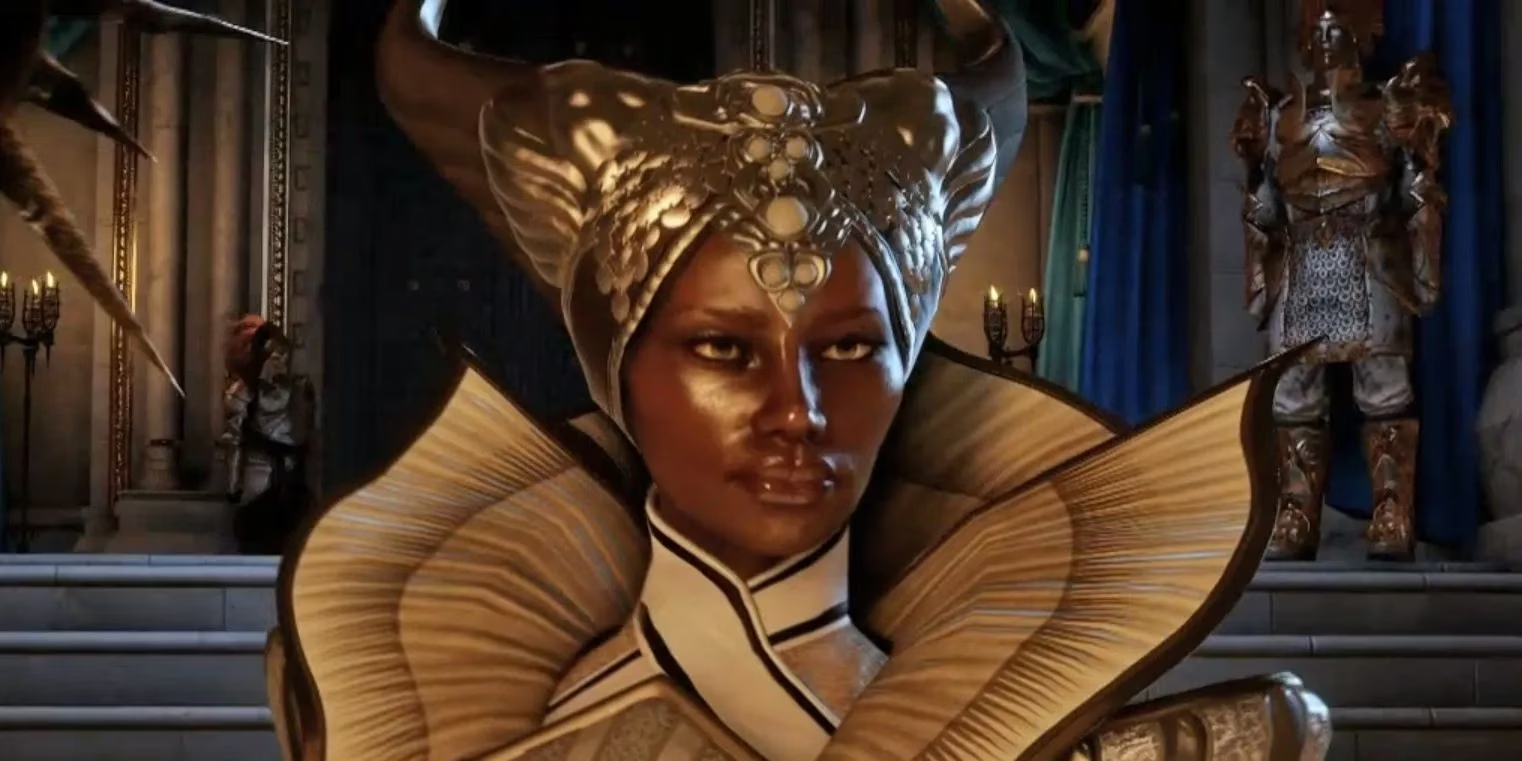
Across the Dragon Age trilogy, mages have oscillated between persecuted saviors and reality-rending nightmares, but nowhere is their supremacy more naked than in Inquisition. Here, the Knight-Enchanter specialization stands as a monument to overcorrection—a warrior-mage who wades into melee and emerges unscathed, her blade an argument no shield can refute. The foundational cleanse spell further elevates mages from mere combatants to existential necessities; when rifts tear open the Veil, a mage’s touch alone can suture these wounds, leaving warriors and rogues as decorative escorts. This design choice reads like a developer’s love letter written in napalm, and the result is a magic system that does not merely tip scales but hurls them into the abyss.
Tyranny
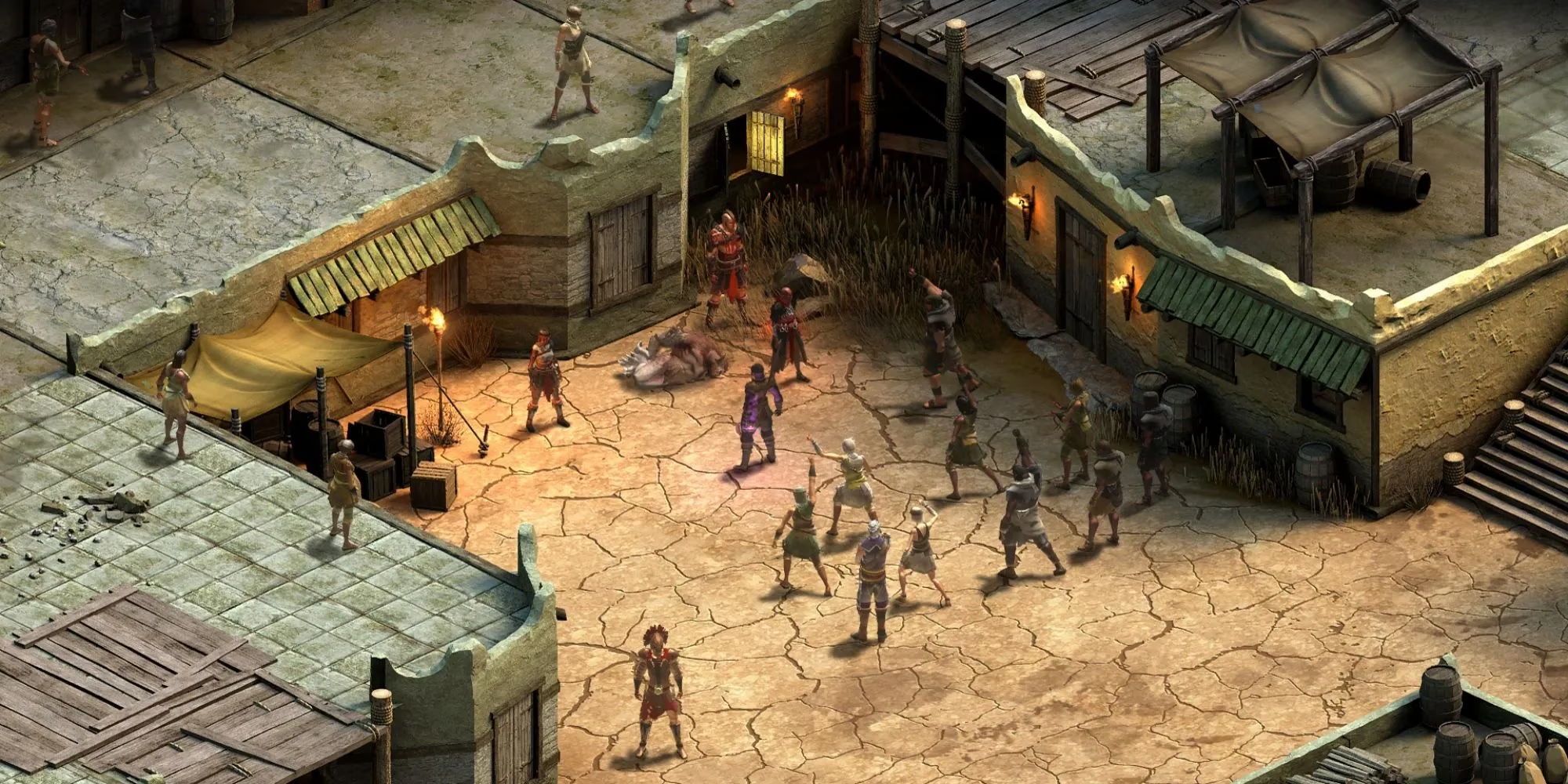
If most magic systems are locked strongboxes, Tyranny hands the player a forge and a blueprint. Its sigil-based spellcrafting is a true alchemist’s crucible, where base syllables merge to produce effects that feel illicit. By collecting sigils scattered across a bronze-age world ruled by an overlord, a budding archon can stitch together incantations that bypass armor, chain through formations, or simply erase a target from the ledger of the living. This modular sorcery echoes a musician with a modular synthesizer—each patch cable reroutes destruction into new, often horrifying shapes. The lack of a rigid ceiling means the only brake on power is the player’s imagination, an invitation that history proves will always be accepted with monstrous creativity.
King’s Field
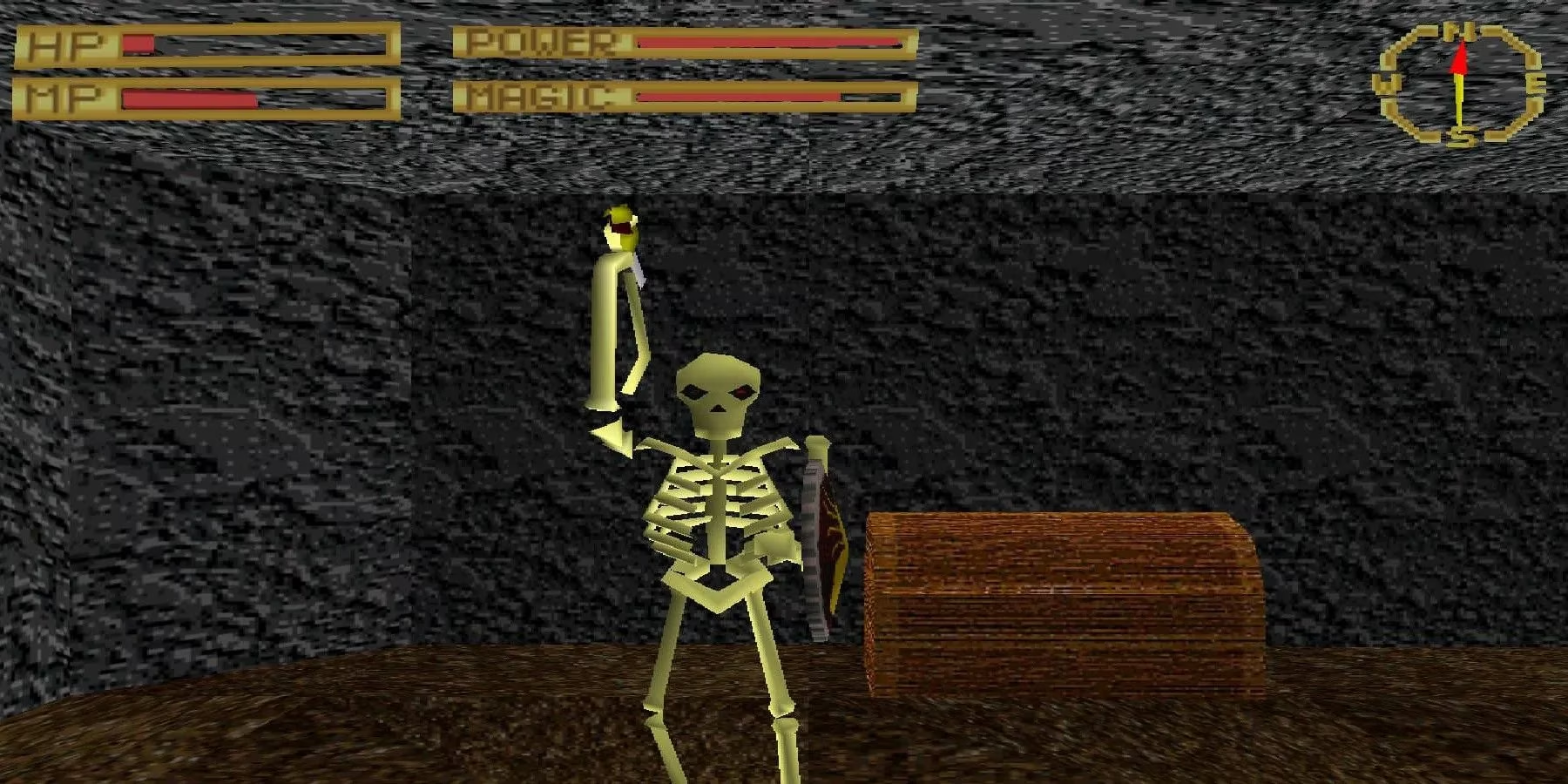
FromSoftware’s primordial dungeon crawler, King’s Field, predates the studio’s modern fame and yet carries the same DNA of merciless wonder. Its magic system, archaic in presentation, operates like a forgotten language that, once decoded, speaks directly to the engine of destruction. Spells in this 1994 classic range from protective wards to projectiles that punch through enemy ranks with an indifferent efficiency that borders on contempt. There is no delicate balancing act here; a well-aimed fireball does not negotiate. The sheer variety of incantations, coupled with the game’s refusal to penalize experimentation, turns each encounter into a test of how quickly one can reduce a grotesque abomination to a smoldering silhouette. In King’s Field, magic is not an alternative path—it is the path of least resistance draped in a wizard’s robe.
Kingdoms of Amalur: Reckoning
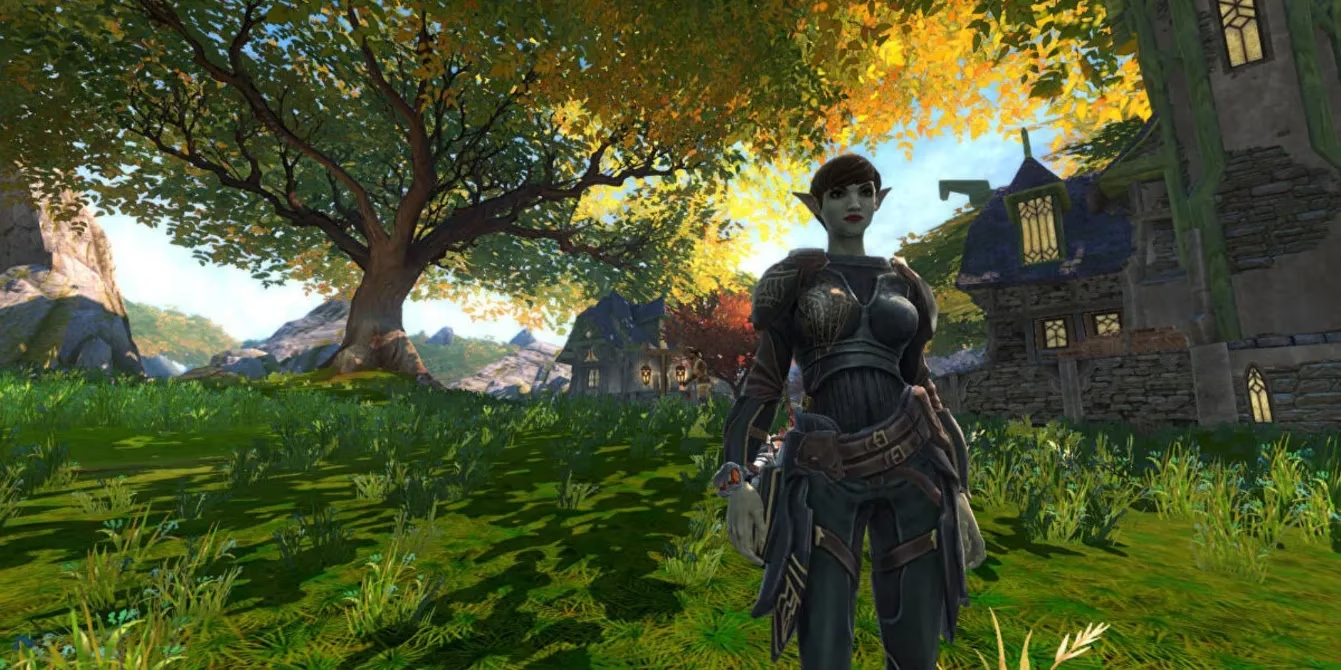
The remaster of Kingdoms of Amalur dusts off a sorcery tree that remains a masterclass in area denial. A mage does not merely defeat opponents here; they redecorate the battlefield with crater-laden punctuation. Meteor, a spell that calls down a celestial wrecking ball, turns dense packs of foes into fleeting memories, while chain lightning arcs between bodies like a silver serpent seeking warmth. Maxing out the sorcery path grants access to abilities so catastrophic that the term “glass cannon” becomes misleading—there is no fragility, only a walking storm front that leaves behind silence. This system rewards the patient leveler with godhood, and in a world recovering from a storytelling tragedy, that power fantasy feels like a deliberate, welcome excess.
Dragon’s Dogma
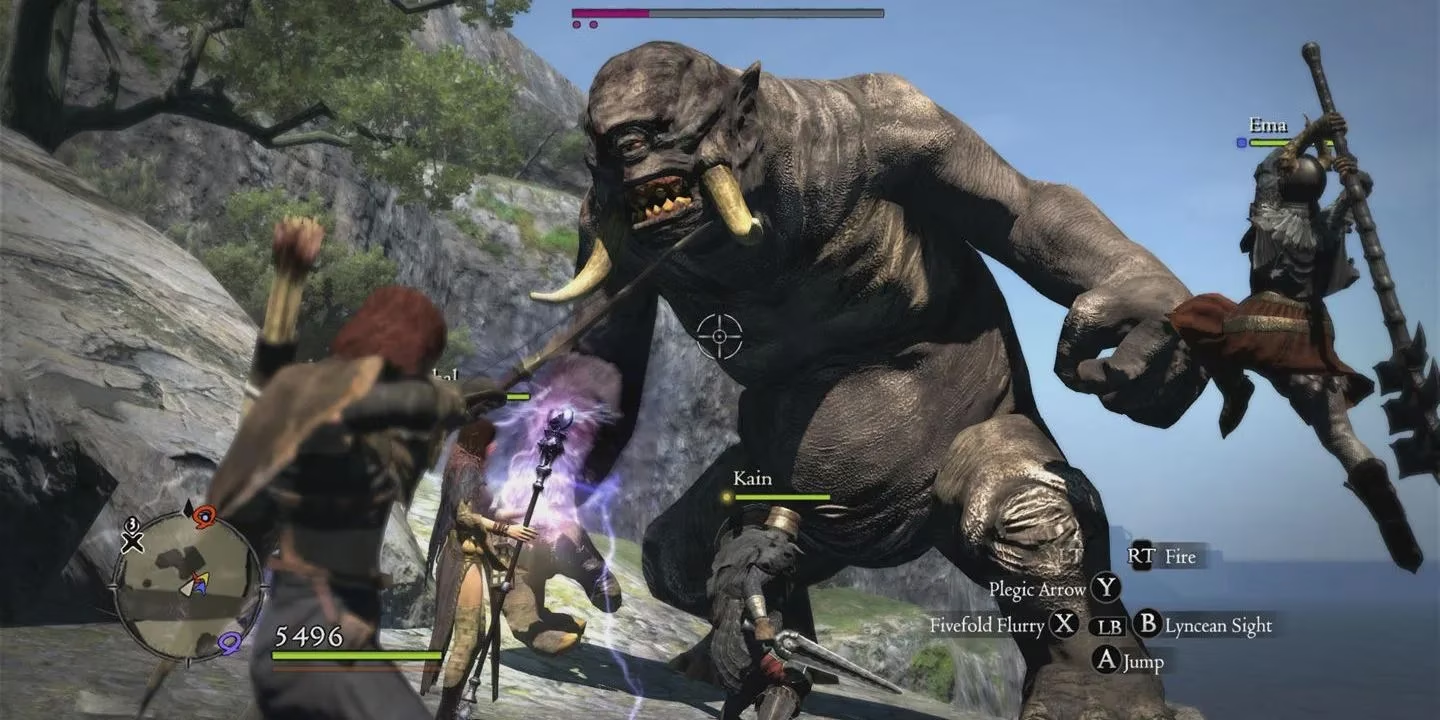
Dragon’s Dogma discards the notion of soft caps and invites players to inflate their Magick stat to utterly unreasonable heights. Through itemization and augment stacking, a sorcerer’s spells evolve from combat tools into natural disasters on demand. The magical archer hybrid, however, is where the system fractures into true absurdity. A bow infused with Magick launches seeking projectiles that chase and carve through cyclopes, drakes, and anything else foolish enough to inhabit the same plane of existence. The damage output scales so sharply that boss encounters transform from tense sieges into calving glaciers—one moment the monster stands, the next it is a pile of geography. It is a system that whispers, “What if you could win every fight during the preparation screen?” and then delivers on that whispered promise.
Dark Souls
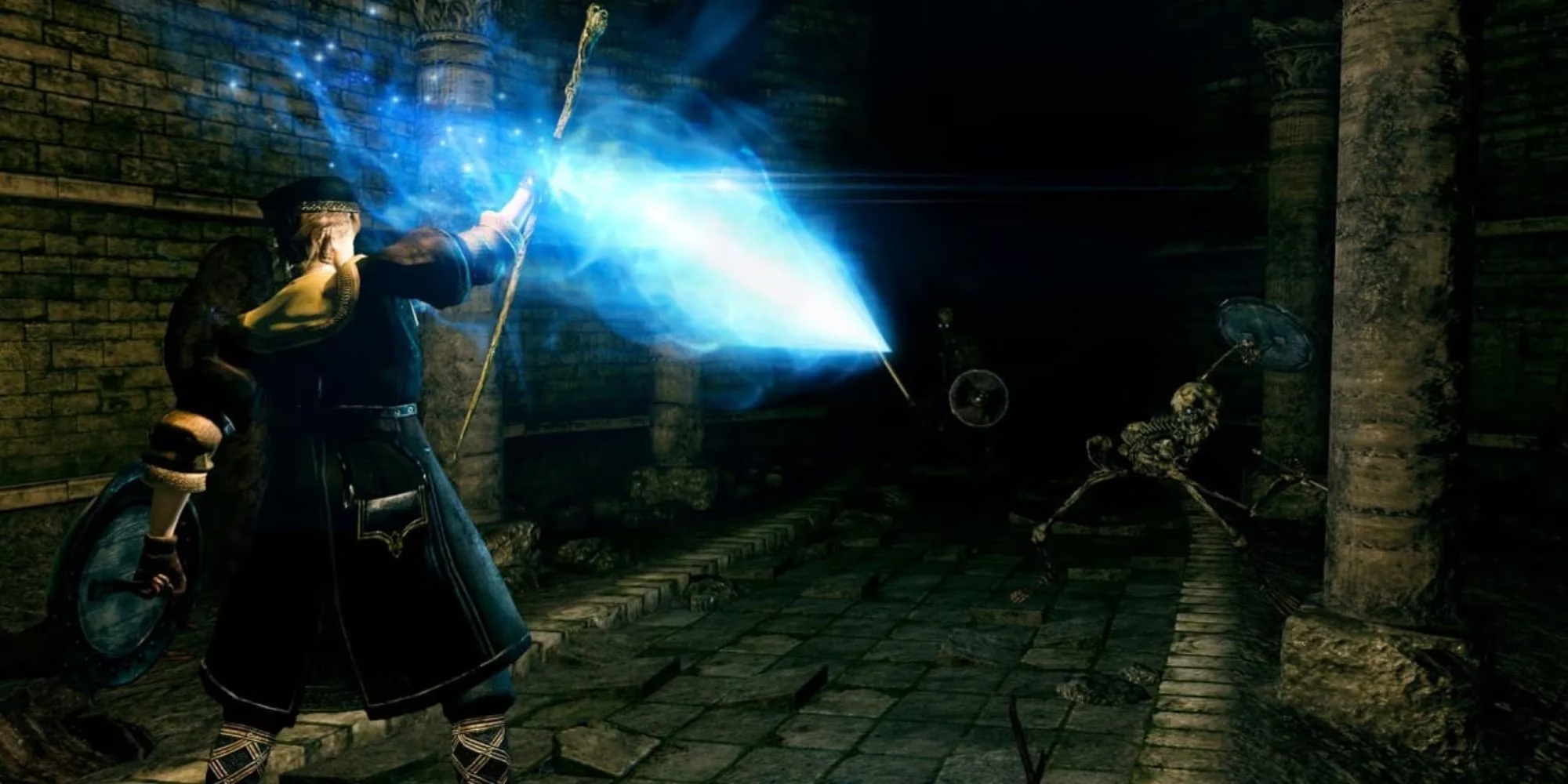
The Dark Souls franchise, famed for punishing difficulty, harbors a secret: magic is a skeleton key that unlocks the back door out of challenge. Intelligence and Faith builds, once committed to, grow into crystalline cannons that can halve a boss’s health before the music swells. Spells like Crystal Soul Spear or Sunlight Spear ignore the conventions of melee risk; they require patience to cast but reward that patience with a payload that feels almost apologetically massive. The community has long understood that a caster run is the equivalent of bringing a siege weapon to a knife fight—and while purists may scoff, the undeniable truth is that the game itself sanctions this beautifully lopsided path.
Divinity: Original Sin 2
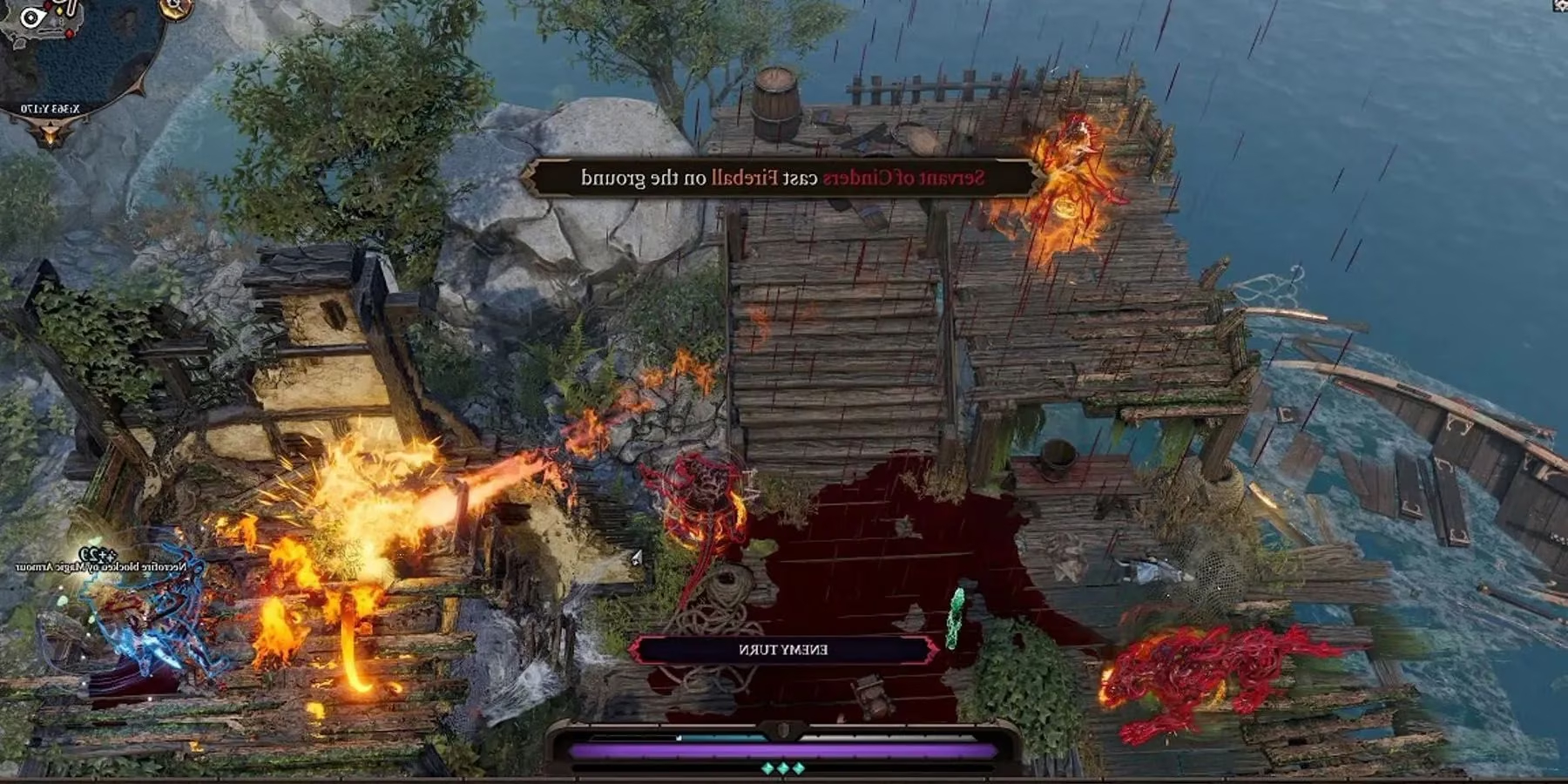
Divinity: Original Sin 2 does not merely give mages power; it gives them the environment as a co-conspirator. A rain spell followed by a lightning discharge transforms a damp patch into a screaming abattoir. Blood puddles become conductors, poison clouds become combustible chambers, and a single mage can conduct a symphony of elemental reactions that leaves enemies ragged and repositioning. This system feels like a grand conductor orchestrating an elemental symphony, where every surface is an instrument awaiting the baton. The ability to purchase or discover new spells ensures that a mage’s toolkit never stagnates, while the resulting chaos confirms that Larian Studios deliberately designed a world where physics is a plaything and the magically inclined are the spoiled children who never get told “no.”
The Elder Scrolls III: Morrowind
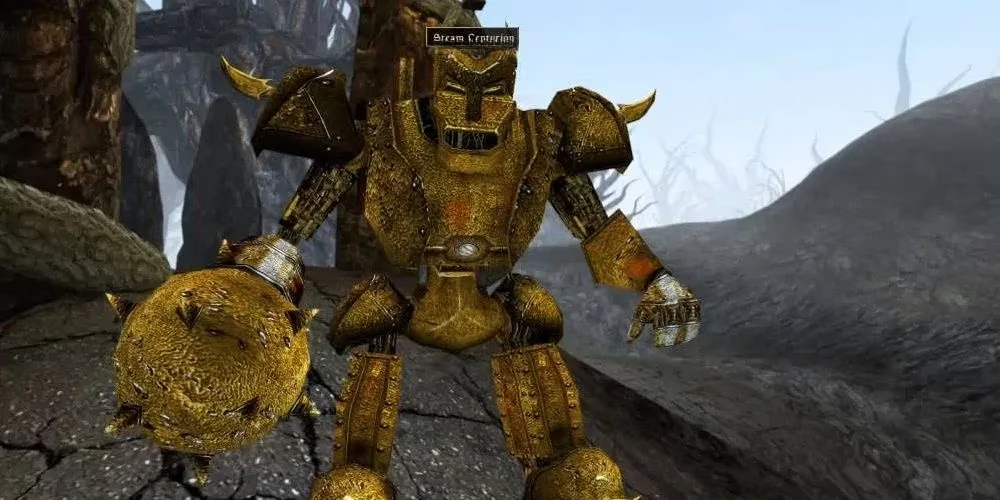
Within the broad reach of The Elder Scrolls, Morrowind stands as the moment magic was a nuclear arsenal in a medieval world, before later entries sanded down its jagged supremacy. Six schools of magic, each a deep well of possibility, allowed a determined wizard to fly across the map, levitate enemies into helplessness, or craft a spell that drained health while restoring it to the caster in an infinite vampiric loop. The lack of modern restrictions—cooldowns, scaling caps—meant that a mage could keep distance indefinitely while blasting opponents into dust. This freedom came with a strange beauty: Morrowind trusted the player with godlike tools and then dared them to use them. Players answered by breaking the game in ways that are still celebrated over two decades later, a testament to the joyful calamity of unlimited arcane power.
Across these worlds, the common thread is not merely power but its delivery—the feeling of a system that has slipped its leash and now runs wild with the player at the helm. Whether through ancient dungeon design, customizable incantations, or physics-based mayhem, these RPGs offer a flavor of escapism where the mage is not the supporting cast but the entire production. In 2026, as role-playing games continue to evolve, revisiting these broken yet brilliant magic systems is a reminder that sometimes the most memorable journeys are the ones where you hold the map, the compass, and all the explosive runes.
As modern gamers continue to explore these magical realms, the desire to experience the full spectrum of these overpowered magic systems remains as enticing as ever. Whether you're a veteran looking to reminisce or a newcomer eager to dive into these worlds for the first time, finding the right game at the right price can enhance the adventure. Fortunately, there are resources available that can help enthusiasts keep their gaming library fresh and exciting.
If you're on the lookout for the best game deals to expand your collection, DealNest offers a comprehensive platform where you can discover top titles at unbeatable prices. This can be a great way to ensure you're always ready to summon storms, cast spells, and conquer any challenge these captivating RPGs throw your way, without breaking the bank.