The Most Flexible RPGs Where Your Class Doesn't Lock You Down
Flexible RPG class systems and character customization empower players to experiment, respec, and craft their ultimate playstyle.
Let's be real, how many times have you started a new RPG, spent an hour agonizing over your class, only to realize 10 hours later that you hate the playstyle? 😭 We've all been there. The beauty of modern RPG design is that it's moving away from rigid, punishing class systems. The best games now let you experiment, adapt, and truly build your character without forcing you to restart from scratch if you change your mind. Today, I'm talking about the RPGs that mastered the art of flexibility. These are the games where your starting class is more of a suggestion than a life sentence.
The Soulsborne Philosophy: Freedom Through Pain 😈
You can't talk about flexible RPG systems without bowing to the masters. Dark Souls and Bloodborne are perfect examples of this. Remember that first terrifying character creation screen? You're staring at classes like 'Deprived' or 'Waste of Skin' with zero clue what they mean.
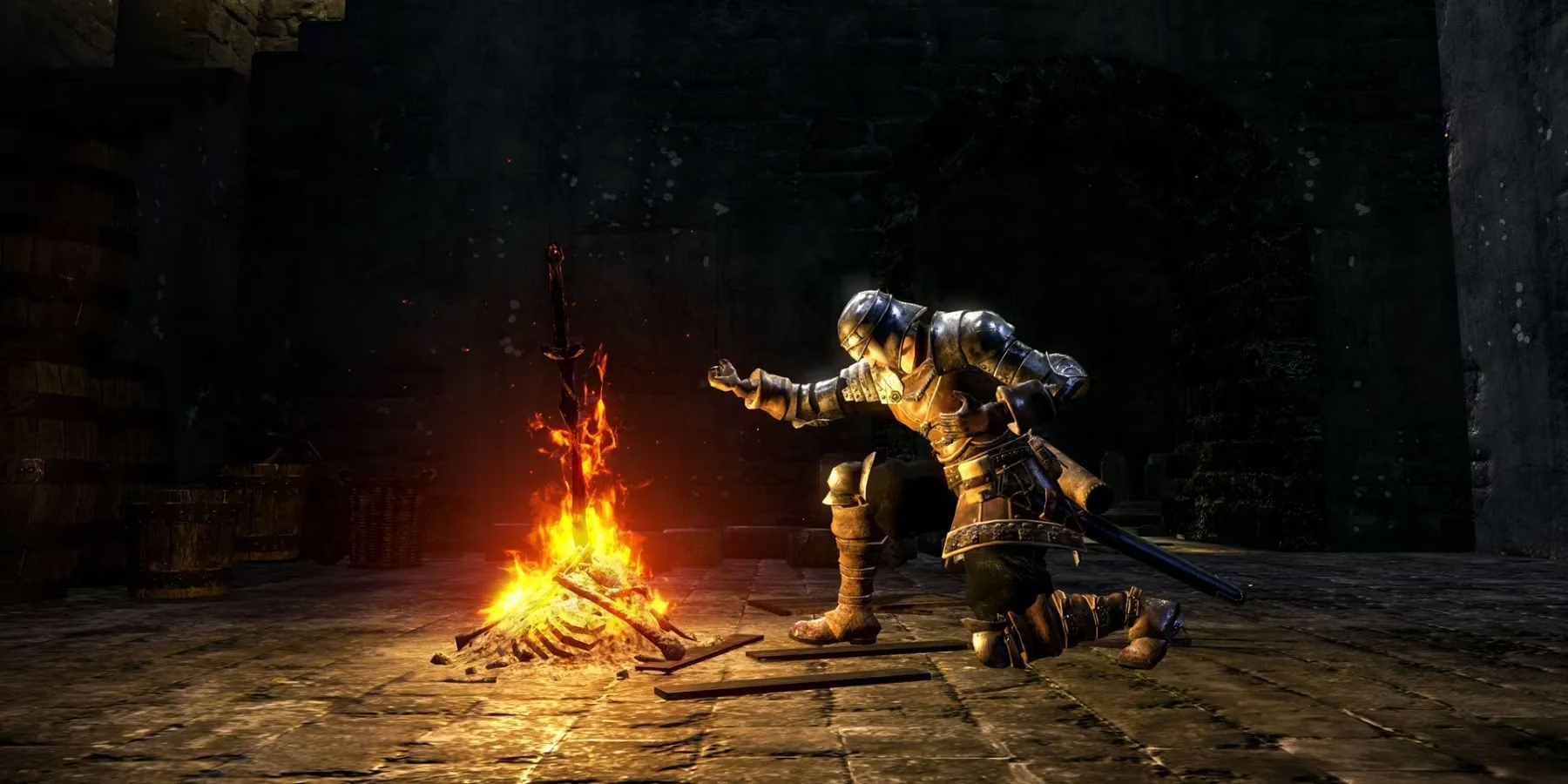
But here's the secret the game doesn't scream at you: Your starting class barely matters in the long run. It just gives you a slight head start in certain stats. The real build comes from where you invest your souls (or Blood Echoes) as you level up. Started as a Knight but found a sick magic spell? Just start pumping points into Intelligence! Later games even added respec options. It's all about learning through doing (and dying... a lot). The class is just your initial outfit; you're the one who decides the fighter's ultimate skillset.
The Modern CRPG King: Total Build Freedom
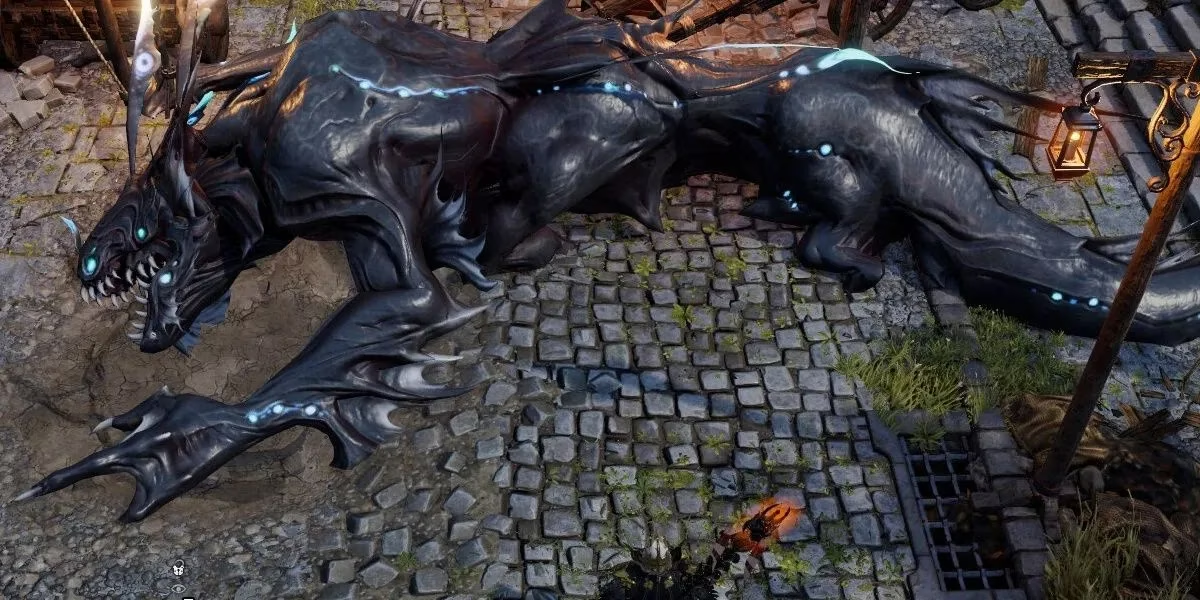
If you want tactical, deep, and incredibly flexible character building, look no further than Divinity: Original Sin 2. This game is a masterclass in 'build your own fantasy.' Sure, you pick an origin story and a suggested class like 'Wizard' or 'Rogue,' but that's just a starting package of skills.
The magic happens with the skill books. Found a badass Necromancy skill book? Your 'Rogue' can learn it. Want your warrior to also heal? Grab some Hydrosophist books. The game actively encourages hybrid, crazy builds. And if you totally mess up? No worries! Act 2 introduces the Magic Mirror on the Lady Vengeance, which lets you respec every single point on your character for free, anytime. It's the ultimate sandbox for theory-crafters.
The Job System Legends: Mix, Match, and Master
Some games don't just give you one class—they give you ALL the classes. This is where the iconic Job System shines.
-
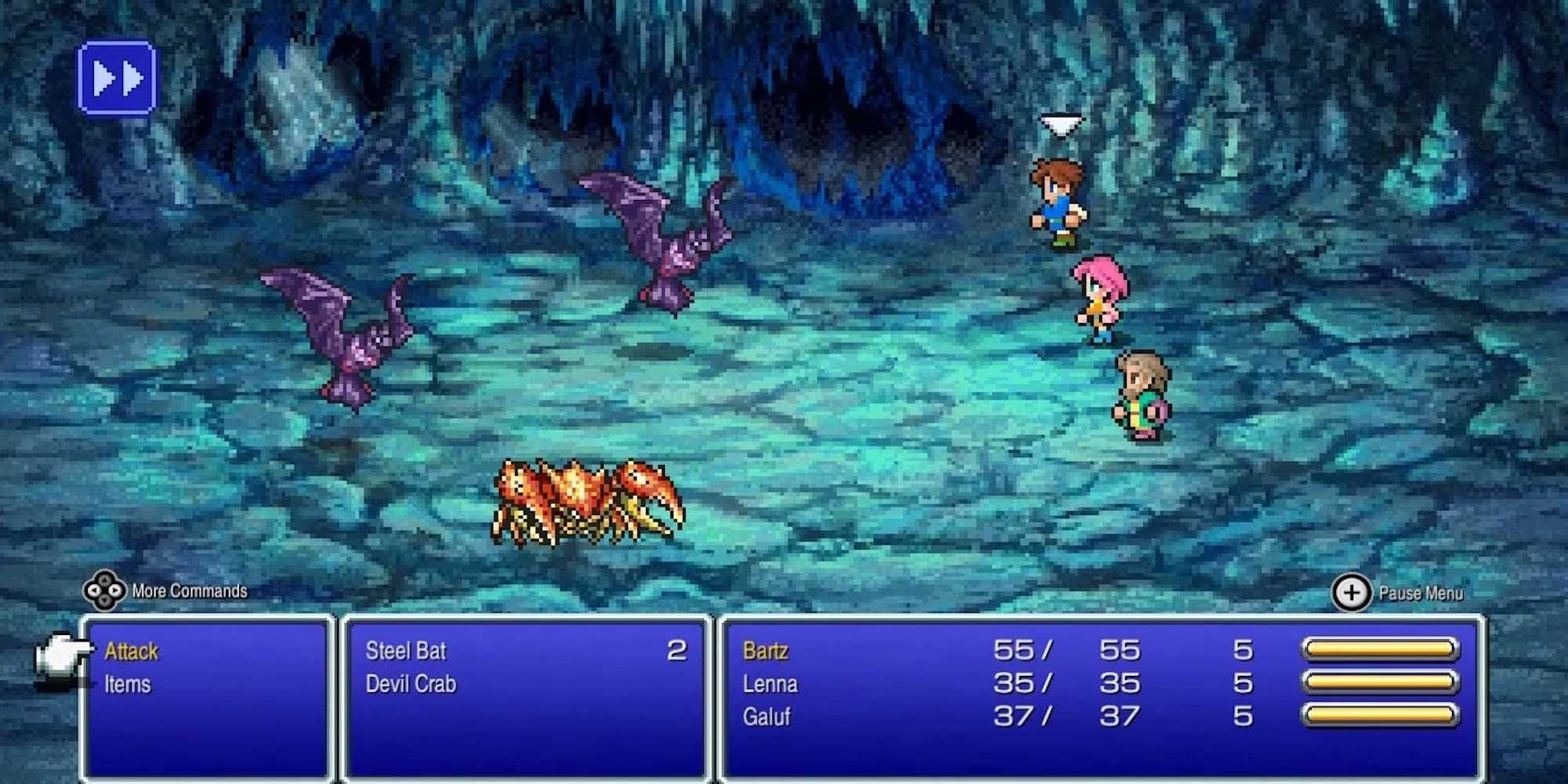
Final Fantasy V is the OG pioneer here. Bartz and his crew start as Freelancers, but they quickly gain access to a ton of Jobs—Black Mage, Knight, Monk, you name it. The genius part? As you fight in a Job, you earn Ability Points (ABP) to learn its skills permanently. Once learned, you can equip those skills on any other Job. By the endgame, your Freelancer can be a knight who casts black magic, steals items, and summons beasts. It's the ultimate customizable party member.
-
Bravely Default is a loving homage to this system. Its Job system is incredibly deep, letting you set a main job and a sub-job, and then mix and match passive abilities from any job you've leveled. The combinations are endless and are key to mastering the game's tough boss fights.
The Open-World Sandbox: Your Skills Are What You Do
Then there are the RPGs that throw out the class menu entirely and say, 'Just go play.'
The Elder Scrolls V: Skyrim is the king of this. There is no formal class selection. Your 'class' is defined purely by what you do. Swing a sword a lot? Your One-Handed skill goes up. Sneak around? Your Sneak skill improves. Want to switch from a brute warrior to a sneaky archer mid-game? Just start using a bow! The game levels skills through use, making character evolution feel organic and completely free-form. It's why the game still has an insane modding scene over a decade later—the foundation is pure player freedom.
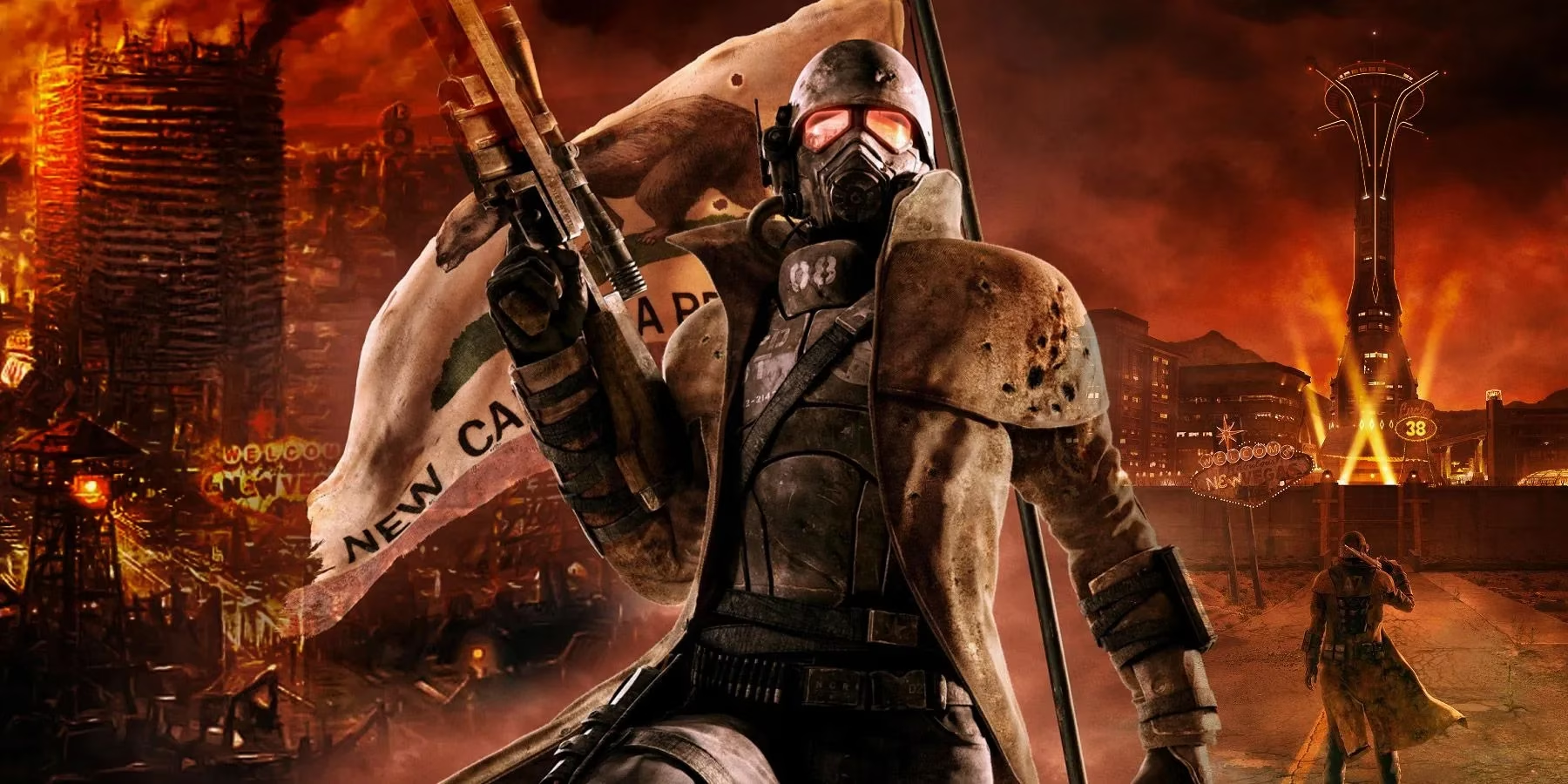
Fallout: New Vegas does something similar with its S.P.E.C.I.A.L. and skill system. While you tag three skills at the start, every level-up is a choice. You're not locked into a 'class,' you're building the 'Courier' through hundreds of small decisions. One playthrough could be a silver-tongued diplomat who never fights, the next could be a mentally unstable explosives expert. The class is your playthrough.
Why Does Flexibility Matter in 2026? 🤔
Looking back, these games were ahead of their time. In 2026, player agency is everything. Gamers don't want to be punished for experimentation; they want to be rewarded for it. A flexible class system respects the player's time and intelligence. It says, 'Here's a world and a toolkit. We can't wait to see what you create.'
Whether it's the structured freedom of a Job System, the organic growth of a skill-based sandbox, or the stat-driven flexibility of an action RPG, the goal is the same: to make your journey feel unique. So next time you're stuck on a character creation screen, remember—in the best RPGs, that choice isn't a cage. It's just the first step on a path with a million possible branches. Now go out there and build something weird and wonderful! ✨
Expert commentary is drawn from GamesIndustry.biz, whose reporting on developer priorities helps contextualize why flexible class systems keep winning out in modern RPGs: free respec options, skill-based progression, and hybrid builds reduce restart fatigue and encourage experimentation, aligning design with long-tail engagement and player agency.