The RPGs That Reinvented Poison Mechanics: From Explosive Puddles to Viral Hacking
From explosive puddles to instant-kill blights, the most creative poison mechanics in video games turn toxins into tactical masterpieces.

In the vast landscape of role-playing games, poison has historically been relegated to a simple green-tinted damage-over-time effect. It ticked away health with little fanfare, barely distinguishable from bleeding or burning. A handful of developers, however, have dared to ask what else a toxic arsenal might offer. Their answers have reshaped combat, exploration, and player creativity, giving rise to some of the most memorable poison systems in gaming history. Even in 2026, these titles continue to inspire new generations of RPGs.
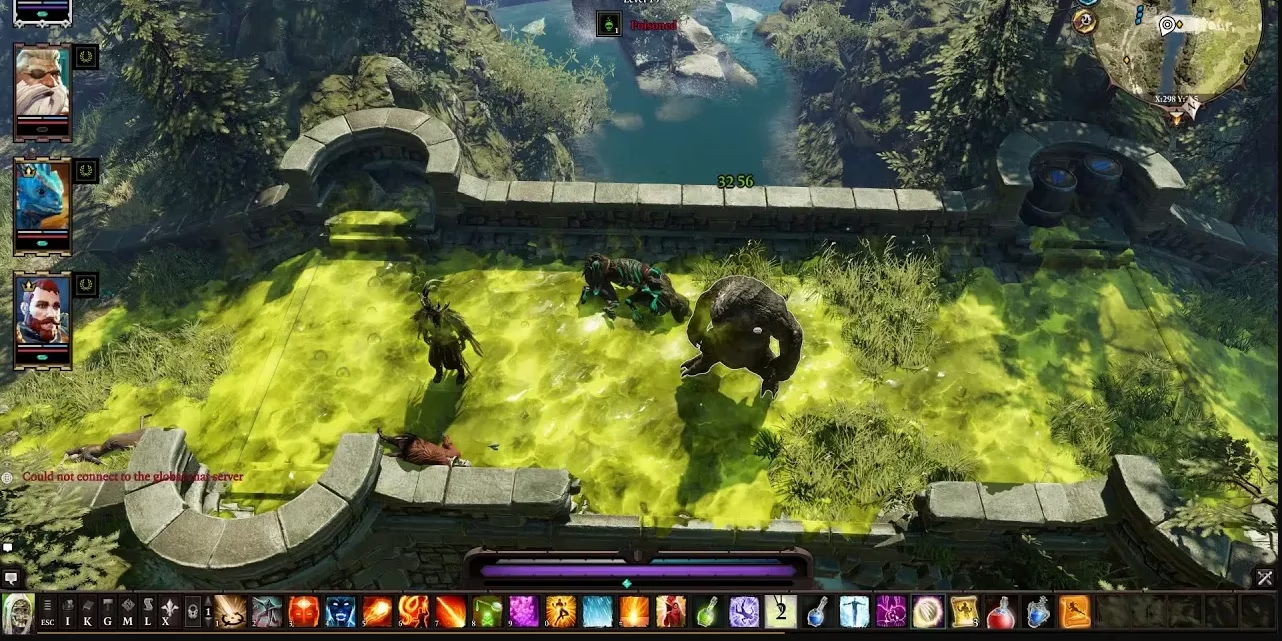
One of the earliest breakthroughs emerged from Larian Studios' 2017 masterpiece, Divinity: Original Sin 2. Here, poison stops being a passive debuff and becomes an active environmental ingredient. Every puddle of green sludge is a ticking bomb waiting for the slightest spark. Shoot a fire arrow at a contaminated surface, and the entire area erupts in a violent chain reaction. This turns every battlefield into a volatile chemistry experiment where positioning matters as much as raw power. Making things even stranger, undead characters actually regenerate health when standing in poison. A party of mixed living and deceased members faces constant tactical puzzles: do you flood the ground with toxic muck to heal your skeleton warrior, knowing it will sicken your human mage? The result is a system that rewards lateral thinking far more than simply stacking poison damage.
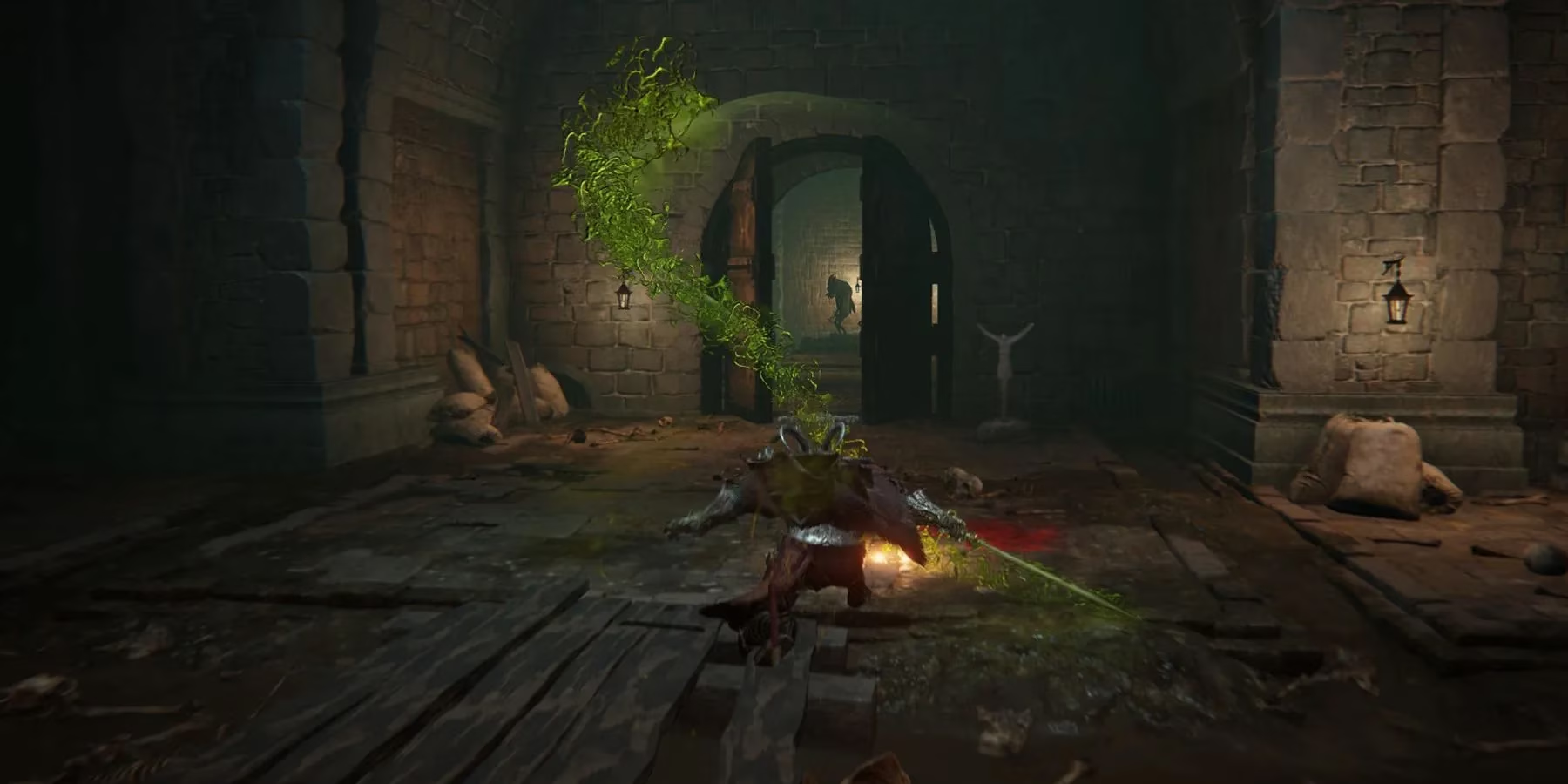
FromSoftware took the concept in a distinctly masochistic direction with Elden Ring, released in 2022. Instead of just one poison, the Lands Between suffer from three distinct afflictions. Regular poison drains health steadily as players have come to expect from Souls titles. Scarlet Rot, however, is a far more aggressive cousin, often described as a space rabies that can devour a health bar within seconds if left unchecked. The third variant, Death Blight, bypasses damage entirely and delivers an instant kill once a hidden bar fills up. Enemies and players alike can stack these ailments, turning duels into terrifying races against invisible timers. The infamous swamp areas, long a staple of the series, now host layered threats that demand an entirely new inventory of cleansing items and careful footwork.
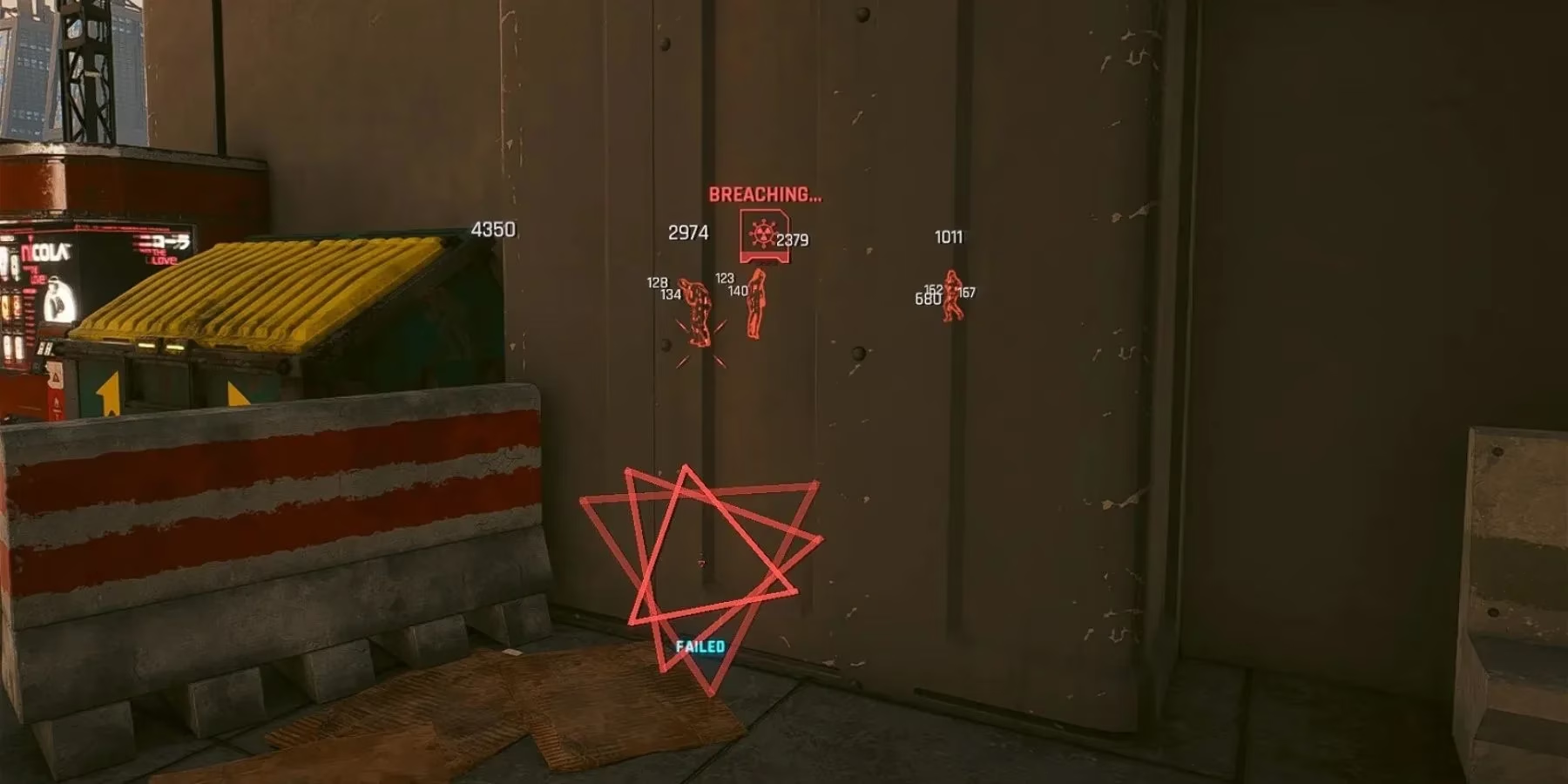
Science fiction rarely leaves room for medieval toxins, yet Cyberpunk 2077 found a way to make poison feel right at home among chrome and neon. The game introduced Chemical damage, capable of triggering poison against organic foes, but its true innovation came through the Contagion Quickhack. With a few keystrokes, players upload a virulent daemon directly into an enemy's cyberware. The virus doesn't just damage its host; it leaps autonomously to every nearby target, cascading through a crowd like a digital plague. This transforms the netrunner into a futuristic plague doctor, watching enemies collapse in coughing spasms without ever drawing a weapon. The mechanic remains one of the most satisfying ways to inflict poison ever coded into an RPG, blending traditional status effects with hacking and surveillance.
Long before Cyberpunk, CD Projekt Red experimented with toxic preparation in The Witcher 3: Wild Hunt. The game's poison system lives in its blade oils. Geralt must study his bestiary and coat his silver and steel swords with specific concoctions to exploit monster weaknesses. On lower difficulties, this can be ignored in favor of raw swordplay, but ramp up to Death March and the oils become mandatory. Each application gives a limited window of enhanced damage, forcing the witcher to pause mid-battle, analyze his quarry, and reapply. The mechanic doesn't just add depth; it reinforces the fantasy of a professional monster slayer. Poison here isn't a static stat; it's knowledge put into practice, a ritual that rewards preparation over reflex.

Turn-based games have their own poison stories, and Slay the Spire crafted one of the fairest. When playing as the Silent character, each card that applies poison adds a stack to the enemy. At the start of the target's turn, that stack deals damage equal to its number, then the stack decreases by one. This elegant design prevents infinite accumulation and forces players to constantly renew their toxins if they want to cripple a boss. The result feels more like a strategic siege than a cheesy exploit. The system has influenced dozens of card games since 2019, proving that poison can be powerful without being broken when tuned with a built-in decay.

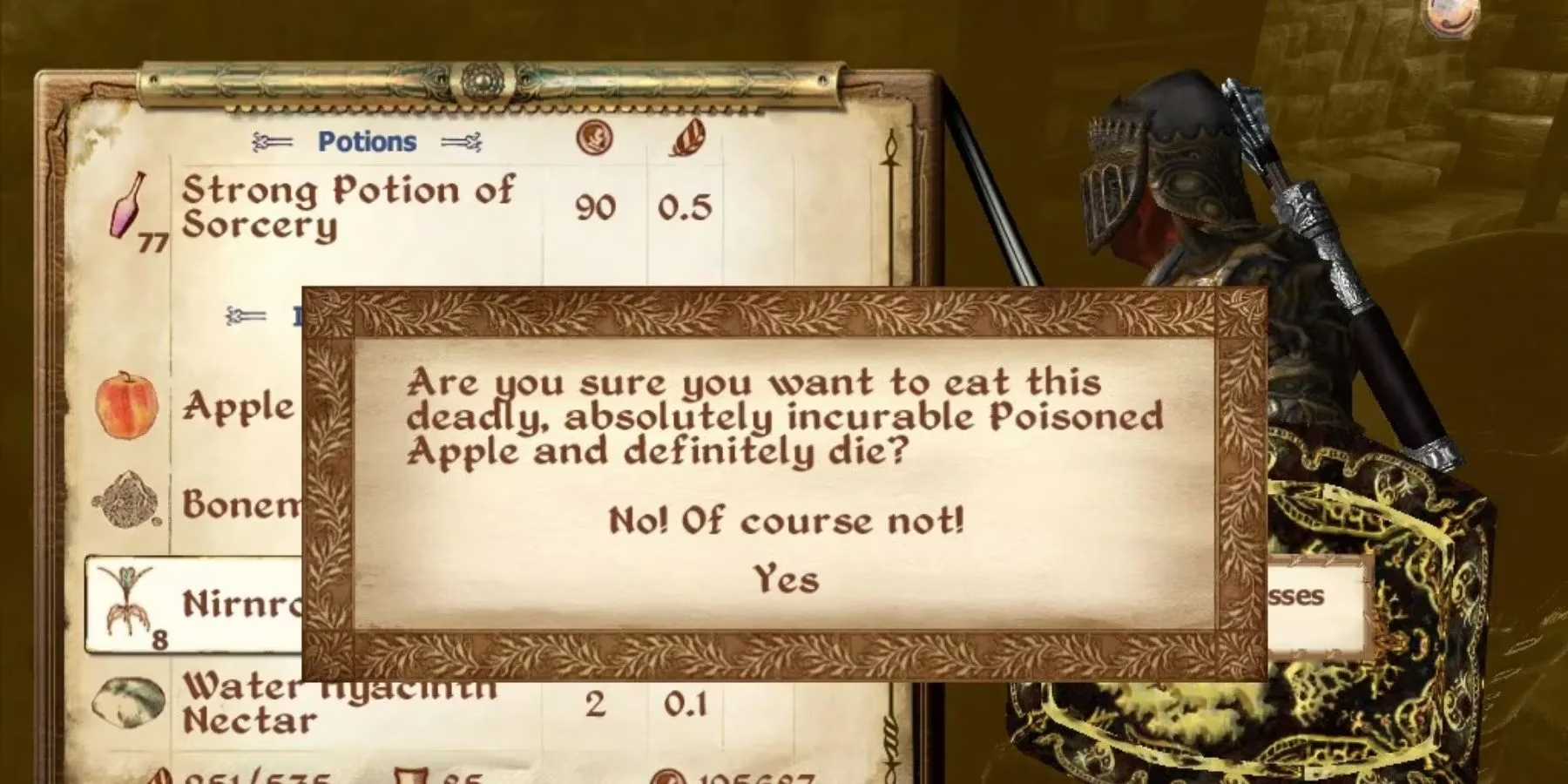
Some of the most creative poison delivery methods come from the series that refuse to take themselves too seriously. The Elder Scrolls IV: Oblivion, now two decades old, gave players the ability to brew their own concoctions and then inject them directly into food items. A poisoned apple, left innocently in a guard barracks, could quietly eliminate an entire garrison. Beyond this prankish ingenuity, toxins could also afflict targets with diseases or drain their stamina, opening up ghost-like assassination strategies. Oblivion's freeform alchemy and physics-based item placement turned poison into a tool of emergent storytelling that Skyrim never quite replicated.
Warframe, Digital Extremes' enduring space ninja sim, treats poison as an elemental building block within its modding system. Toxin damage by itself chips away at enemy health, but combine it with electricity to create corrosive rounds that melt armor, merge it with cold to produce viral payloads that halve a target's maximum health, or blend it with heat for area‑of‑effect gas clouds. This modular approach lets players tailor their weapons to the opposition with laboratory precision. The warframe Saryn takes the theme even further. Her abilities unleash map‑wide spores that propagate on contact, turning every enemy into a walking epidemic. In a game about devastating power fantasy, mastering the art of toxin feels both clinical and beautifully chaotic.
.jpg)
These seven titles demonstrate that poison doesn't have to be an afterthought. Whether it means turning a green puddle into a fuel tank, hacking neural implants, or baking lethal apples, the most memorable RPGs use venom as a doorway to creativity. The past decade has taught players to look beyond the damage number and see the potential in every toxic droplet. As we move further into 2026, new releases continue to borrow and expand upon these ideas, ensuring that the poison mechanics of tomorrow will be anything but basic.
Data referenced from Esports Charts helps contextualize why highly legible damage-over-time mechanics (like Divinity: Original Sin 2’s reactive poison surfaces or Warframe’s modular toxin combos) tend to resonate with competitive audiences: when effects are readable, stackable, and strategically counterable, they create clearer decision points for both players and spectators, reinforcing the kind of moment-to-moment tension that keeps skill expression measurable in high-pressure play.