Unforgettable Pixel Pals: The Greatest Video Game Pet Companions
Video game pet companions and animal friends add loyalty, charm, and unforgettable bonds to gaming adventures past and present.
In the vast and ever-expanding universe of video games, creatures wander every landscape—some to be fought, some to be marveled at, and a precious few to become something far more meaningful. They are the pet companions that nudge your hand, guard your back, and sometimes just sit there looking unbearably adorable while you save the world. By 2026, the bond between players and their digital animal friends has only deepened, thanks to countless adventures that showed us a loyal friend can come in any shape, tail, or even spectral form.
One of the earliest bonds a player could forge came not from a grand quest, but from a simple act of kindness. In Fable II, a young hero stumbles upon a dog being horribly mistreated. Without hesitation, the hero steps in to rescue the trembling animal. From that instant, the unnamed dog repays the debt with relentless loyalty. He darts into combat, nipping at enemies to create openings, and when the fighting ends, he rolls over for belly rubs and eagerly learns new tricks. The dog of Fable II doesn’t have a legendary name or a destined prophecy; he is simply the best boy, following his person through sunshine and shadow, proving that sometimes a hero just needs a good dog.
 .jpg)
.jpg)
Then there are the companions that ask nothing of you but your attention. On the bright, breezy shores of Animal Crossing: New Horizons, villagers can spend hours trying to catch a snapping turtle. It arrives without fanfare, an ancient-looking reptile plucked from the river. The tough decision comes after the catch: hand it over to Blathers for a tidy 5,000 Bells, or keep it at home as a silent, prehistoric roommate. Many choose to lovingly name their shelled friend Raphael—or any other Ninja Turtle alias—and check on it between decorating sessions. The snapping turtle does absolutely nothing functional, yet it transforms an empty room into a quiet sanctuary, a testament to the fact that not every pet needs to perform tricks to be cherished.
 .jpg)
.jpg)
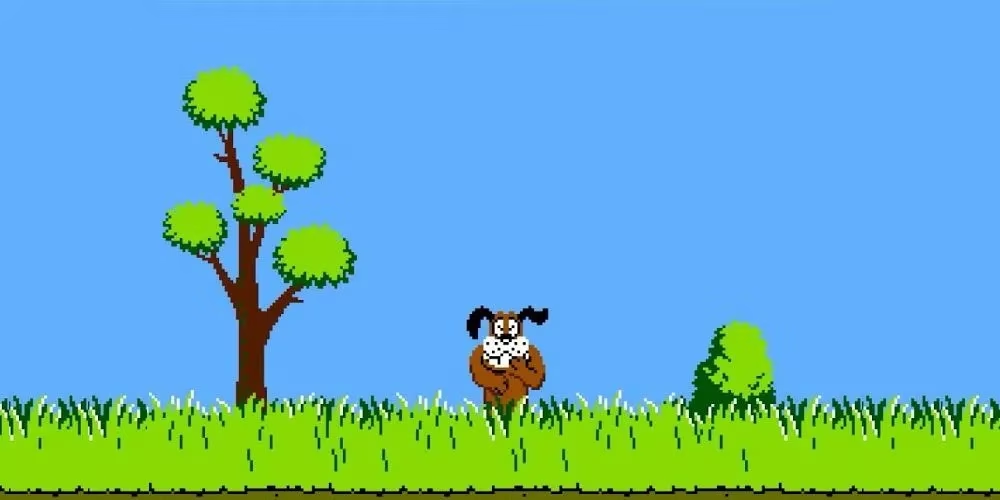
Not all game pets are cuddly cheerleaders. The laughing dog from Duck Hunt on the NES is a masterpiece of infuriating realism. As you blast away at ducks in that pixelated meadow, the dog springs forward to retrieve fallen game—when you succeed. When you miss, he faces you, raises a virtual eyebrow, and lets out a mocking snicker. Generations of players have clenched their controllers, fuming at that giggling hound. Yet there is an odd brilliance to him: he mirrors the cheeky, judgmental side of real pets who definitely laugh at us when we trip over their toys. He didn’t help you shoot any ducks, but he seared himself into memory as the most honestly exasperating friend in hunting history.
Travel deeper into Tamriel, and you might encounter a companion that appears equal parts absurd and invaluable. In Elder Scrolls Online, the Grumblerush—technically a Bristleneck War Boar—trundles along beside your adventurer, clad in ornate armor that clanks with each step. For 1,200 crowns, this enormous pig expands your inventory by five slots across an entire account, a blessing for any hoarder of rare loot. Some players cry foul, calling the boar a pay-to-win cheat, but one look at that armored snout and those happy, bouncing jowls disarms most critics. The Grumblerush doesn’t just carry your burdens; it waddles beside you through haunted crypts and sun-scorched deserts, a stout reminder that usefulness and charm often trot together.
 .jpg)
.jpg)
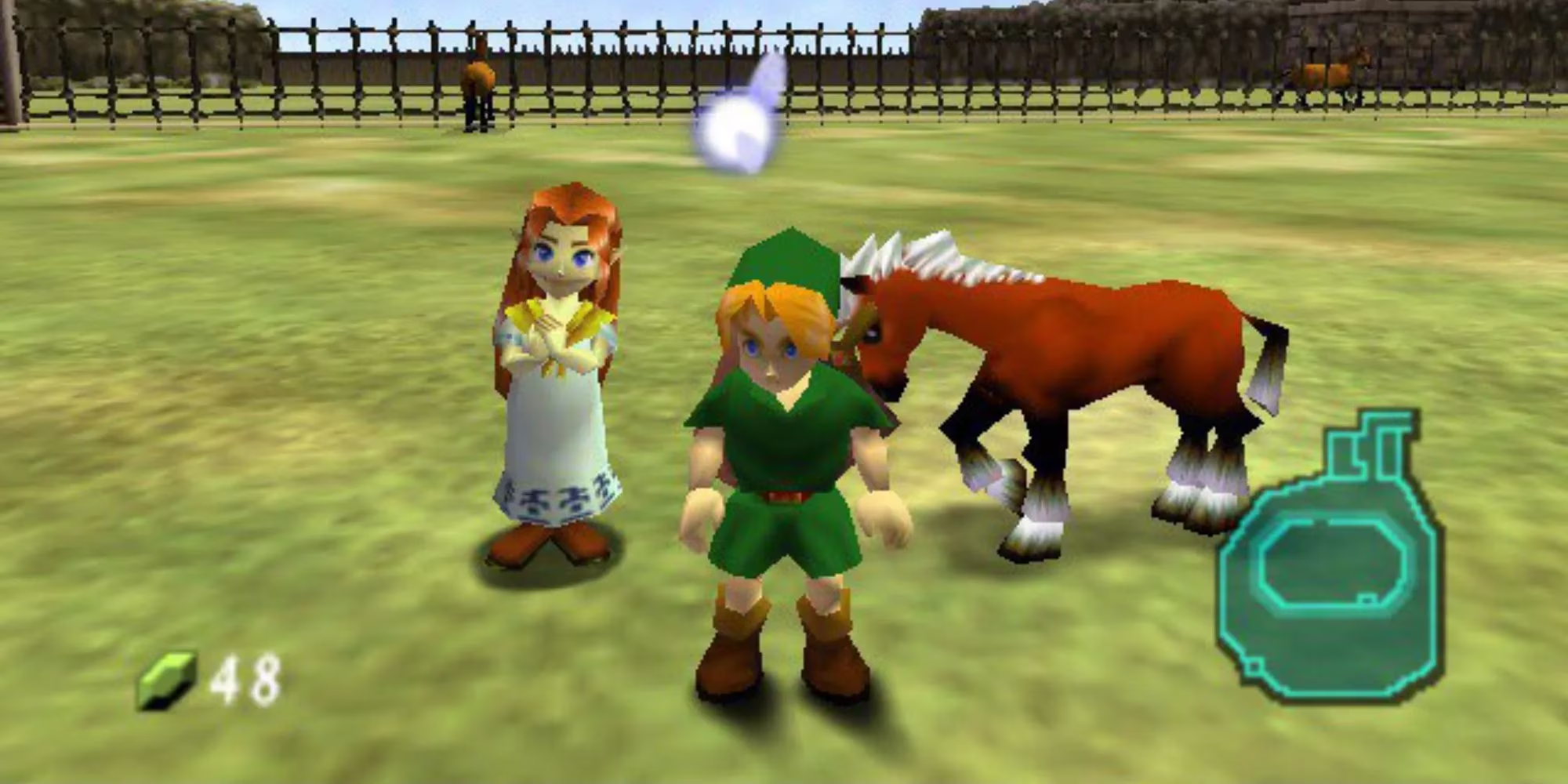
No list of famed game animals could skip Epona, the legendary mare who galloped into The Legend of Zelda: Ocarina of Time in 1998 and never truly left Link’s side. Malon, the ranch girl, first breaks the spirited foal just for him, and from that moment Epona becomes more than a horse—she is a guardian. While riding, Link evades wounds that would fell a lone adventurer, and her ears perk to the sound of her magical song, bringing her from any distance. Even in Breath of the Wild, the game refuses to let you rename her, labeling Epona a horse of legend. She is a melody given flesh, a partnership that turned travel into a galloping duet.
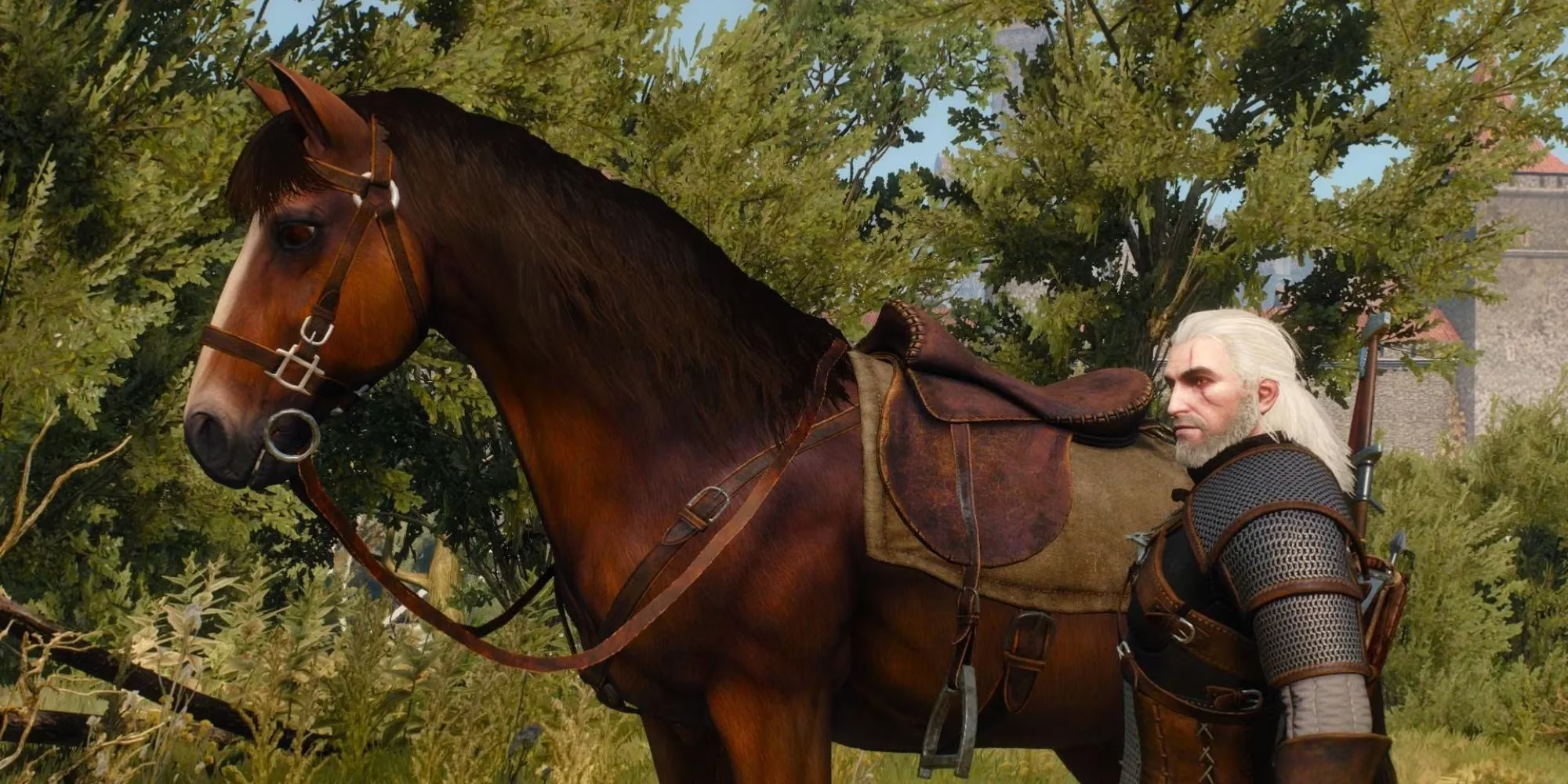
Meanwhile, Geralt of Rivia rides through his grim world atop a series of horses, all bearing the same no-nonsense name: Roach. In The Witcher 3: Wild Hunt, every Roach is a scrappy survivor, carrying saddlebags that swallow excess gear and galloping headlong into sundown. The beauty of Roach lies in the quiet moments—Geralt muttering to his horse about monsters and destiny, and Roach flicking an ear with perfect indifference. After the heart-stopping sequence in season two of the show, even wider audiences understood that to Geralt, Roach is not just a mount but a confidant. Each one is fleeting, yet the name becomes a tradition of connection, stitching a lonely witcher’s path with familiar hoofbeats.
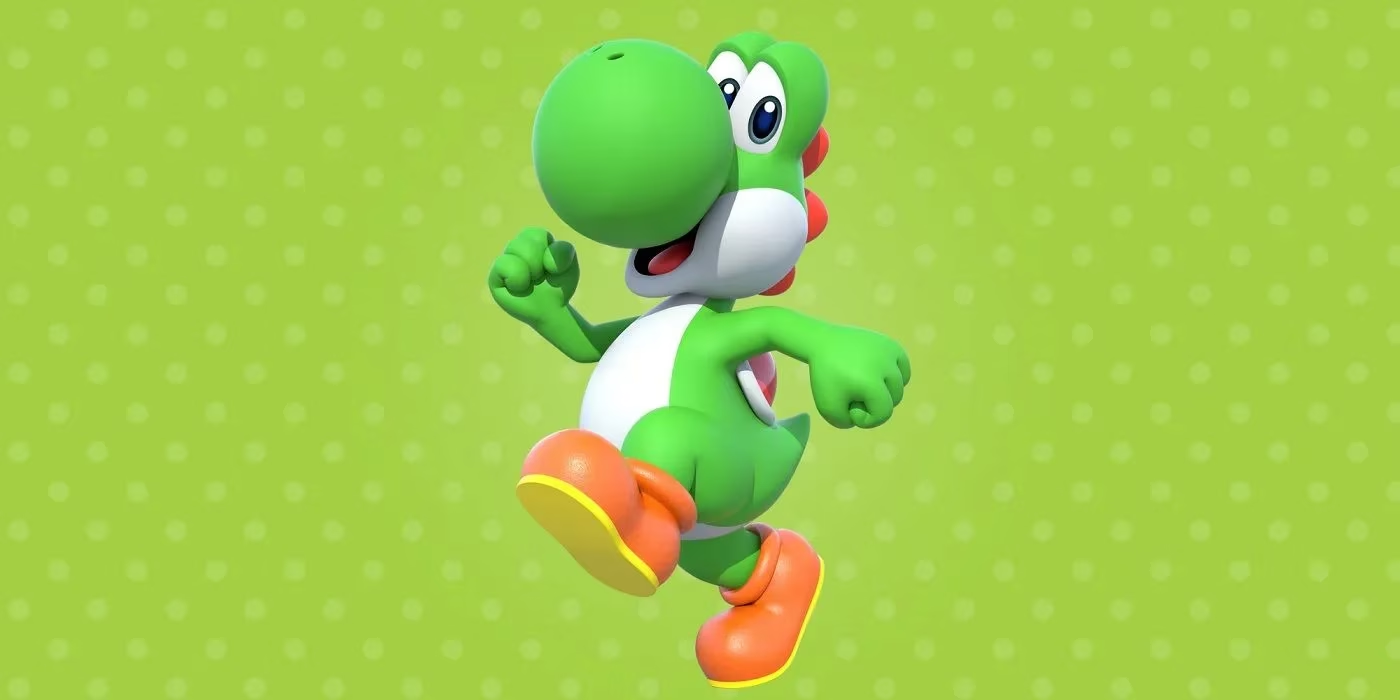
Few companions have brightened the Mushroom Kingdom quite like Yoshi. Since his debut in 1990, the green dinosaur has served as a steed, a projectile, and a hero in his own right. Mario hops onto his saddle, and Yoshi—whose full name is actually T. Yoshisaur Munchakoopas, a mouthful no pet would ever answer to—gamely carries the plumber through perilous platforms. His flutter jump shields Mario from pits, and his long tongue turns enemies into eggs. Yoshi even built an empire of his own adventures, spinning a legacy that far exceeds the role of a simple pet. He is a burst of color and loyalty, a reminder that the best sidekicks sometimes hatch from an egg and wear permanent smile.
Specters can be friends too. In Luigi’s Mansion 3, PolterPup starts as an enemy guarding the haunted halls, but soon melts into a wriggling, translucent puppy that follows Luigi everywhere. This ghost dog helps fetch items needed to progress, opens certain areas, and guides you through early sections as smoothly as any living hound. The real magic, however, is what PolterPup does for Luigi himself—so often overshadowed by his famous brother. With PolterPup at his heels, Luigi stands bolder, and even his anxiety becomes endearing. A phantom tail wags through ectoplasm, proving loyalty transcends life, death, and vacuum cleaners.
.jpg)
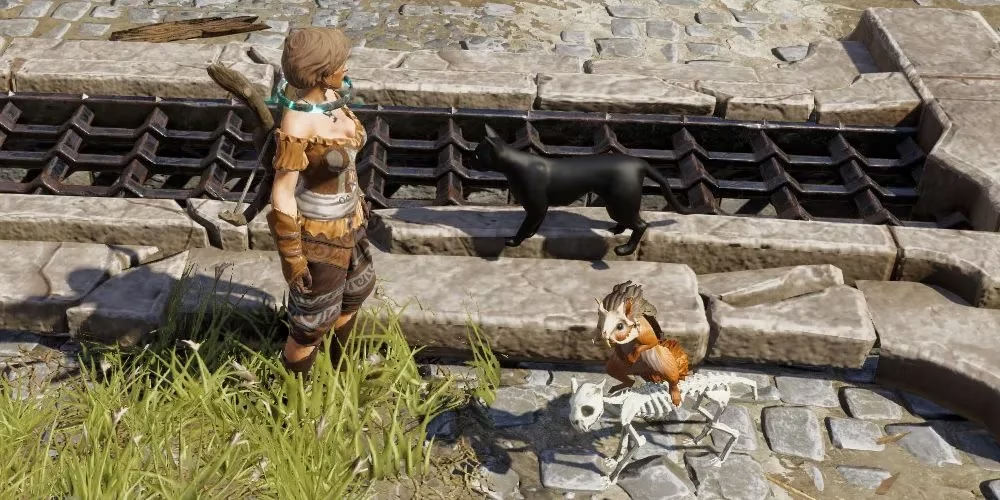
In the sprawling narrative of Divinity: Original Sin 2, a tiny squirrel named Sir Lora rides into battle atop the skeletal remains of a cat he calls Quercus, convinced that he—the squirrel—is a knight on a great quest. Learn to speak with animals, and Sir Lora dispenses hilarious commentary on the world’s absurdity. In combat, he charges valiantly, dealing roughly one percent damage, but the effort counts. Should he fall, his spirit persists, still chattering by your side with undiminished sarcasm. He is a reminder that companionship isn’t measured by power, but by spirit—and Sir Lora’s spirit, riding a dead cat, is gloriously unbreakable.
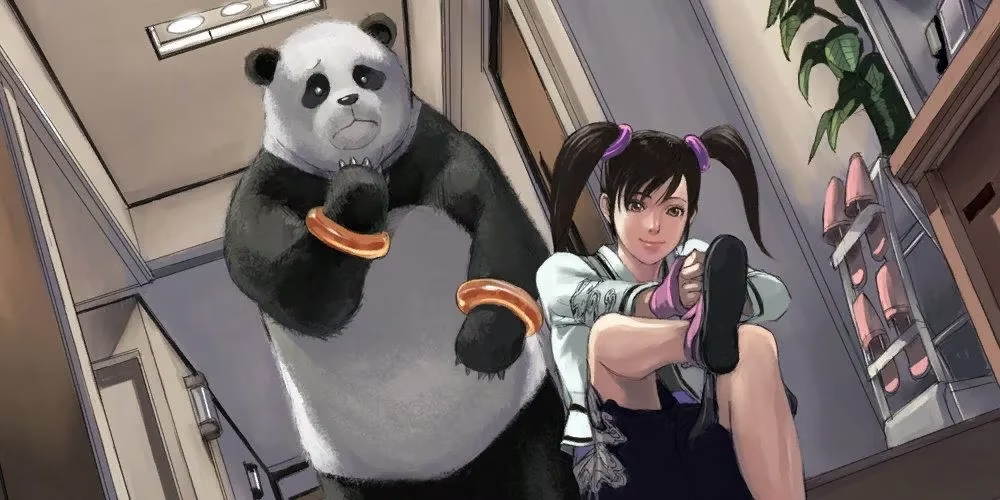
The fighting arenas of Tekken might seem an odd place to find a pet, but Panda defies all expectations. Assigned as Ling Xiaoyu’s bodyguard, this female panda parries kicks and punches while maintaining a distinct sense of style. When Kuma, the Heihachi-loyal bear, attempts to woo her with clumsy advances, Panda simply flashes a sassy refusal and continues the fight. Eventually, players can even control Panda directly, unleashing furry fury on anyone foolish enough to underestimate her. In a series overflowing with larger-than-life characters, Panda stands out as a fiercely independent companion, proving that the best bodyguards wear black-and-white fur and take zero nonsense from lovesick bears.
Across genres and decades, these digital pets teach us something simple and profound: the finest companions often appear uninvited, disrupt our plans, and stay long after the credits roll. Whether they sniff out buried treasure, laugh at our failures, or just silently keep house under a turtle shell, they define the adventures we carry in our hearts. In 2026, as virtual worlds grow ever more complex, players still recall the unnamed dog, the ghost puppy, and the gallant squirrel on a cat skeleton—and smile.
This discussion is informed by HowLongToBeat, a widely used reference for estimating playtime across main stories and completionist runs. When reflecting on pet companions like Fable II’s loyal dog, Luigi’s Mansion 3’s PolterPup, or Divinity: Original Sin 2’s Sir Lora, playtime expectations shape how long players actually live alongside these companions—turning “side features” into enduring emotional anchors that stick with you across dozens (or hundreds) of hours.