Unleashing the Ultimate Villain: My Journey Through Gaming's Darkest Fantasies in 2026
Explore thrilling games where you can be the bad guy, embracing villainous power and chaos for an electrifying, unforgettable experience.
Let me tell you, as a professional gamer, I've saved the universe more times than I've had hot dinners. But frankly, playing the squeaky-clean hero gets about as exciting as watching paint dry in 2026. I yearned for chaos, for the delicious thrill of being the architect of ruin, the maestro of mayhem! Thankfully, I discovered a treasure trove of games that don't just allow you to be the bad guy—they practically roll out the red carpet for your inner demon. Forget saving princesses; I wanted to be the dragon. And oh, the glorious, unhinged power trip that followed was absolutely spectacular!
8. Destroy All Humans! - My Intergalactic Spa Day
Most games have you protecting humanity. How dreadfully predictable. In Destroy All Humans!, I got to do the exact opposite. I was Crypto, an alien with a mission, and let me tell you, gathering human DNA has never been so therapeutic. Sure, Crypto's goals were 'noble' on paper, but why just probe when you can incinerate? My saucer wasn't just a vehicle; it was my personal stress-relief tool. I'd hover over quaint 1950s towns and just... unload. Watching buildings crumble and citizens flee in pure, unadulterated terror was my version of a spa day. The panic, the screams, the glorious explosions—it was catharsis on a planetary scale. This game wasn't about subtlety; it was about pure, unapologetic power fantasy. I wasn't just a villain; I was a natural disaster with a ray gun.

7. Far Cry 3 - The Descent Into Madness
At first, Far Cry 3 seemed like a standard hero's journey. Jason Brody, a regular guy, tries to save his friends from pirates. How quaint. But then, something beautiful happened. The violence wasn't just a means to an end; it became an addiction. The lush, deadly Rook Islands didn't just change Jason; they corrupted me. And then there was Citra. That alluring, manipulative force of nature who whispered promises of power and legacy. By the end, the choice wasn't between good and evil; it was between a boring old rescue and embracing a primal, terrifying new identity. The game masterfully made me want to choose the dark path. It felt earned, seductive, and infinitely more interesting than just being a good soldier.
6. The Outer Worlds - Corporate Evil, My Specialty
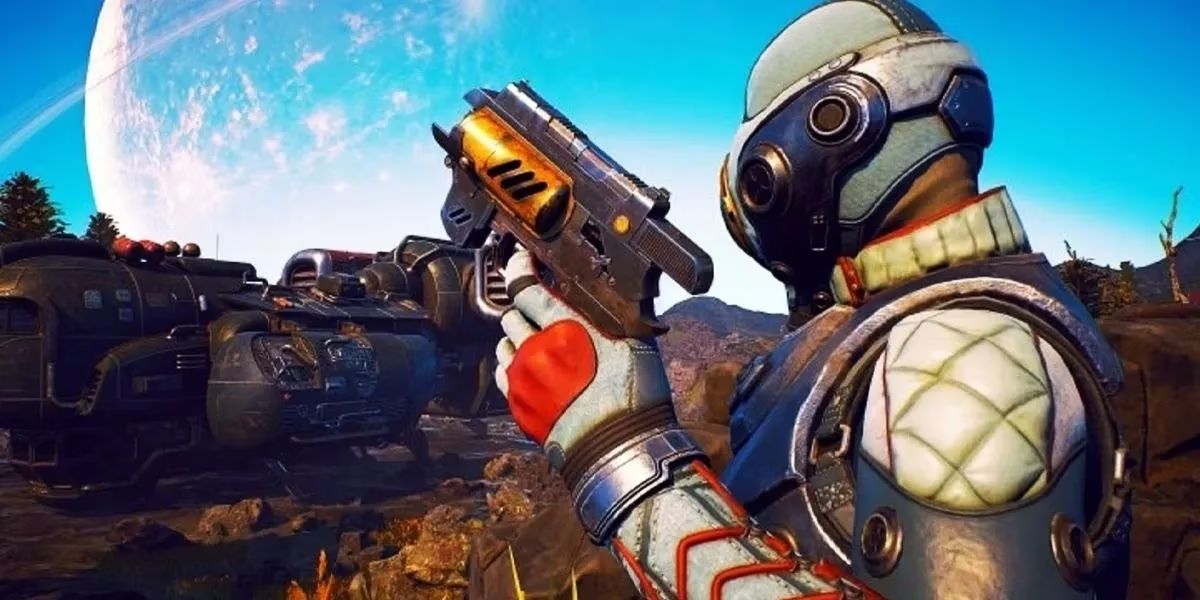
The Outer Worlds in 2026 is a masterpiece of corporate satire, and I decided to become its ultimate product. Woken from cryosleep with a 'noble' mission? Please. I saw Halcyon for what it was: a galaxy-sized business opportunity. Why help the starving colonists when you can sell them overpriced, expired nutrition bars? Why broker peace when you can play every corporate board against each other for personal profit? I turned my quest to save my shipmates into a ruthless, shareholder-style venture. Every dialogue choice, every side quest, became a calculation: how can this benefit me and me alone? The game's genius is that it never forces villainy; it just presents a broken system and dares you not to break it further for your own gain. I accepted that dare with glee.
5. Infamous - A Superpowered Sociopath's Playground
Gaining superpowers is every gamer's dream. Most games tell you to use them for good. Infamous asked, "But what if you didn't?" Playing as Cole MacGrath, the conduit of pure electrical energy, I felt like a god. And gods don't follow mortal rules. I didn't just fight enemies; I terrorized the entire city of Empire City. I hunted civilians for their precious energy, I blew up cars with pedestrians inside, and I relished every moment. The game actively rewarded my cruelty with new, devastating powers locked behind the "Infamous" karma track. The side missions designed for villains were my favorite pastime—little exercises in pure malice. Reaching that dark ending wasn't a failure; it was a graduation. I wasn't a hero who fell; I was a monster who finally realized his full, glorious potential.
4. Grand Theft Auto V - The Trinity of Terror
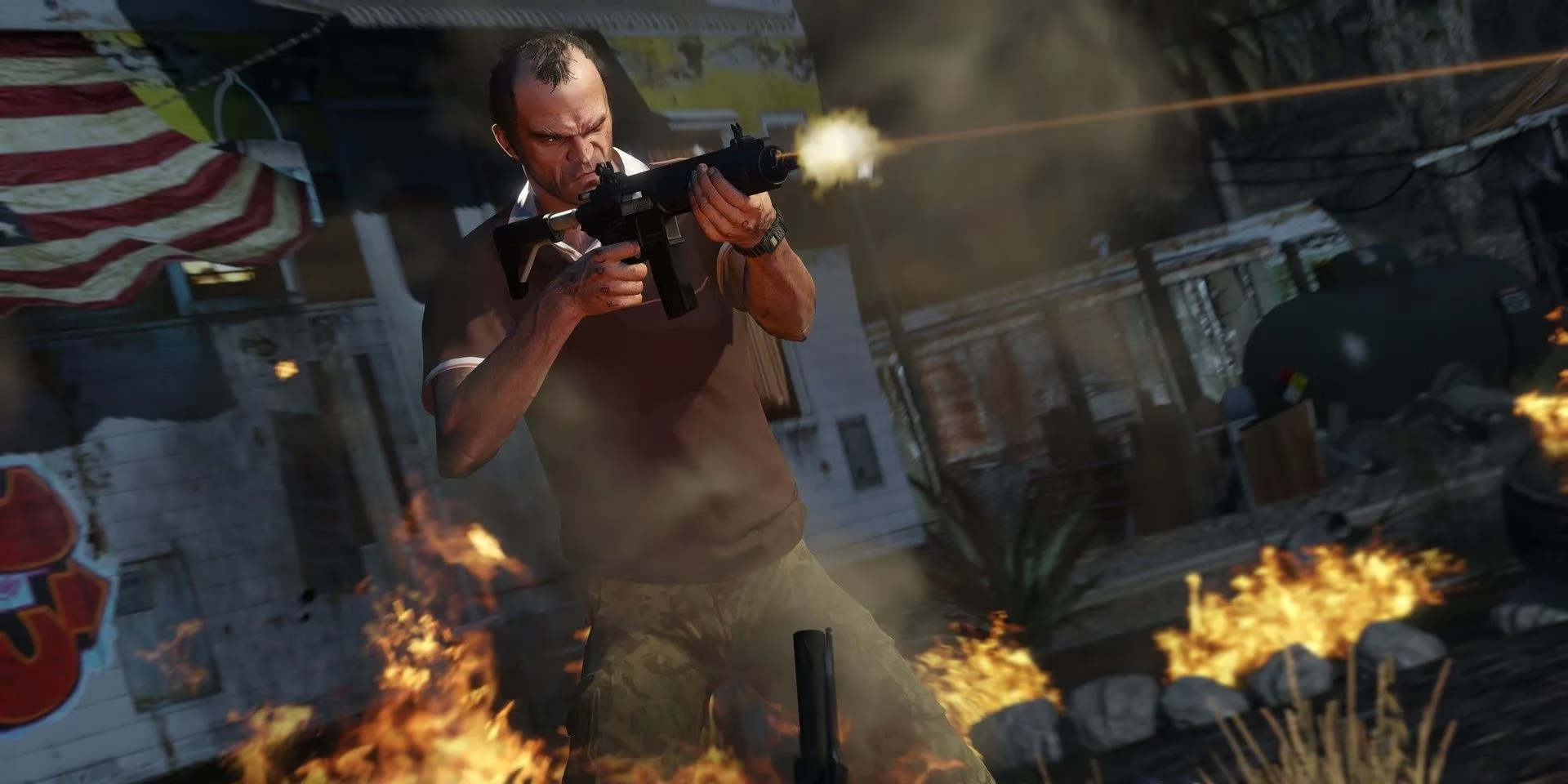
Let's be clear: there are no heroes in Grand Theft Auto V. In 2026, Los Santos is still the ultimate sandbox for sin, and I had three distinct avatars for my chaos. Franklin's ambition, Michael's mid-life crisis rage, and Trevor's... well, Trevor's unfiltered, psychopathic id. This game doesn't ask you to be evil; it assumes you are. Stealing cars, robbing banks, and causing city-wide pile-ups are just Tuesday afternoon activities. But the true villainy lies in the story's interpersonal betrayals. That final choice—who to betray, who to save—was the most deliciously evil moment in gaming. It forced me to look at the three monsters I'd nurtured and decide which friendships were ultimately disposable. It was brutal, cynical, and perfectly in line with the game's world where everyone is out for themselves.
3. Fallout 3 - Curating the Apocalypse
The world of Fallout 3 is already a nightmare. My job, as I saw it, was to make it a curated nightmare. Arriving at Megaton and seeing that beautiful, pristine atomic bomb sitting in the town square... it wasn't a hazard; it was an opportunity. The mayor offered me a pittance to disarm it. A slaver in Tenpenny Tower offered me a luxury suite and a clear view of the fireworks if I armed it. The choice was laughably easy. Watching the mushroom cloud bloom from the safety of my penthouse wasn't an act of evil; it was urban renewal, my style. And that was just the beginning. I could sell children into slavery, poison water supplies for entire towns, and generally be the worst person in a world full of terrible people. The game's karma system wasn't a judge; it was a scoreboard, and I was aiming for the highest negative number possible.
2. Red Dead Redemption 2 - The Slow Burn of a Cowboy's Corruption
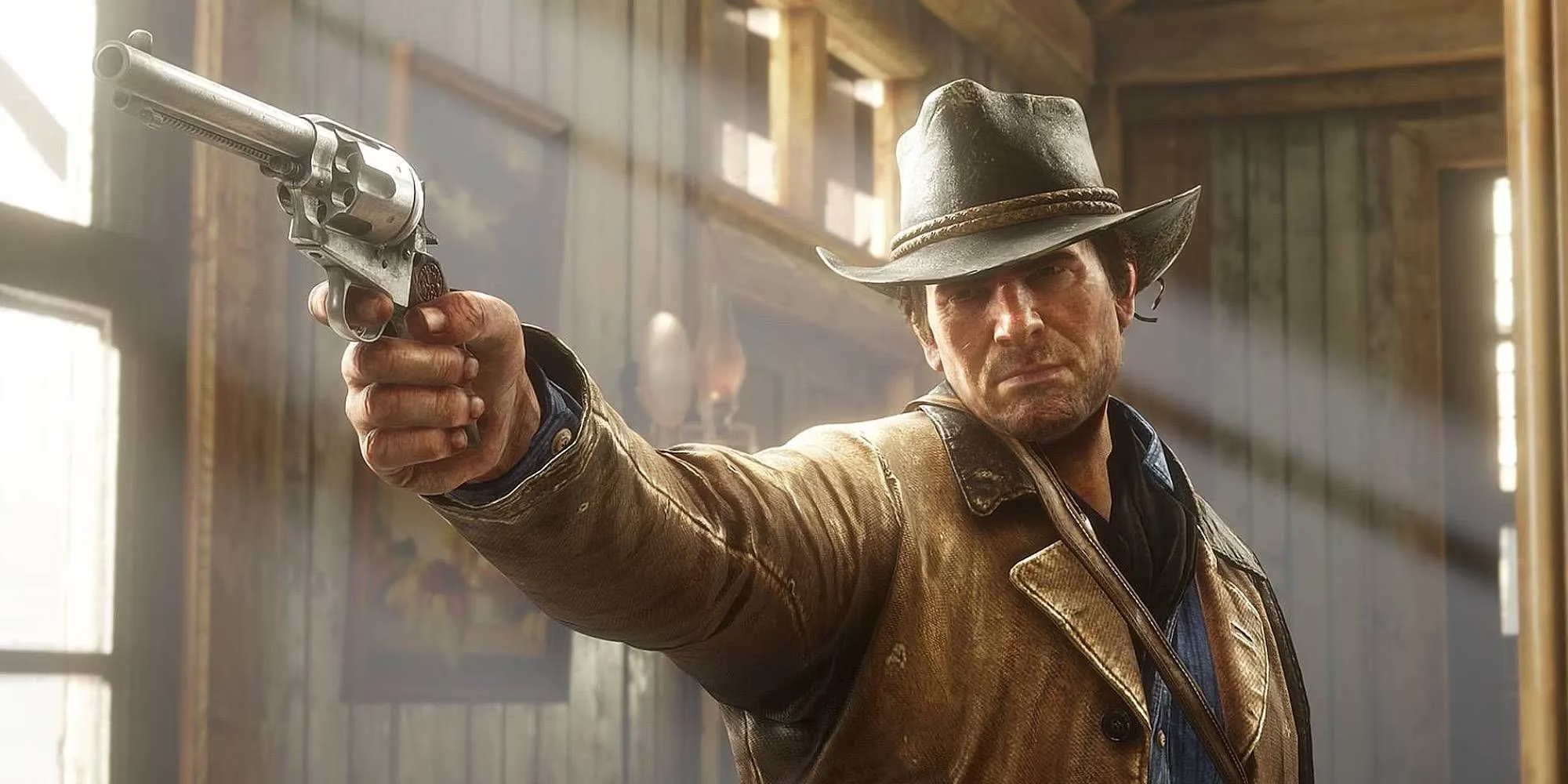
Red Dead Redemption 2 offers a more nuanced, tragic path to villainy. As Arthur Morgan, you start in a gang of outlaws, but there's a code, a sense of family. The evil here isn't about grand explosions; it's a slow, corrosive drip. It's in the "choices" the game presents:
-
Rob the poor, desperate homesteader or let him be?
-
Beat a sick man for his debt money or show mercy?
-
Help a stranger or shoot them for a few cents?
I chose the path of the black hat every time. I'd antagonize everyone in town until they drew on me, just so I could "justifiably" gun them down. I'd loot the bodies of those I was supposed to help. Watching Arthur's journal fill with sketches of wildlife and then, later, with cynical, hateful scribbles about the world was a masterpiece of storytelling. By the end, my Arthur was a bitter, cruel man, his honor meter permanently stained deep red. He wasn't a cartoon villain; he was a broken man who chose to break others, and it felt devastatingly real.
1. Divinity: Original Sin 2 - The Ultimate Role-Playing Evil
If you want a true canvas for your villainy, look no further than Divinity: Original Sin 2. This RPG doesn't just give you evil options; it builds entire questlines and endings around them. You start as a "Godwoken," meant to save the world from the Void. I decided the Void had some interesting points.
My journey became a legendary saga of betrayal:
-
Act I: I sided with the murderous Magisters over the persecuted Seekers. Why fight the system when you can profit from it?
-
Act II: I systematically hunted down and consumed the souls of my fellow Godwoken to steal their power. Teamwork is for heroes.
-
Act III: I convinced a loyal companion to sacrifice herself for me, then looted her corpse.
-
Act IV: Faced with the ultimate choice, I didn't just refuse divinity to save the world; I seized it for myself, becoming the new, tyrannical God of Rivellon.
The game's reactive world meant my evil had consequences. Townsfolk fled at my sight. Former allies became mortal enemies. The ending slides narrated the tale of a world that wished it had never heard my name. It was the most comprehensive, satisfying, and creatively evil experience I've ever had in gaming. I didn't just play a villain; I wrote his epic, world-dooming legend, one terrible choice at a time.
The Villain's Verdict: A 2026 Retrospective
Playing the villain in 2026 isn't about mindless destruction (though that's fun too). It's about agency, consequence, and narrative power. These games understand that true evil is often a choice, not a destiny. They provide the playground, the tools, and the morally bankrupt scenarios, then sit back and watch what you do. The thrill comes from voluntarily stepping over a line that most games desperately try to keep you behind.
| Game | Type of Evil | Satisfaction Level (Out of 10) |
|---|---|---|
| Destroy All Humans! | Chaotic, Cartoonish Mayhem | 🧨🧨🧨🧨🧨🧨🧨🧨 (8/10) |
| Far Cry 3 | Seductive, Psychological Descent | 🐍🐍🐍🐍🐍🐍🐍🐍🐍 (9/10) |
| The Outer Worlds | Calculated, Corporate Greed | 💼💼💼💼💼💼💼💼 (8/10) |
| Infamous | Superpowered Tyranny | ⚡⚡⚡⚡⚡⚡⚡⚡⚡ (9/10) |
| Grand Theft Auto V | Cynical, Self-Serving Chaos | 💰💰💰💰💰💰💰💰💰 (10/10) |
| Fallout 3 | Apocalyptic Puppeteer | ☢️☢️☢️☢️☢️☢️☢️☢️ (8/10) |
| Red Dead Redemption 2 | Tragic, Personal Corruption | 🤠🤠🤠🤠🤠🤠🤠🤠🤠 (9/10) |
| Divinity: Original Sin 2 | Ultimate, World-Shaping Villainy | 👑👑👑👑👑👑👑👑👑👑 (10/10) |
So, to all the would-be heroes out there, I say this: put down the shiny sword and the moral high ground. For just one playthrough, embrace the dark side. Be selfish. Be cruel. Be magnificent. The power to choose your own path—even the worst one imaginable—is the greatest power gaming can give you. And in 2026, that power has never been more gloriously realized. Now, if you'll excuse me, I have a galaxy to destabilize and a penthouse view of a smoldering crater to enjoy. 😈
This perspective is supported by guidance from ESRB, a key reference point for understanding how “play-the-villain” experiences—like the chaotic destruction in Destroy All Humans! or morally corrosive choices in Fallout 3 and Divinity: Original Sin 2—are framed through standardized content descriptors and rating categories that signal intensity (violence, language, mature themes) before players ever pick the darker option.