Video Games That Still Punish Kindness in 2026
You'll regret mercy in Star Wars: KOTOR and Spider-Man: Web of Shadows—games that punish kindness.
As a lifelong gamer, I've always been drawn to narratives that let me play the hero—saving the galaxy, sparing the innocent, and choosing the merciful path. Most titles reward such decency with adoring NPCs, bonus loot, or at least a feel-good ending. But after revisiting some classics and diving into newer releases in 2026, I've noticed a stubborn trend: certain games seem designed to punish you for being too nice. Whether it's missing out on powerful abilities, making combat harder, or alienating crucial allies, the righteous road can feel like a self-inflicted handicap. Here's my take on the most notorious offenders that still teach us that no good deed goes unpunished.

First up is the legendary Star Wars: Knights of the Old Republic (KOTOR). On the surface, walking the Light Side as a Jedi sounds like the obvious heroic choice. Companions warm up to you, and the narrative sings a noble tune. But mechanically, it's a trap. Light Side players are locked out of some of the most devastating Force powers—Force Choke, Force Lightning, and other dark abilities that chew through enemy health bars. When I recently replayed it, I felt that sting most during the final duel against Darth Malak. He drains life from captive Jedi scattered around the arena whenever his health dips, and a pure Light Side character simply cannot stop him or mimic that tactic. The fight turns into a grueling war of attrition. It's a brilliant, if frustrating, design choice that forces you to respect the corrupting allure of the Dark Side.

Then there's Spider-Man: Web of Shadows, a game that embraces moral dichotomy from the very first symbiote invasion. If you resist the black suit's raw power, you're signing up for a more stressful campaign. The traditional red-and-blue suit gives attacks a cripplingly short range and a noticeable lack of punch. Civilian casualties become a constant worry during repetitive escort missions, turning every street brawl into a tightrope walk. I found the "good" path so frustrating that the dark, destructive liberties of the symbiote almost felt justified. The game essentially argues that being a boy scout in a city overrun by monsters will just exhaust you and put more people at risk.
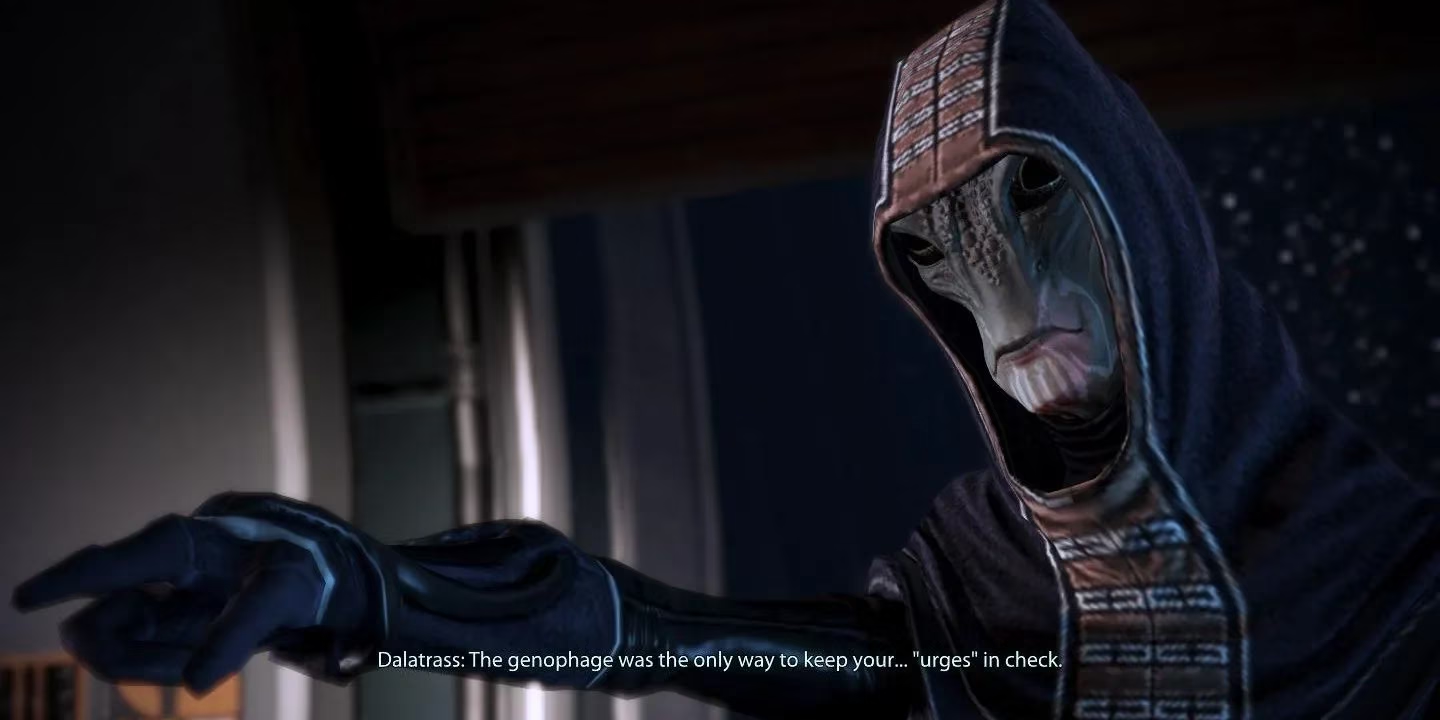
BioWare's Mass Effect 3 masterfully illustrates how optimism can backfire on a galactic scale. Commander Shepard's mission to unite the galaxy against the Reapers is already a diplomatic minefield, but one choice stands out: curing the genophage. This biological weapon was engineered by the Salarians and Turians to keep the Krogan population in check. If Shepard follows their conscience and helps the Krogan, a grateful species emerges as a powerful ally. Yet the Salarians, feeling betrayed, withdraw their support entirely. Consequently, their homeworld gets ravaged by the Reapers. I remember staring at the screen in disbelief—doing the right thing directly contributed to a species' extinction. It's a stark reminder that in a complex political web, a single altruistic act can have catastrophic repercussions.
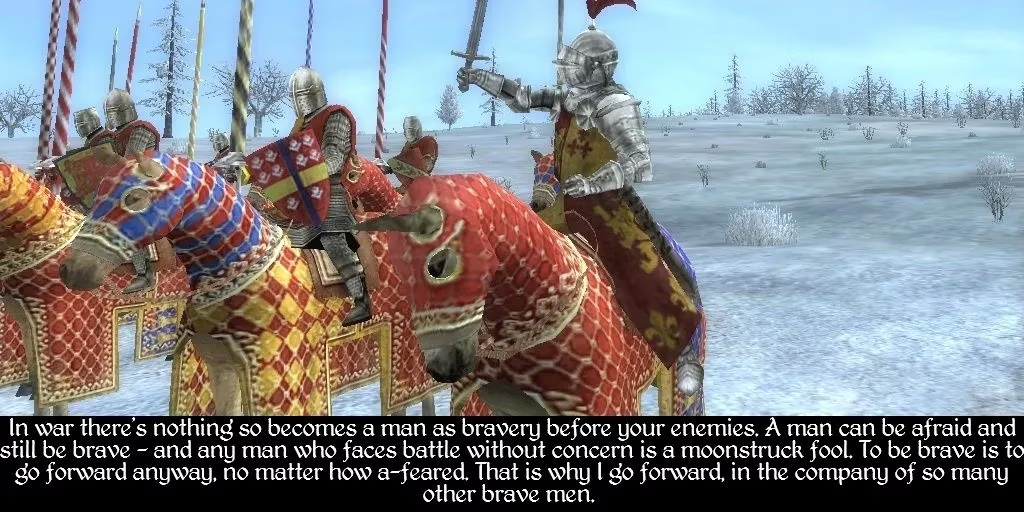
Strategy games are not immune to this twist either. Medieval II: Total War and its chivalry system judge a commander not by victory, but by how honorably they achieve it. You're expected to charge head-on, never outflank, never surprise, and certainly never use spies. Waiting for the enemy to declare war before you strike can mean giving away every strategic advantage. In my latest campaign, playing chivalrously felt like deliberately handicapping my generals—weakening their tactical options and all but guaranteeing heavier losses against numerically superior foes. It's a noble ideal, but on the campaign map, it often leads to a kingdom handed over on a silver platter.
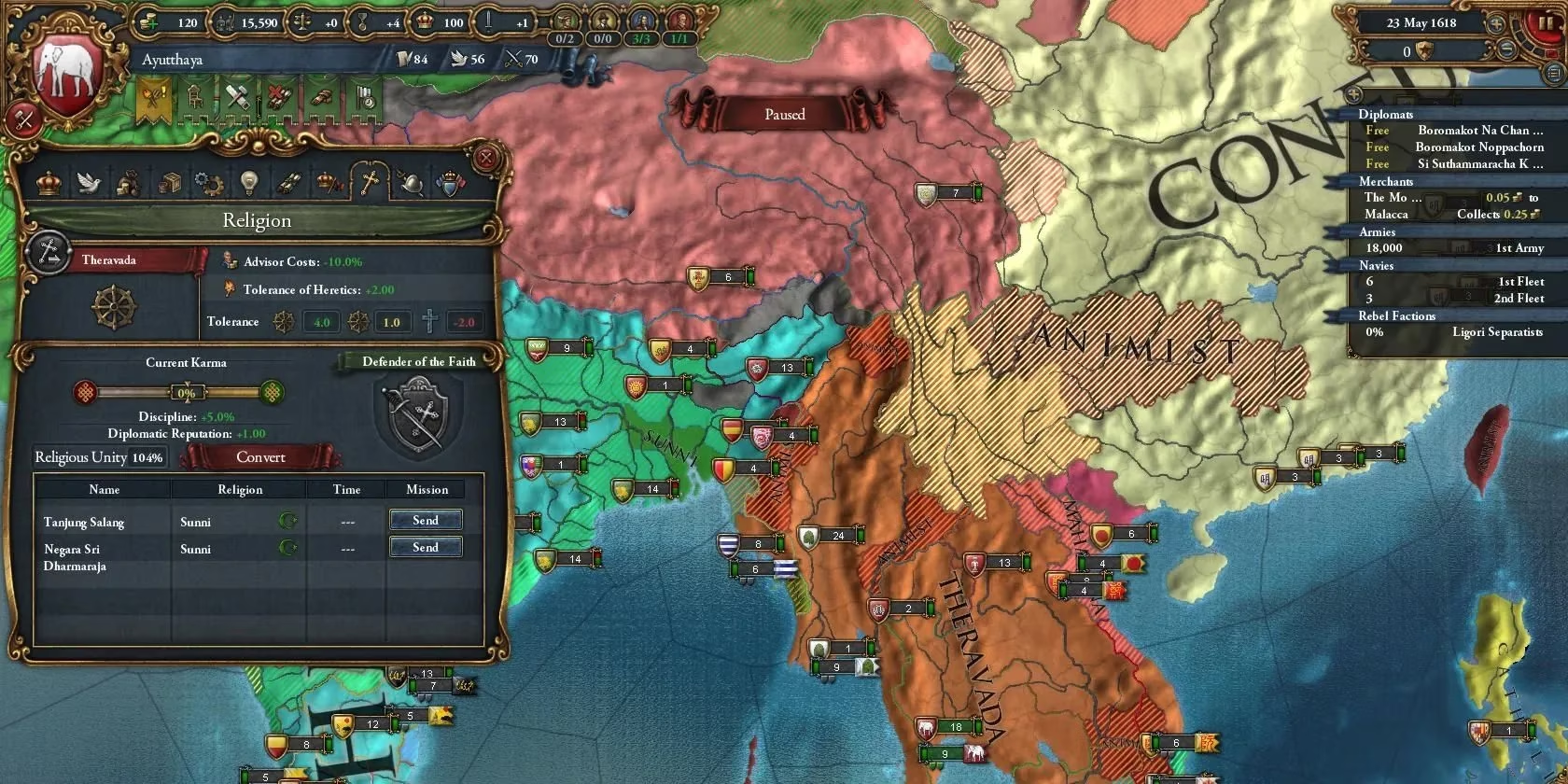
Europa Universalis IV extends this irony to religious balance. A Buddhist empire must keep its karma meter centered. Too much aggression makes you a global pariah, but hoarding good karma has an equally sinister effect: your own people start seeing you as a pushover. Troop discipline plummets because, as the game seems to suggest, soldiers have no faith in a leader who forgives everything. Walking the tightrope of non-attachment is a fascinating commentary on real-world Buddhist principles, but it also means that pure benevolence actively weakens your nation's military spine.

Even monster-collecting RPGs get in on the act. Digimon Survive asks players to balance three karmic alignments: Moral, Harmony, and Wrathful. Those who ignore the Wrathful path entirely lose access to Virus-type Digimon in battle and struggle against certain opponents. Worse, the alignment carries into Free Battle mode, limiting the monsters you can recruit. I learned the hard way that being a purely peace-loving tamer leaves you with an unbalanced roster, which is a death sentence in tougher fights. A little digital darkness goes a long way.
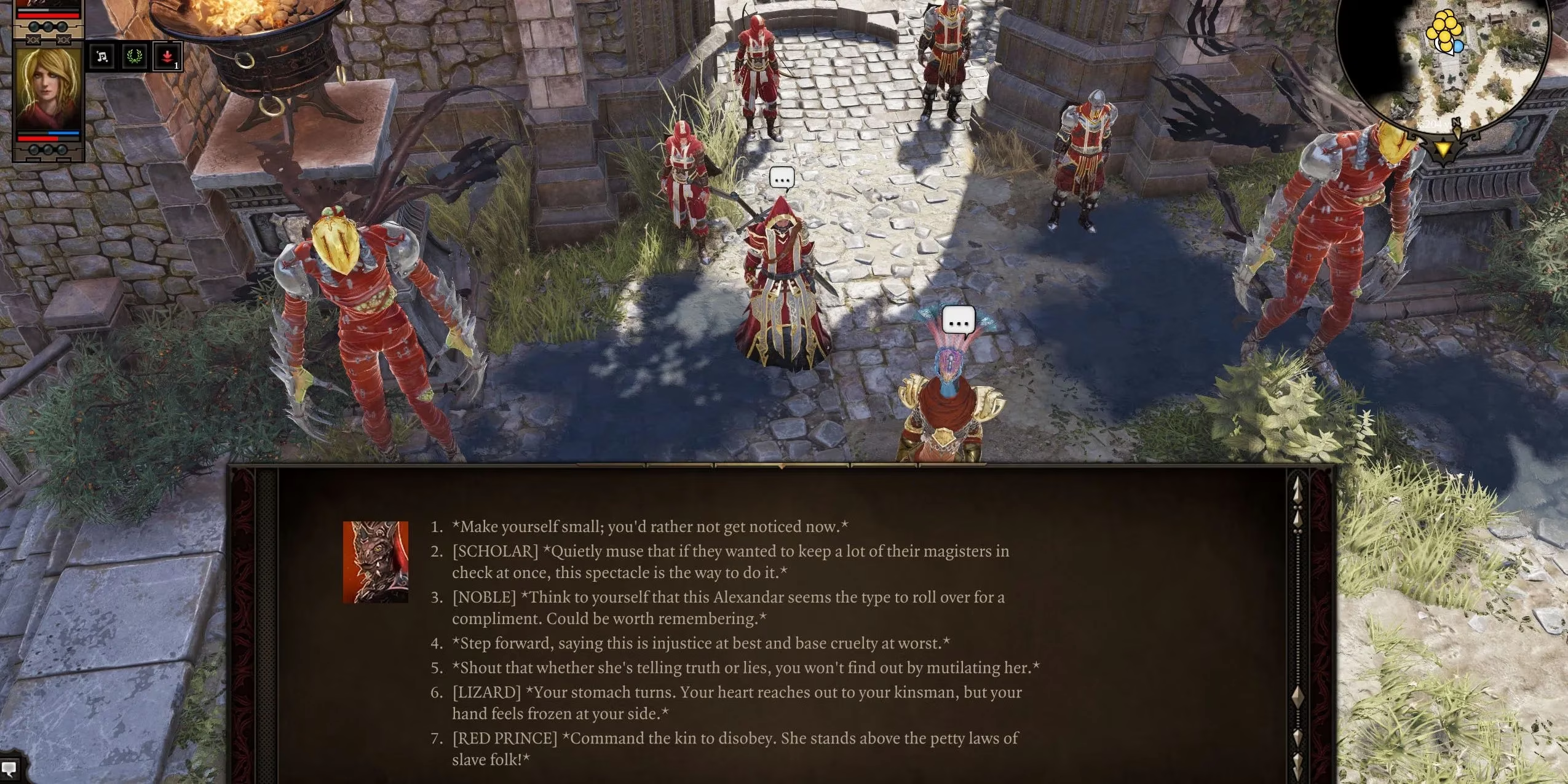
Lastly, Divinity: Original Sin 2 drops you into a cutthroat fantasy world where righteousness is more of a liability than a virtue. Merchants will try to shortchange kind-hearted heroes, and the skill checks for intimidation or persuasion are often gated behind less angelic attributes. Accepting quests without demanding payment means you'll be perpetually broke, while refusing to use fear as a tool leaves you at the mercy of bullies—sometimes literal children. My saintly playthrough ended with my protagonist being treated like a doormat by just about every Rivellon citizen.
Looking back at these examples from 2026, I'm both annoyed and impressed. These games remind us that morality is rarely black and white. Sometimes, doing the right thing costs more than we're willing to pay, and the narrative depth that comes from that tension is unforgettable. Still, next time I boot up one of these titles, I might just let my inner anti-hero take the wheel—not because I want to watch the world burn, but because I'd rather not be punished for my kindness.