When Magic Runs Wild: The Chaotic Sorcery of Divinity: Original Sin 2
Divinity: Original Sin 2's elemental interplay turns poison heals into fireballs, ruining undead mages' plans.
Magic, by its very nature, should be terrifying and unpredictable. In the real world, hurling a fireball would not just singe your target—it would incinerate the curtains, roast the family pet, and turn the neighbor's rose bushes into ash. Most video games reduce sorcery to a glorified gun with sparkling projectiles and neat area-of-effect circles. They strip away the terror and the wonder. But deep in the crates of digital role-playing games, a single title shattered that illusion. Larian Studios' Divinity: Original Sin 2 treats magic like a living, snarling beast—one that does not care about friendly fire, carefully laid plans, or the poor cat that wandered into the wrong turn-based encounter.
In a dimly lit gaming den in 2026, a trio of veterans has gathered for their fifth campaign. They call themselves the Ashen Fellowship, a squad of undead mages who turned their backs on conventional healing. Their reasoning was simple: why mend flesh when you can slurp poison and bathe in blood? The group leans heavily into the game's elemental interplay, a system so volatile that it turns every battle into a physics sandbox where the only rule is that everything will eventually catch fire.
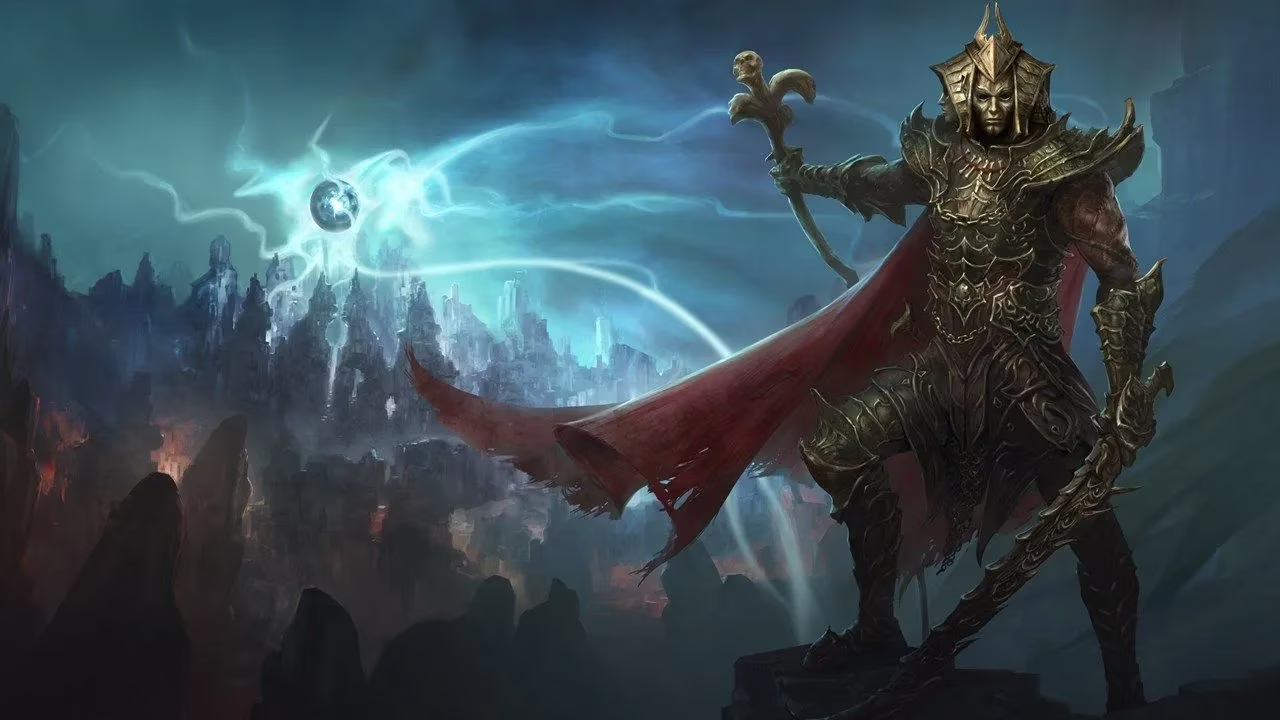
One of them, a gaunt battle mage with a fondness for two-handed axes and reckless decisions, often charges headfirst into puddles of ominous liquid. Another, a crackling electric mage who dabbles in earth magic, waits patiently for the moment when the battlefield floor becomes conductive. The third, a necromancer who specializes in ice and blood, views corpses not as tragic losses but as mobile bombs ready to be detonated. Together, they have learned that the best-laid tactics dissolve within two rounds—not because of enemy intelligence, but because of their own catastrophic spell synergies.
Take the poison incident. The Fellowship, being skeletal and thoroughly dead, cannot tolerate traditional healing potions. Instead, they rely on poison surfaces to regenerate their decrepit bodies. The earth mage would casually fling a contamination spell, coating the cobblestones in a shimmering green slick. The undead would stride through it, bones knitting amid toxic fumes, while living enemies writhed and coughed. It was a beautiful, morbid ballet until someone on the team forgot they were holding a torch. Poison, as every alchemist knows, is notoriously flammable. A single misplaced spark transformed their healing pool into a roaring hellscape. "Whoops," the battle mage would mutter as his allies' health bars evaporated—not from enemy swords, but from the inferno he had accidentally ignited.
.png)
Those battlefields never stayed pristine. What began as a controlled tactical advance quickly mutated into a painter's palette of elemental chaos. The necromancer would raise a Bloated Corpse from a fallen goblin and send it waddling toward a cluster of archers. With a wet, gurgling explosion, the corpse showered the area in blood. Then came the electric mage, fingers already crackling with a discharge spell. A bolt into the crimson pool would electrify it, stunning everyone standing within—including, sometimes, the battle mage who had just triumphantly planted his boots in the viscera. The sound of groaning teammates and sizzling armor became the Fellowship's unofficial victory anthem.
.png)
But blood and poison were merely the appetizers. The real feast of madness came when fire met oil, when cursed smoke met stray lightning bolts, and when someone accidentally clicked a stool instead of an orc. In one notorious encounter, the electric mage had planned to teleport away from an approaching troll. A slight misclick sent him not to safety but onto a rickety wooden chair that was already merrily ablaze. His turn ended immediately, turning him into a human (well, skeletal) candle for the next few rounds. His companions, instead of offering sympathy, collapsed into laughter. That is the secret heart of Divinity 2's magic: it invites you to fail spectacularly and then laugh about it.
.png)
The stories they tell years later are not about optimal builds or perfectly executed combos. They are about the cat. In a quiet act of madness, the battle mage had attempted to toss a poison grenade at a bandit leader. The trajectory clipped a stray feline that had been napping by a barrel. The cat, completely innocent, dissolved into a puff of toxic smoke. The player paused, genuinely remorseful, while his friends dissolved into tears—not of sadness, but of pure, incredulous laughter. Such moments cannot be scripted. They emerge from the raw, untamed rules of a world that treats magic as a force of nature rather than a tool.
Modern RPGs, even Larian's own later masterpiece Baldur's Gate 3, often tame their systems to avoid player frustration. But Divinity: Original Sin 2 thrives on that frustration turning into comedy. The game’s dialogue brims with wit, and its characters are larger-than-life, yet the real humor comes from the emergent storytelling of combat. When a four-player co-op session devolves into a screaming match over who just electrified the whole party for the third time, you realize that the unpredictability is the point. Managing a single character among friends lets each person fully inhabit their role, whether that role is the Inept Fire Mage Who Keeps Hurting His Friends or the Loot Goblin Who Starts Fights With Merchants (those guys are definitely assholes).
.png)
As 2026 rolls on, many players yearn for more games that embrace this level of systemic magic. They want fires that spread logically, water that conducts electricity across an entire dungeon, and cursed ground that transforms a simple skirmish into an environmental catastrophe. Divinity 2 proved that giving players the power to ruin their own plans is not a design flaw but a masterstroke. The Ashen Fellowship still fires up the game every few months, knowing full well that their next session will end with someone on fire, someone poisoned, and that same damned stool claiming another victim. And they wouldn't have it any other way.